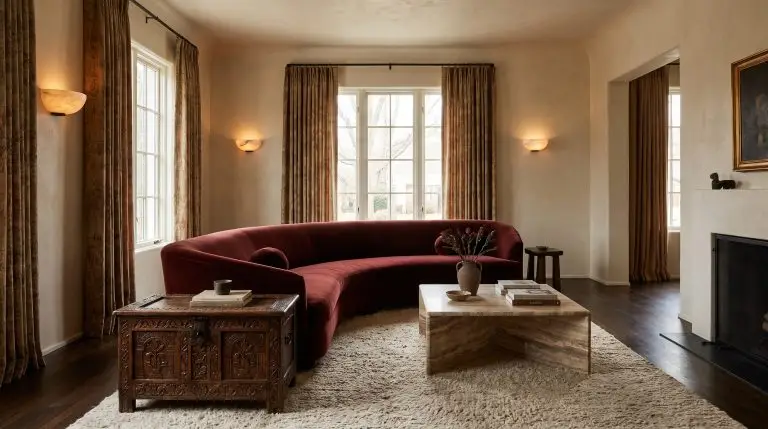
How to Master Modern Shabby Chic in the Living Room (Without Looking Like a Grandma)
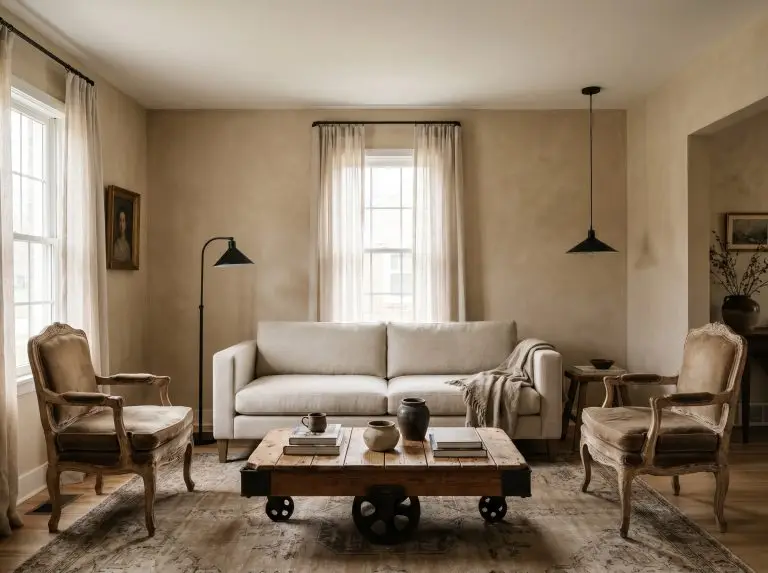
Step into a room where the crisp edge of a modern sofa meets the quiet history of a deeply worn, perfectly imperfect antique. We are leaving the heavy, ruffled excess of the 1990s behind and stepping firmly into a refined, breezy interpretation of quiet luxury.
Modern Shabby Chic is about the tension between clean architectural lines and curated historical patina, proving that you can honor vintage romance while maintaining an airy, beautifully edited space.
The Modern Shabby Chic Foundation (Color & Architectural Texture)
You cannot drop vintage furniture into a stark, clinical white box and expect it to sing. The walls and baseline palette must possess inherent warmth to bridge the gap between contemporary structural elements and aged antiques. This foundation sets the tone for a space that feels collected rather than contrived.
Swap Bright Whites for “Muddy” Sunbaked Neutrals
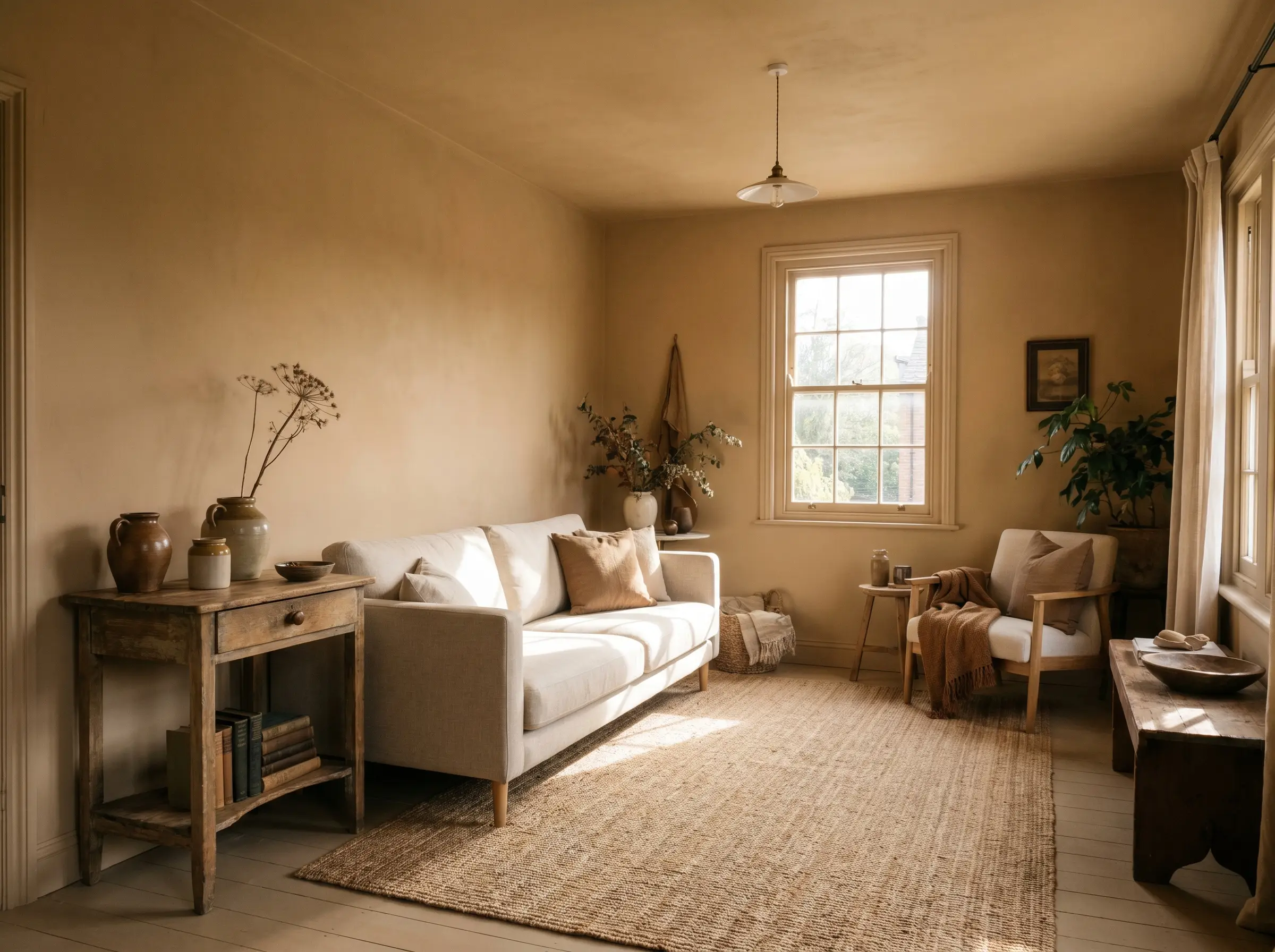
Ditch the clinical gallery-white walls that make antiques look dirty rather than distinguished. By embracing sunbaked, muddy undertones like oatmeal, biscuit, and parchment, you create a soft, forgiving backdrop that celebrates historical wear.
- The 2026 Swap: Trade stark titanium whites for muddy, sunbaked neutrals that add instant historical warmth.
- Vibe: Sophisticated heritage meets organic modern warmth.
- Key Materials: Matte-finish interior paint, lime-based primers.
- Styling Pro-Tip: Carry this muddy neutral onto the ceiling to envelop the room in a continuous, soft glow.
Add Depth with Roman Clay or Limewash Walls
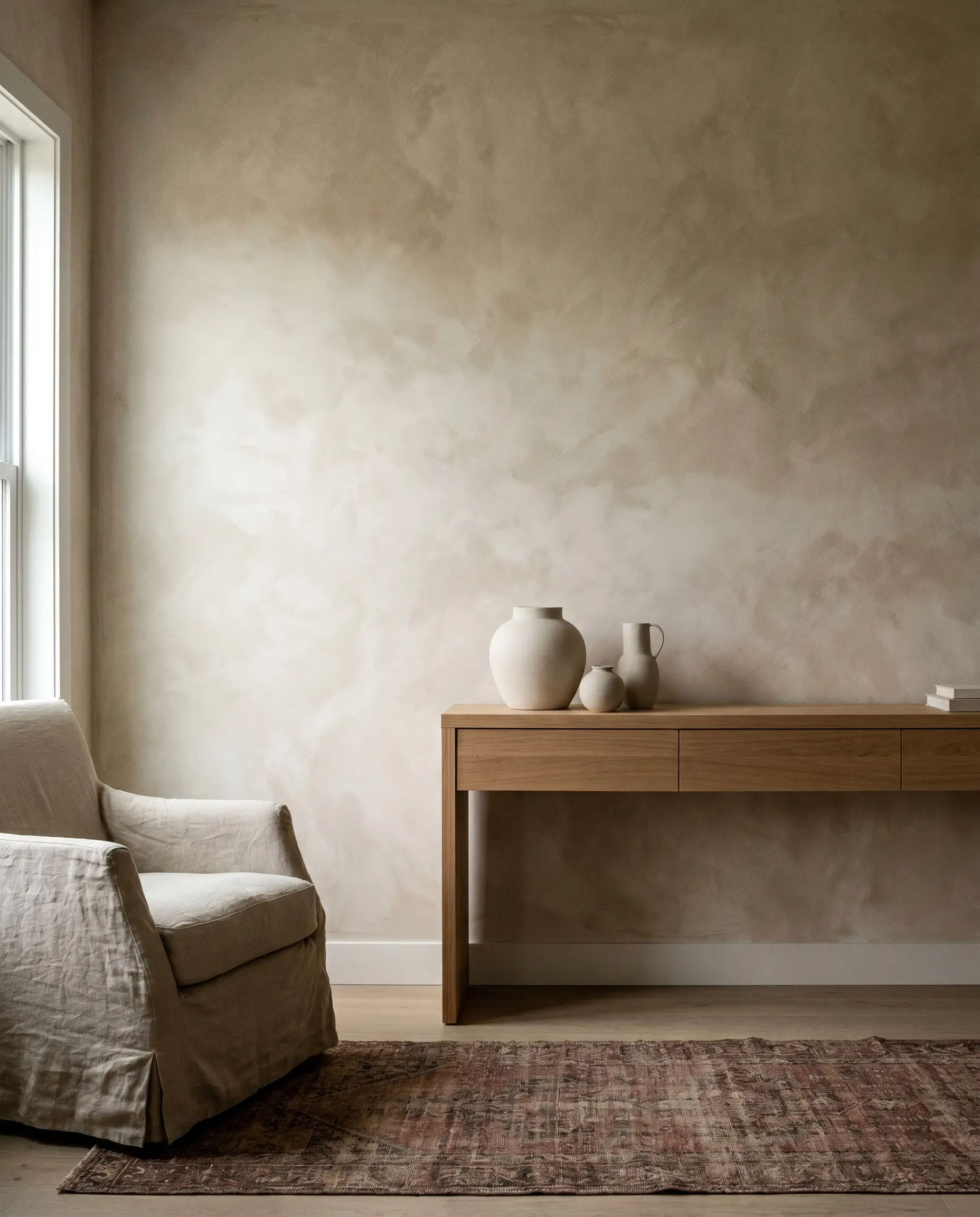
Bring in a distinct organic modern influence by treating your walls as a tactile canvas rather than a flat surface. Plaster, Roman clay, or limewash paint adds a subtle, cloudy texture that replicates the feel of old European country houses without relying on physically distressed wood paneling.
- Vibe: Earthy, wabi-sabi elegance.
- Key Materials: Roman clay, limewash paint, natural bristle block brushes.
- Styling Pro-Tip: Apply limewash paint in a crisscross motion to maximize light refraction and cloudy movement across the wall.
Ground the Space with Dark, Moody Accent Tones
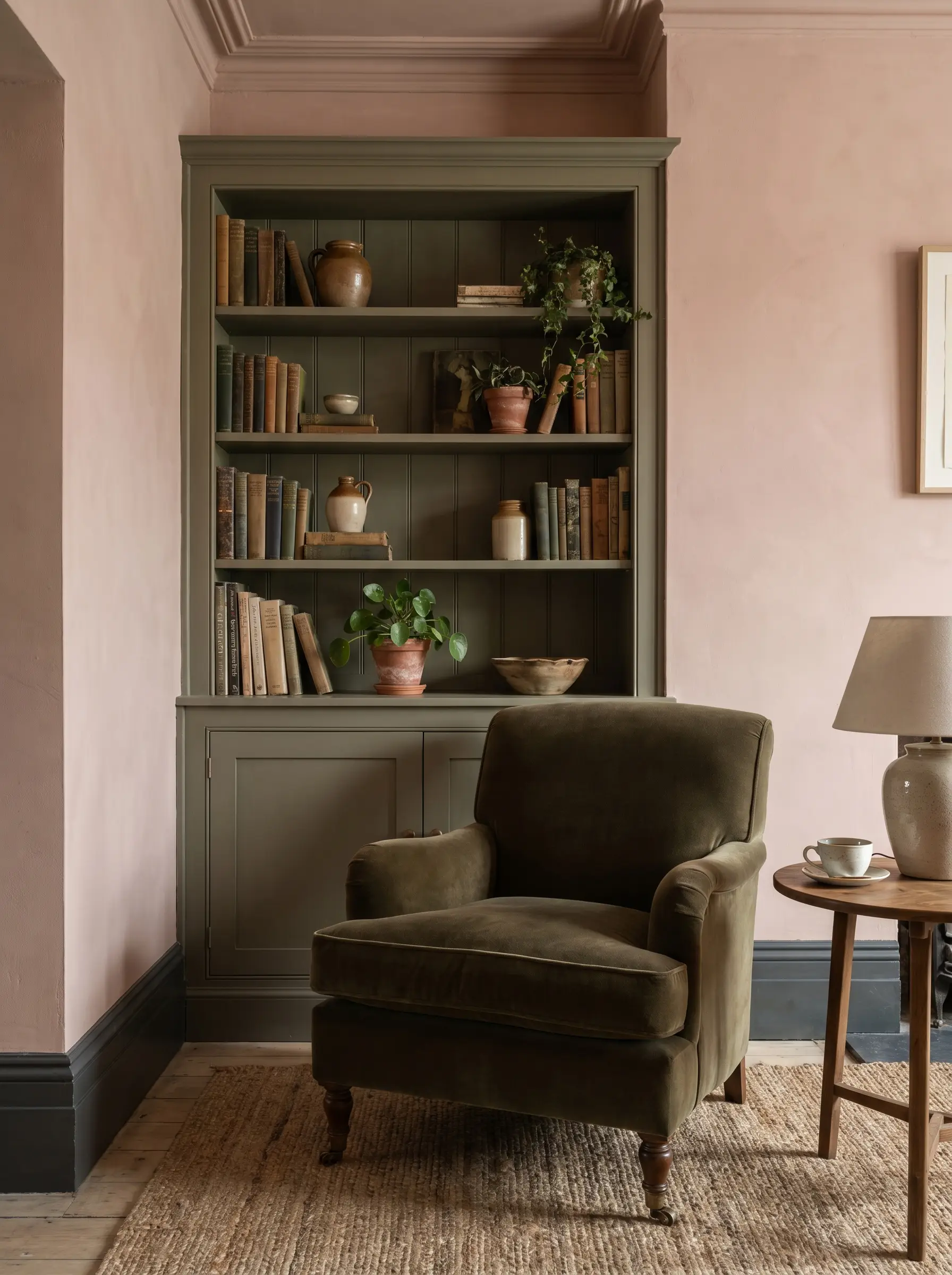
To prevent the room from feeling like a giant, washed-out marshmallow, introduce restorative darks that anchor the eye. A single accent chair or a painted built-in bookcase in a muddy sage or oxidized charcoal provides necessary visual weight.
- Color Match 1: Farrow & Ball ‘Dead Salmon’ (a complex, muddy plaster pink).
- Color Match 2: Sherwin-Williams ‘Rosemary’ (a deeply restorative muddy sage).
- Color Match 3: Benjamin Moore ‘Iron Mountain’ (a soft, oxidized charcoal).
- Styling Pro-Tip: Use these dark tones sparingly on grounding elements like baseboards, interior doors, or heavy velvet accent pillows.
Furniture Silhouettes & Upholstery Rules
The secret to mastering this modern look lies in absolute structural restraint. If the fabric is relaxed, the silhouette must be sharp. This is where we redefine seating expectations, balancing the comfort of slipcovers with the discipline of modern design.
Choose Tailored Belgian Linen Over Slouchy Slipcovers
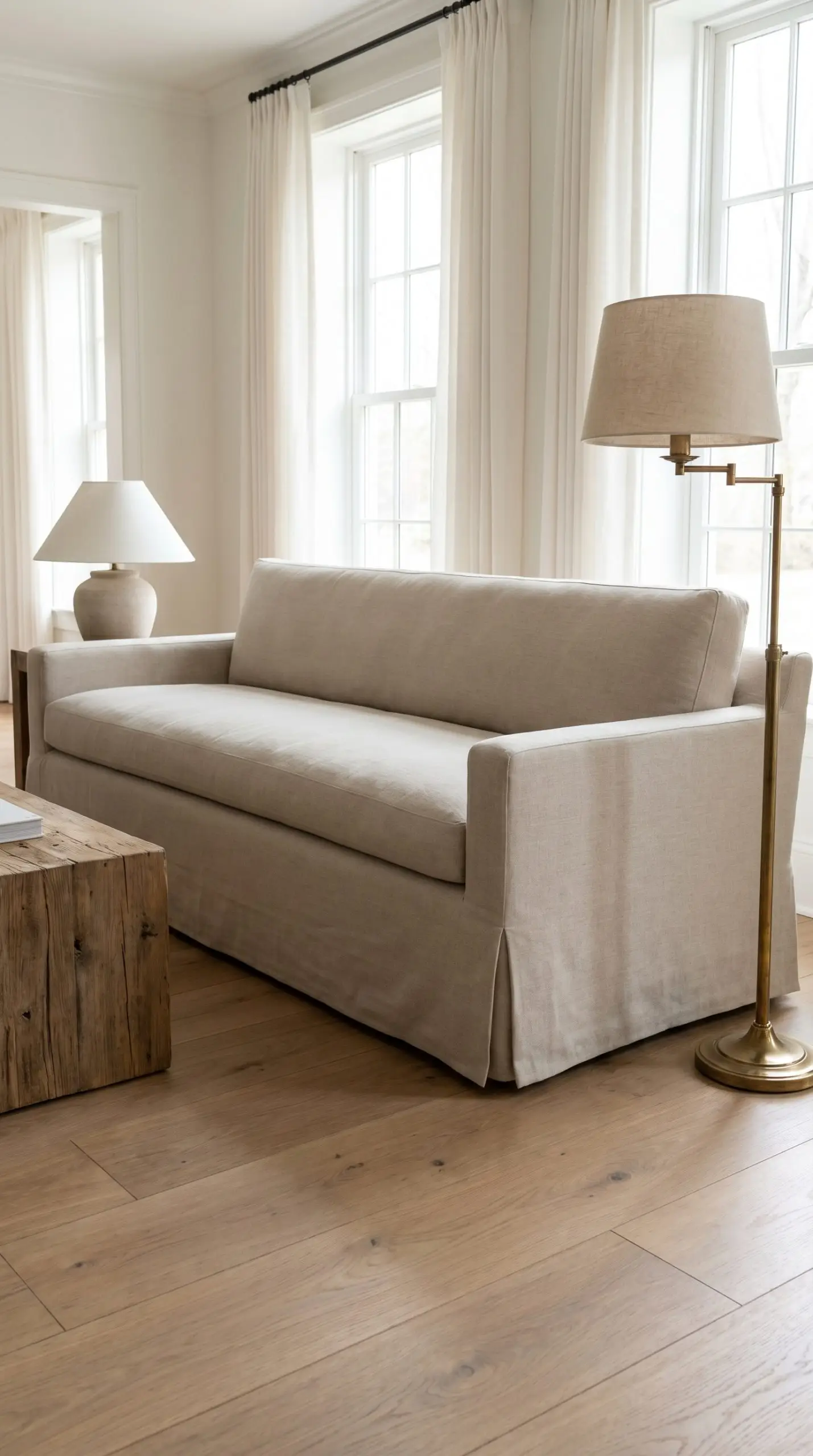
Slipcovers are mandatory for this aesthetic, but the execution must be elite. Erase the image of puddling skirts and excessive wrinkles; instead, demand heavy performance Belgian linen with a crisp, tailored skirt that hovers just a half-inch above the floor.
- Vibe: Clean, structured comfort.
- Key Materials: Heavyweight performance Belgian linen, structured foam-core cushions.
- Styling Pro-Tip: Always request a tight back or a single bench-seat cushion to minimize visual clutter on the sofa.
| Feature | Performance Belgian Linen | Traditional Cotton Canvas |
|---|---|---|
| Structure | Holds a crisp, tailored shape | Prone to slouching and heavy wrinkling |
| Durability | Treated for stain resistance, highly durable | Highly susceptible to stains and fading |
| Tactile Feel | Soft, breathable, luxurious hand-feel | Stiff initially, requires extensive breaking in |
| Maintenance | Spot cleans easily, retains dye | Shrinks in the wash, requires constant steaming |
Pair Clean-Lined Modern Sofas with Antique Occasional Chairs
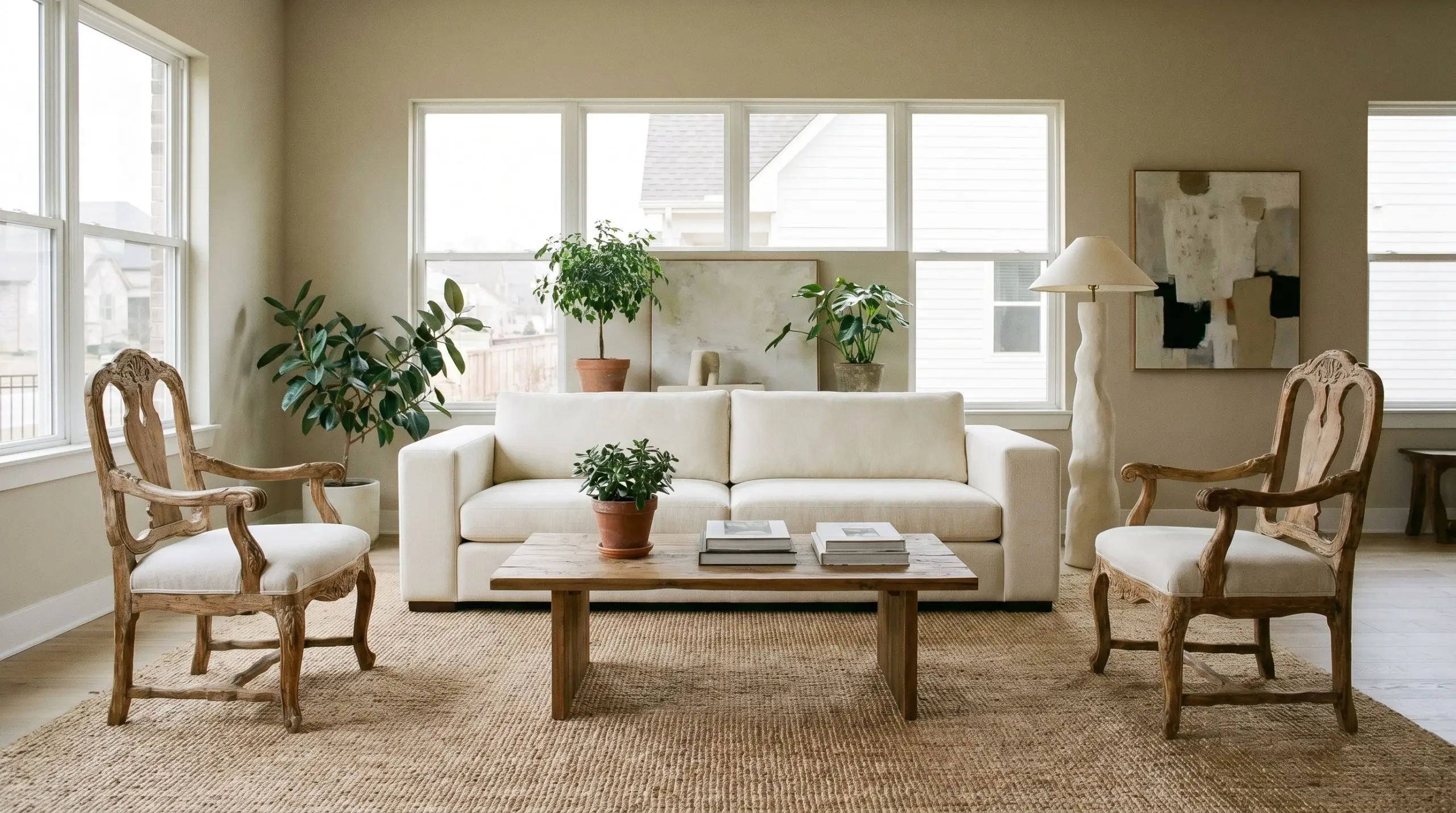
This pairing is the heartbeat of the high-low mix, championed perfectly by designers like Leanne Ford. Invest your primary budget in a new, square-armed modern sofa, then flank it with highly distressed, carved wood French provincial chairs sourced from a local antique market.
- Vibe: Curated tension between eras.
- Key Materials: Solid oak antique frames, modern linen blend upholstery.
- Styling Pro-Tip: Leave the wooden frame of the antique chair entirely raw, but recover the seat in a stark, modern fabric to bridge the gap.
Introduce Raw and Bleached Woods (Skip the Chalk Paint)
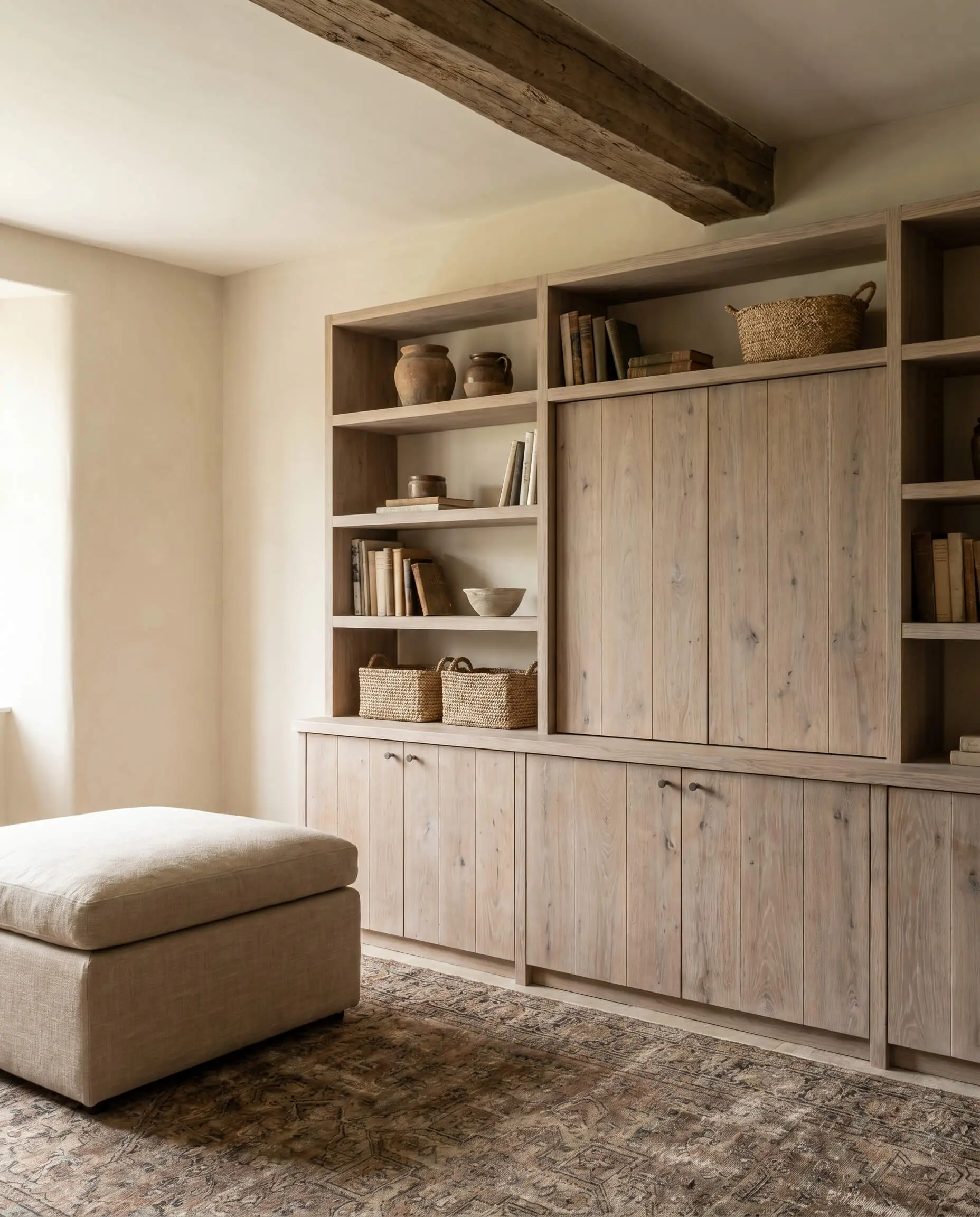
The days of heavily sanded, bright-white chalk paint are definitively over. Modern Shabby Chic relies on the raw, wabi-sabi beauty of bleached walnut, limed oak, and untreated reclaimed beams to provide authentic texture.
- The 2026 Swap: Trade artificial chalk-paint distressing for the authentic, matte finish of limed oak and bleached walnut.
- Vibe: Organic, unpretentious heritage.
- Key Materials: Bleached walnut, limed oak, raw timber.
- Styling Pro-Tip: Seal raw woods with a clear, matte water-based polyurethane to protect the surface without adding a dated, glossy yellow sheen.
Anchor with a Statement Architectural Salvage Coffee Table
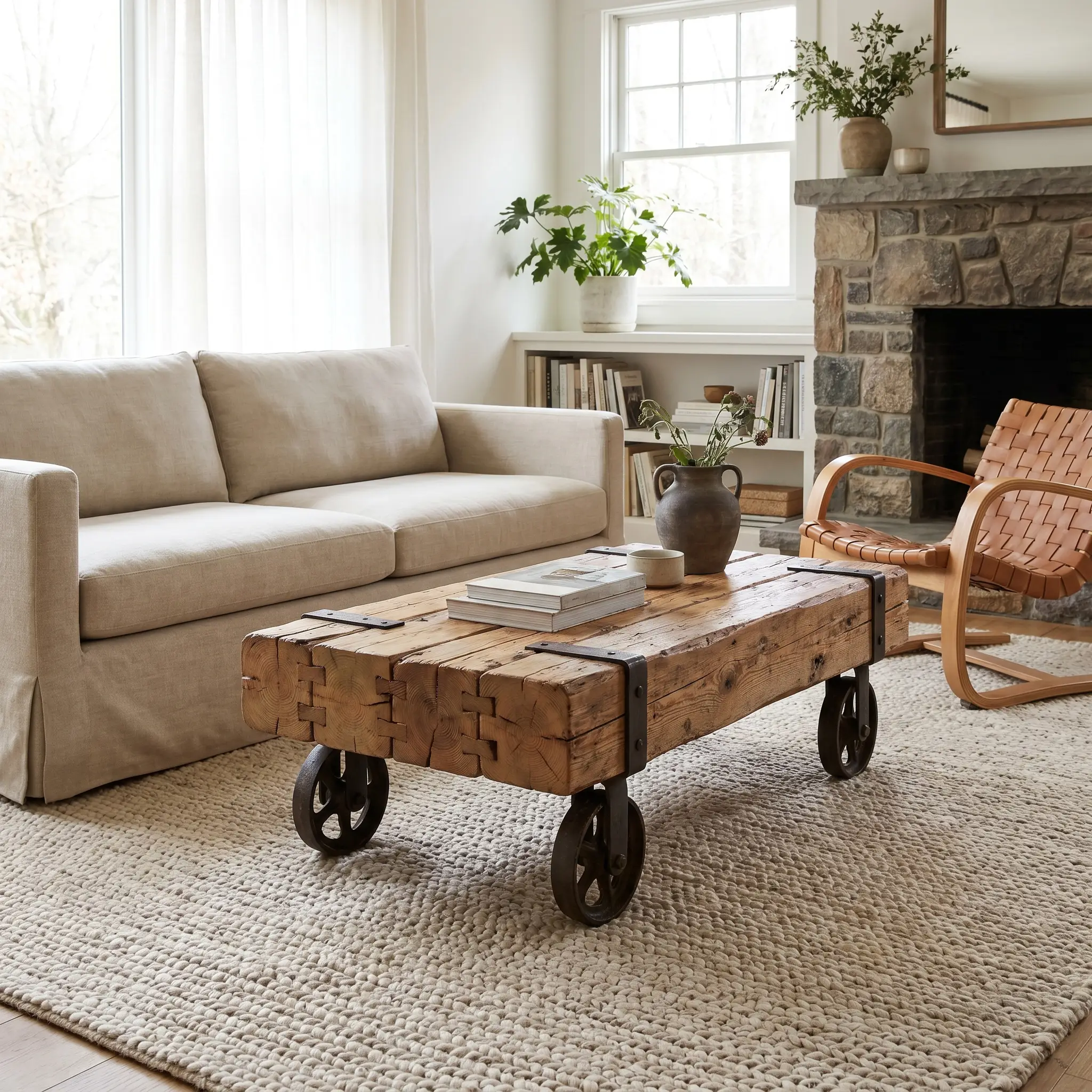
Ground the center of your living room with a heavy, substantial piece of history. A salvaged factory cart, a cut-down antique door, or a chunky rustic milking table injects massive character against the clean lines of your modern sofa.
- Vibe: Industrial romance.
- Key Materials: Reclaimed pine, cast iron casters, heavy timber.
- Thrifting Rule: Look for authentic mortise-and-tenon joints and natural wear patterns on the edges, avoiding pieces with uniform, machine-made scratches.
Modernizing the “Chic” Details (Lighting & Hardware)
Accessories, lighting, and hardware are the fastest vehicles for pulling a vintage room firmly into the current decade. By injecting contemporary, high-contrast metals and sleek glass, you prevent the space from feeling stuck in a time capsule.
Contrast Romantic Textures with Matte Black Iron Lighting
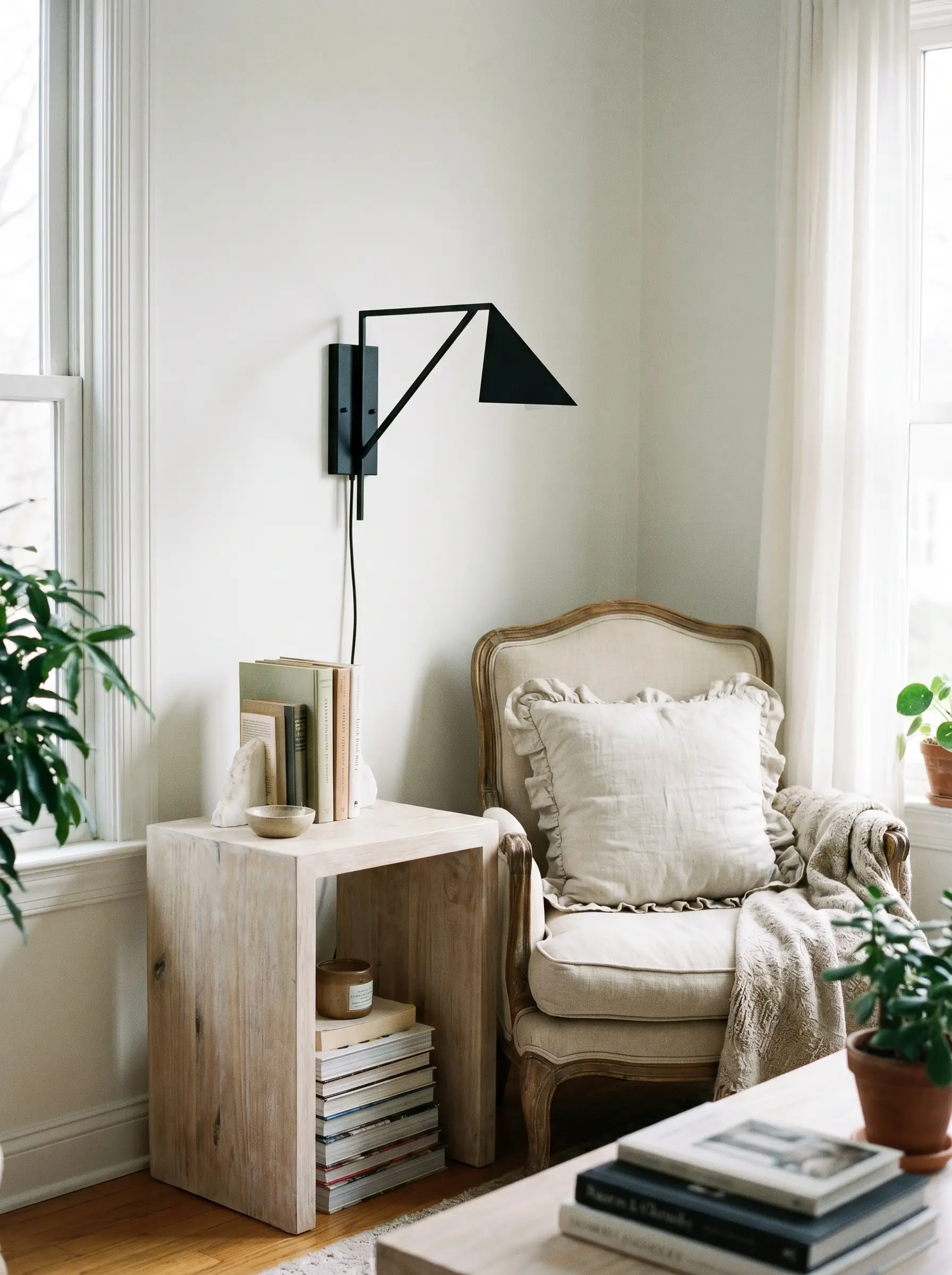
This is the ultimate modernizer for a patina-rich space. Offset the softness of a ruffled linen pillow or a bleached wood console with the razor-thin, aggressive lines of a matte black iron sconce or a minimalist linear chandelier.
To prevent linen slipcovers and raw woods from looking washed out, always introduce at least one piece of razor-thin matte black iron lighting. This high-contrast metal acts as visual eyeliner for the room, instantly sharpening the soft, romantic textures.
Designer Secret
- Vibe: Sharp, architectural contrast.
- Key Materials: Matte black iron, powder-coated steel.
- Styling Pro-Tip: Choose lighting fixtures with articulated, geometric arms to juxtapose the organic curves of your antique furniture.
Upgrade to Oxidized Brass or Unlacquered Hardware
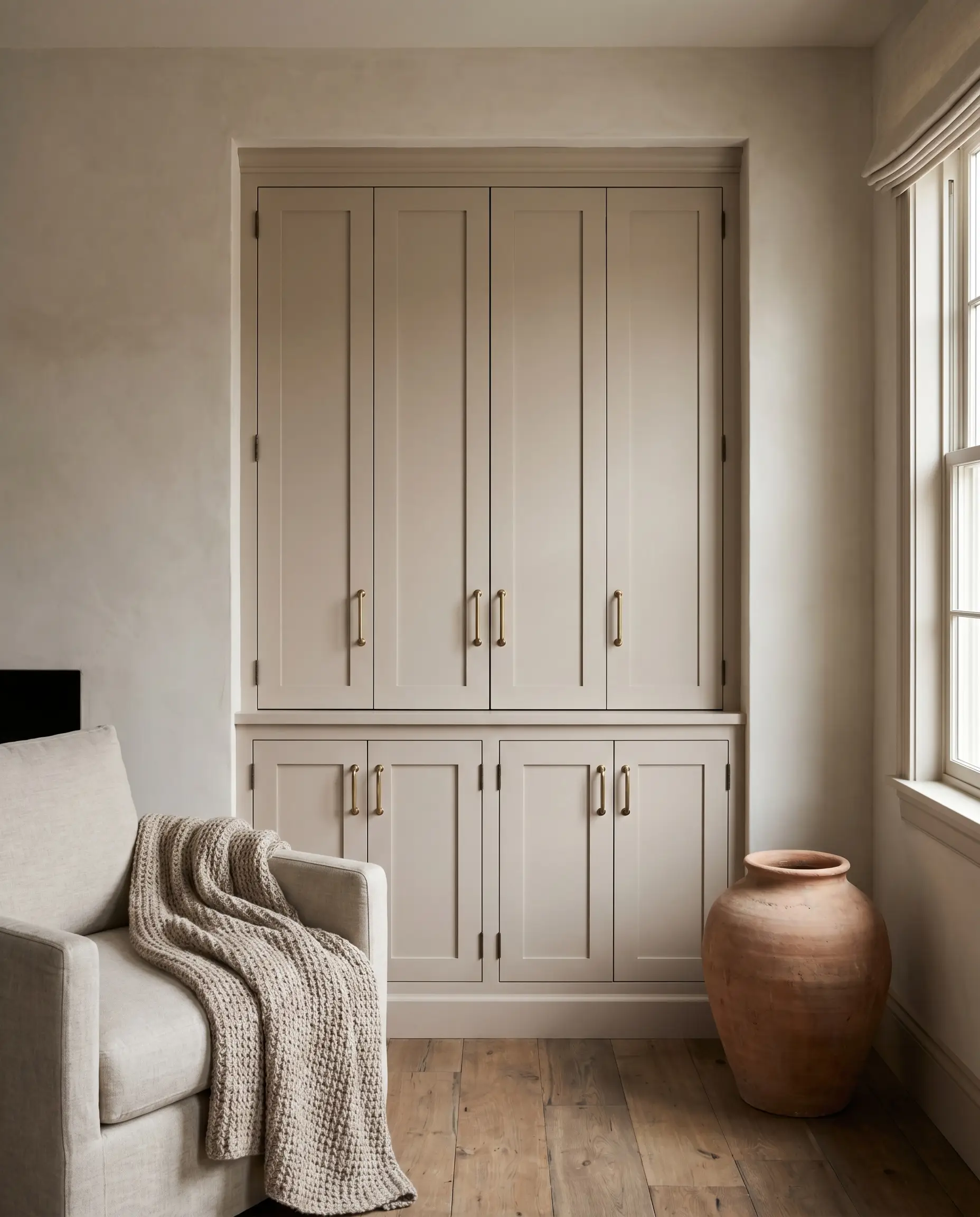
Replace shiny, cheap-looking hardware with unlacquered brass that actively ages alongside your home. This living finish will naturally develop a dark, cloudy patina over time, marrying perfectly with the curated ethos of the room.
- Vibe: Authentic, historical warmth.
- Key Materials: Solid unlacquered brass, oxidized bronze.
- Styling Pro-Tip: If you cannot wait for natural aging, you can accelerate the patina process on raw brass using a specialized chemical darkening solution.
Use Fluted Glass and Ribbed Details for Contemporary Edge
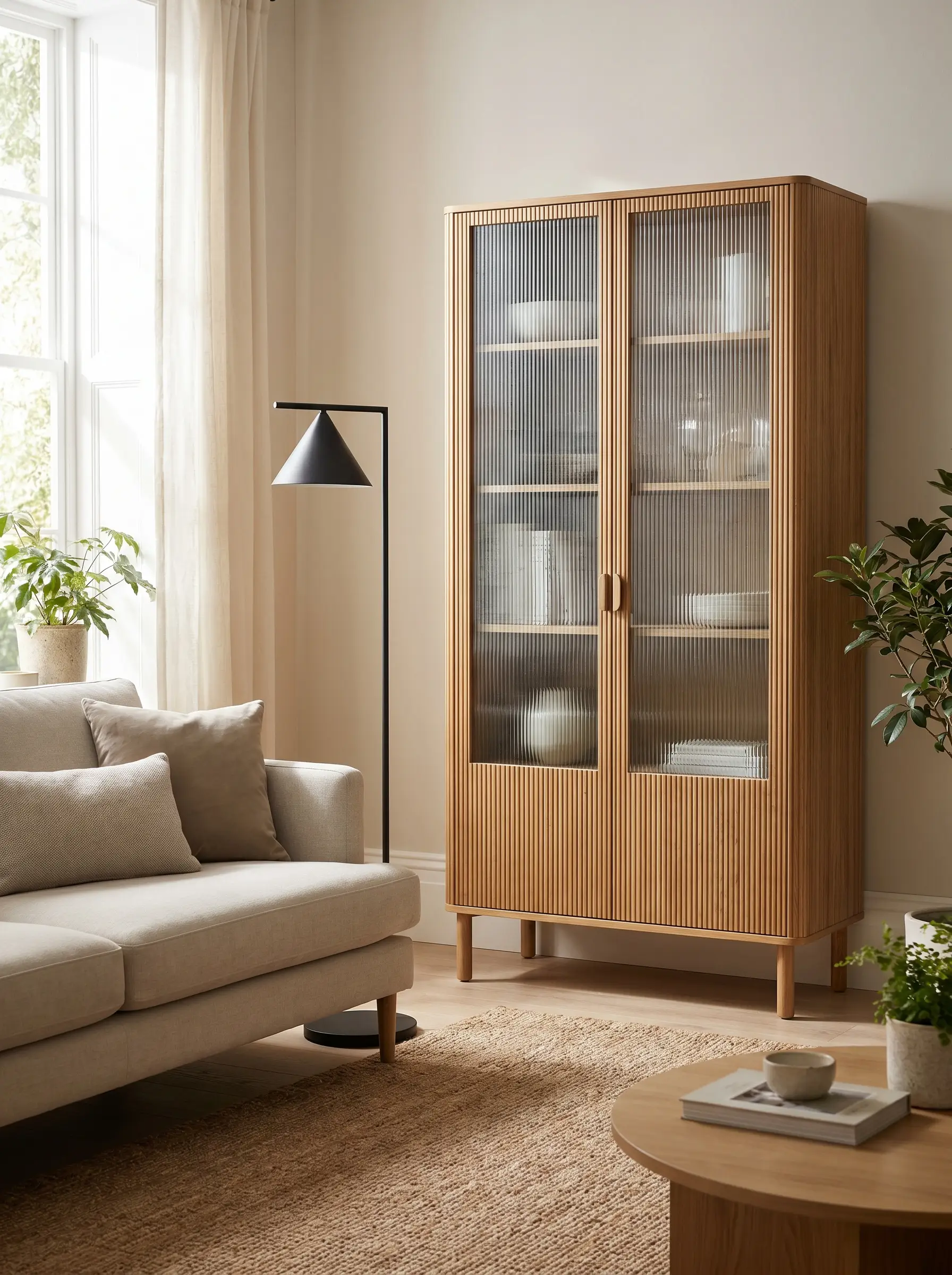
Instead of leaning on traditional floral stained glass or heavy, ornate mirrors, integrate fluted or reeded glass into cabinet doors and coffee table surfaces. This texture offers a subtle nod to old apothecary cabinets while feeling incredibly sleek and bouncing natural light beautifully.
- Vibe: Sleek, transitional elegance.
- Key Materials: Fluted glass, reeded oak detailing.
- Spatial Benefit: Fluted glass obscures the interior clutter of a cabinet while still allowing light to pass through, maintaining the airy feel of the room.
The 2026 Styling Formula for Restrained Romance
The final layer of decor is where traditional interpretations often fail, tumbling rapidly into clutter. We must apply strict styling rules and the art of the edit to ensure your living room remains sophisticated and breathable.
Apply the 70/30 Modern-to-Vintage Rule
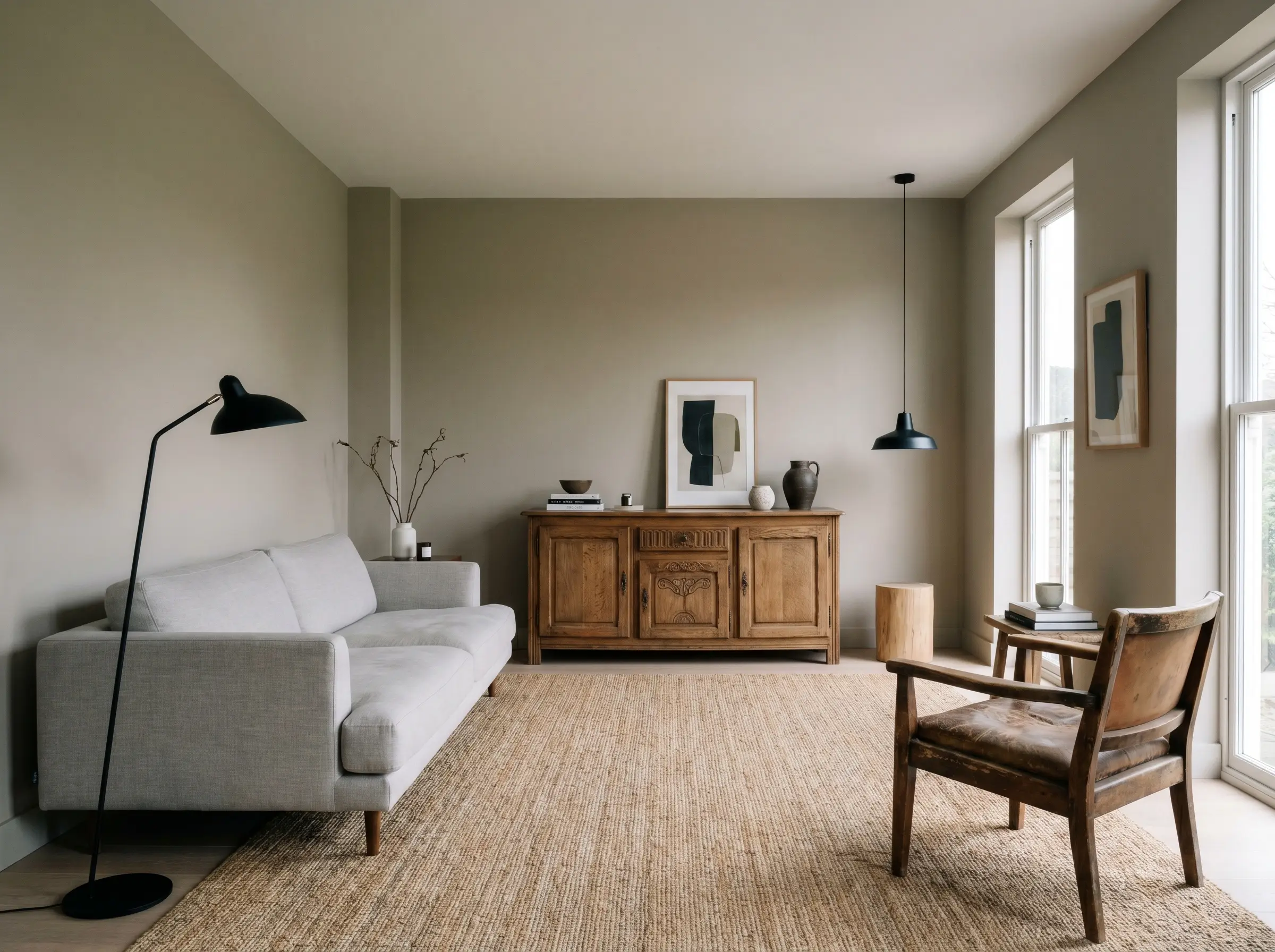
This is the golden ratio of transitional design. Keep exactly 70 percent of the room—the foundation, the sofa, the lighting—clean, modern, and neutral, allowing the remaining 30 percent to feature heavy, textural, unapologetic vintage accents.
- The Golden Ratio: 70% Modern Foundation / 30% Vintage Character.
- Vibe: Ruthlessly edited and perfectly balanced.
- Styling Pro-Tip: If you add a heavy antique sideboard (increasing your vintage percentage), balance it by removing an ornate rug and replacing it with a minimalist jute weave.
Swap Ditsy Florals for Oversized, Muted Botanical Prints
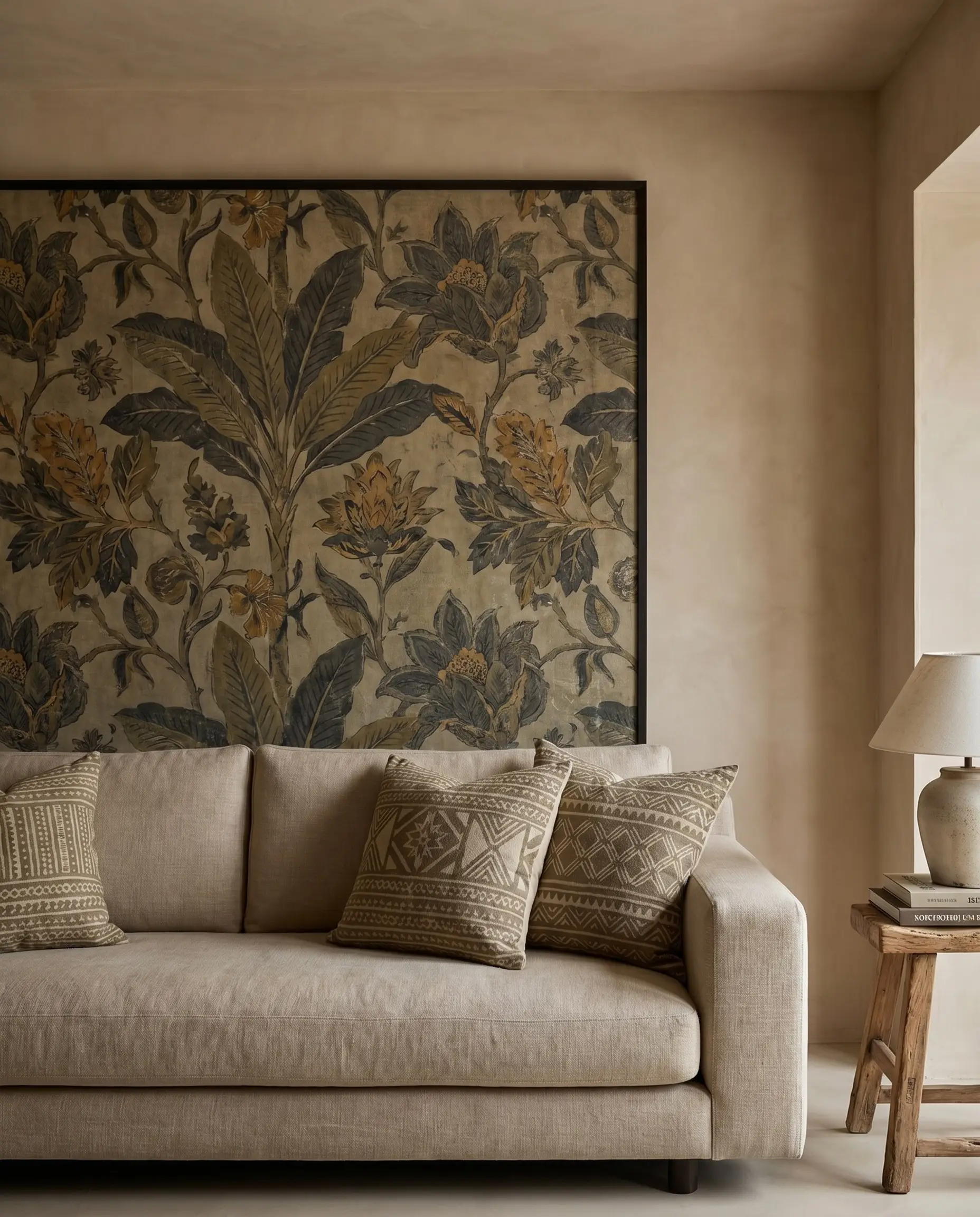
Florals are a necessary nod to the aesthetic’s roots, but tiny 90s rosebuds are officially banned. Direct your textile choices toward large-scale, muted botanical tapestries, William Morris-inspired block prints, or subtle tonal damasks that command attention through proportion.
- The 2026 Swap: Trade chaotic, small-scale ditsy florals for oversized, heavily muted botanical block prints.
- Vibe: Sophisticated, moody nature.
- Key Materials: Printed linen, block-printed cotton canvas.
- Styling Pro-Tip: Frame a single, large-scale piece of vintage botanical wallpaper as a massive art installation rather than wallpapering the entire room.
Display Curated Ceramics with Spatial Restraint
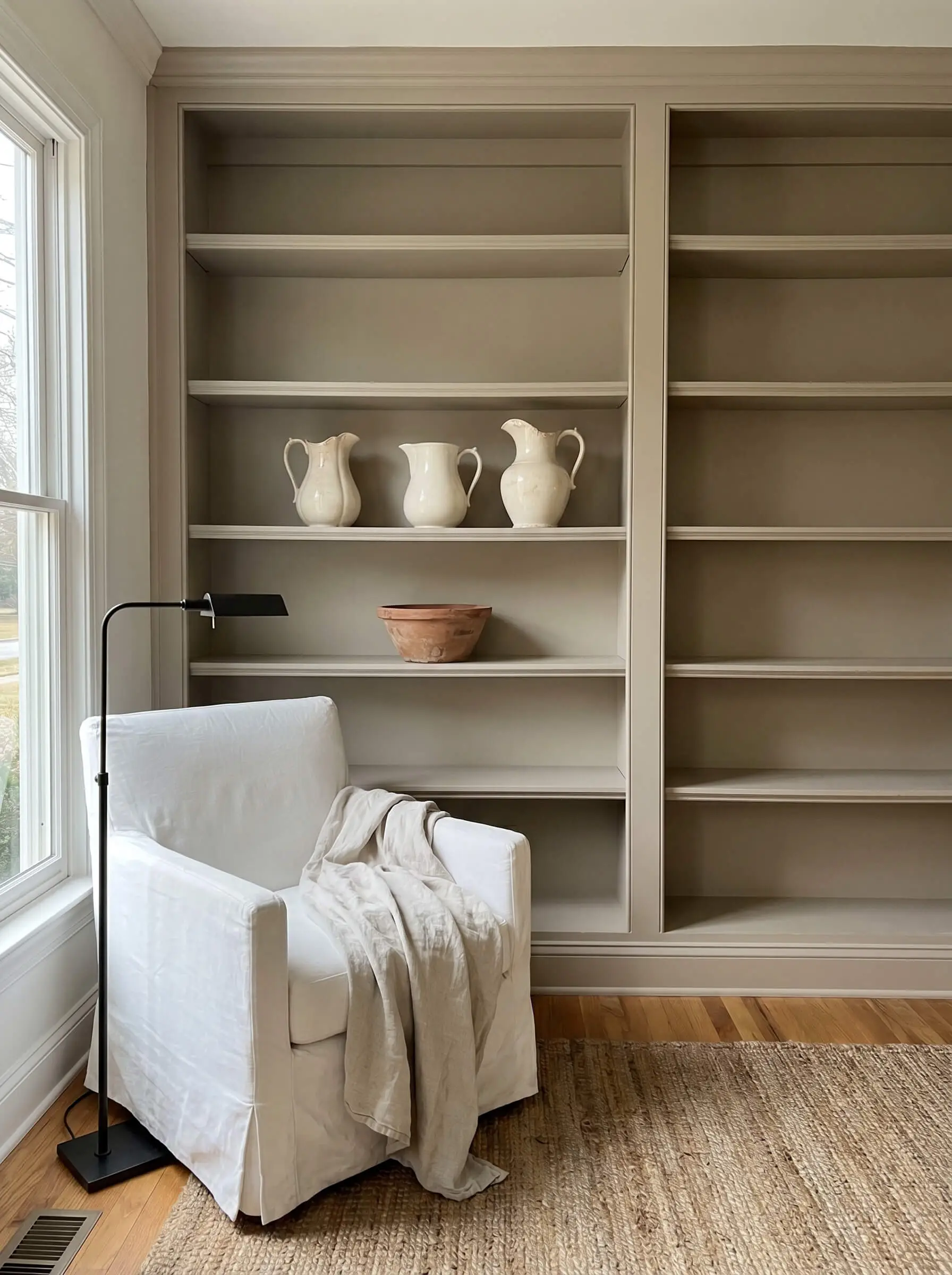
Instead of cramming a shelf with fifty mismatched teacups, display a tightly edited collection of three oversized, handmade ironstone pitchers. Embrace negative space on your bookshelves, allowing the eye to rest and amplifying the visual value of the items you choose to display.
- Vibe: Gallery-like curation.
- Key Materials: Antique ironstone, matte ceramic, raw terracotta.
- Styling Pro-Tip: Group objects in odd numbers and leave at least one-third of every shelf completely empty to master the art of spatial restraint.
Soften Modern Architecture with Flowing, Pleated Drapery
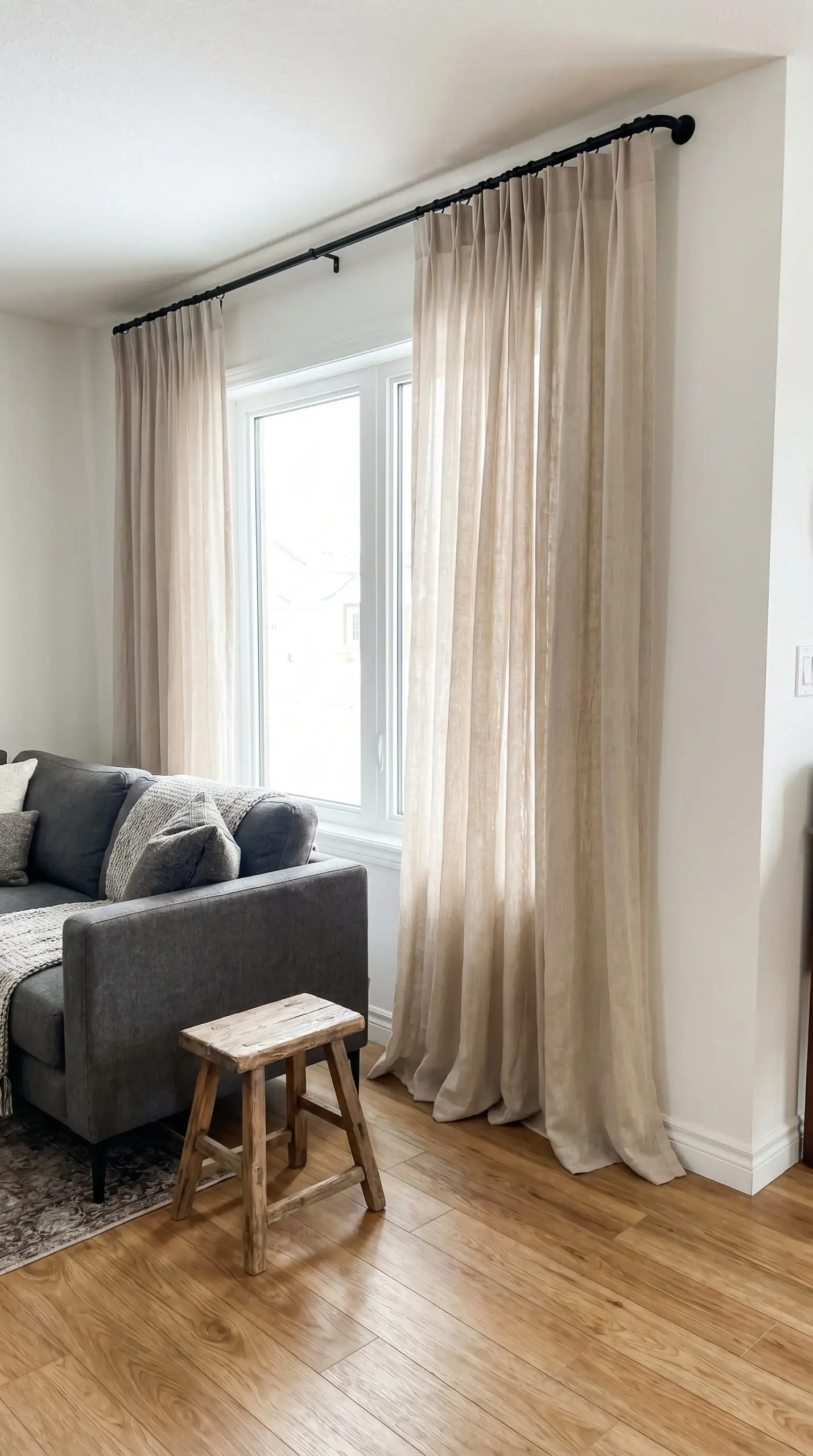
If your high-contrast lighting and sharp sofas push the room a bit too modern, soften the hard edges of the windows with extra-long, pinch-pleated linen drapes. Ensure they barely kiss the floor—absolutely no puddling and no heavy valances allowed.
- Vibe: Effortless, vertical softness.
- Key Materials: Lightweight sheer linen, matte black iron hardware.
- Hardware Recommendation: Use French return rods so the fabric wraps cleanly back to the wall, blocking out side-light and maintaining a seamless, tailored profile.
The Final Edit: Curating Your Patina-Rich Living Room
Modern design and vintage romance are not opposing forces; they are the perfect dance partners when guided by spatial restraint. Creating a living room that feels this deeply personal and patina-rich takes time. Do not attempt to buy this entire look from a single catalog in one weekend. Hunt for that perfect salvaged coffee table, invest in the right tailored linen sofa, and let your space evolve organically. Ready to start building your foundation? Dive into our Limewash Paint Guide for your next weekend project, and tell us about your absolute favorite vintage thrifting find in the comments below!

The Aesthetics Desk curates the visual direction for Hackrea. Specializing in design history, global architectural movements, and interior styling, this desk focuses on the psychology of space and how to translate high-end, magazine-quality aesthetics into approachable residential design without falling into fleeting micro-trends.