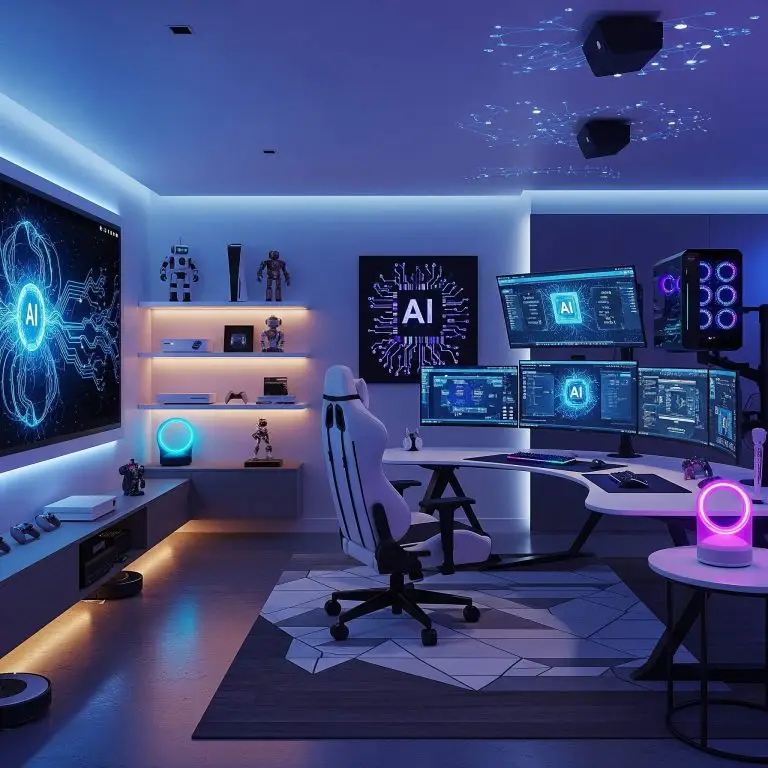
So you’ve got some free space at home. Spare bedroom, finished basement, that one room that’s basically become a dumping ground for things you don’t know where else to put.
And you’ve been planning to turn it into a proper game room, but this planning takes longer than you’d like to admit. So every time you sit down to plan it, the whole thing starts to feel overwhelming. What goes where? How much space do you need? Will that sectional even fit?
Most people skip the planning stage and jump right into buying consoles, acoustic panels, and furniture. That’s usually where the regret kicks in.
Start With a Vision, Then a Plan
Before jumping into layouts and measurements, first decide what kind of game room you want. “Game room” covers different types. It can be an arcade retro, a billiard room with a foosball table, a clean minimalist, bright and social ideal for a family or a dark and moody video game cave just for you.
Browsing ideas for a playroom is a solid first step to figure out what kind of aesthetic actually speaks to you and fits the playroom you want. Every planning decision that follows is much easier when you know the direction you’re heading. Once you’ve got a rough vision, that’s when the real planning begins.
Why Planning Comes Before Purchasing
A 65-inch TV stand looks completely fine on a product page. In your room, it might block the door. That sectional that works perfectly in your head could eat up every inch of floor space, so there’s no space to put a coffee table, let alone actually move around. Returns are a hassle. Re-arranging heavy furniture is worse.
Planning first means you know all dimensions, your lighting situation, and your storage requirements before you purchase anything. We know that’s not the most exciting thing to do, but planning before ordering anything separates the game room that really works from the one that frustrates you every time you come in.
Where AI Tools Come In
These smart tools have changed things quite a bit in recent years. AI-powered room planners let you test your ideas and layouts without touching a single piece of furniture. You upload a photo of your room or a floor plan – even a simple hand-drawn sketch on a piece of paper. And you start experimenting virtually.
The tool can flag things you might not notice on your own: a couch that will block the outlet, a billiard table too close to the wall you can’t swing a cue without hitting it, a table you’ll bump into all the time.
Also, you can change the colors, switch between a darker setup and something brighter in seconds. You can try the table in two different corners. You can add a bookshelf and immediately see if it fits. Simply, you can play with your ideas like a kid until you build your perfect game room.
The Order That Makes Sense
When you open the AI tool, start with the screen and seating. It’s much easier to arrange everything else around the main display. If you want a big screen, you’re looking at roughly 8 to 10 feet of viewing distance for a comfortable experience – mark that space first and then work from there.
Lighting comes next, and you should take it seriously. Game rooms need layered lighting. Overhead ambient light, bias lighting behind the screen to reduce eye strain, maybe some accent strips for atmosphere. If your room gets direct sunlight on the wall where the TV goes, you’ll need a blackout solution.
Then acoustics. Hard floors and bare walls create more echo than most people expect. Room dimensions and surface materials affect the sound and can make or break the whole experience. And you definitely want your game audio to be crystal clear.
The Room You Actually Want to Be In
A game room done right feels personal. It needs to be functional without being sterile, comfortable without being cluttered, and to reflect what you want. Whether that’s a competitive gaming space just for you, a retro arcade sanctuary for the whole family, or a mix of everything. It doesn’t matter. What matters is that you feel good when you’re there.
AI doesn’t design the room for you. But it gives you a fast, simple way to figure out what works best before you buy or move anything. So use these tools to design your dream game room and then enjoy every second of it.