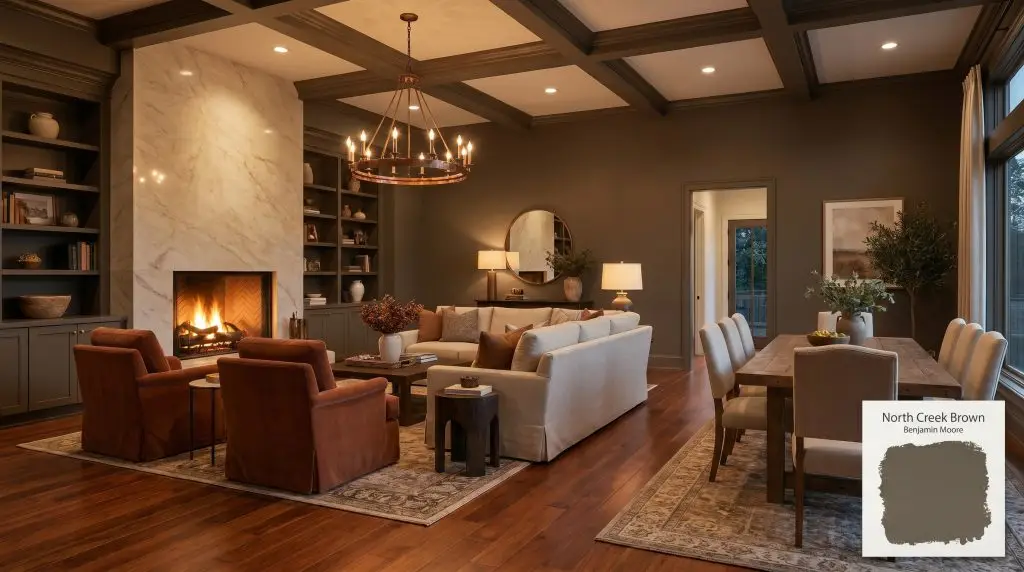
Benjamin Moore North Creek Brown (1001) is a deeply grounded, warm chocolate brown with pronounced red-orange undertones. With an LRV of 10, it acts as a dramatic, earthy neutral that brings a rich, enveloping coziness to interiors and a stately architectural presence to exteriors.
Will North Creek Brown clash with your room?
Paint Technical Profile
| Color ID / SKU | 1001 |
| HEX Code | #65594A |
| Light Reflectance (LRV) | 10 |
| Temperature | Warm |
| Primary Undertone | Red-orange |
| Hidden Undertones | Yellow, Subtle Charcoal |
| Use | Interior, Exterior |
| Best Exposures | North or East |
| Best For | Kitchen islands, lower cabinetry, bedroom accent walls, exterior body, cozy libraries |
North Creek Brown Digital Design Concept Boards
Kitchen islands and lower cabinetry
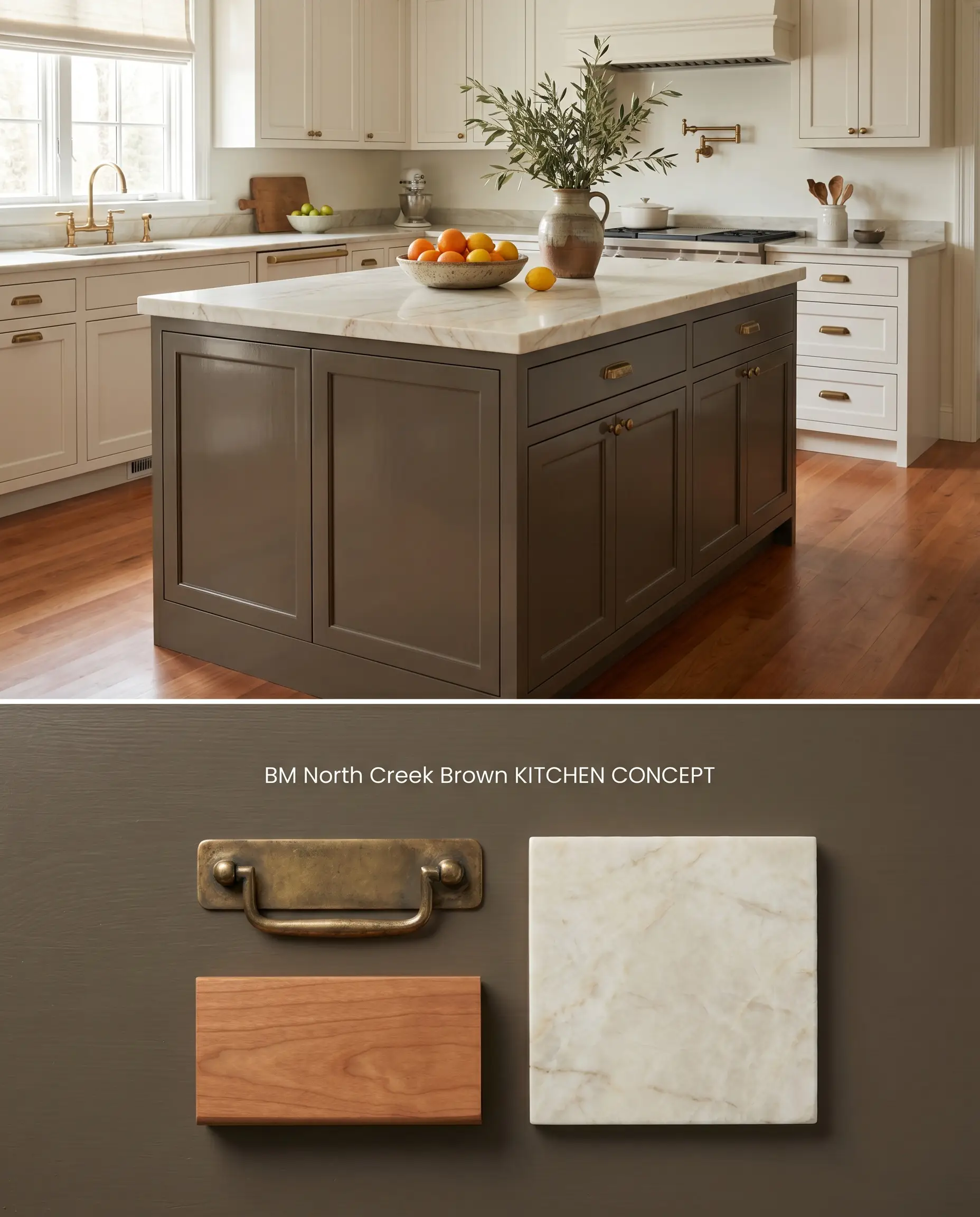
The deep burnt umber base grounds the visual weight of a kitchen, anchoring the island against lighter perimeter cabinetry. Because it carries a pronounced red-orange undertone, it bridges seamlessly with warm metallic hardware and cherry wood flooring, avoiding the stark contrast of a pure black.
Bedroom accent walls
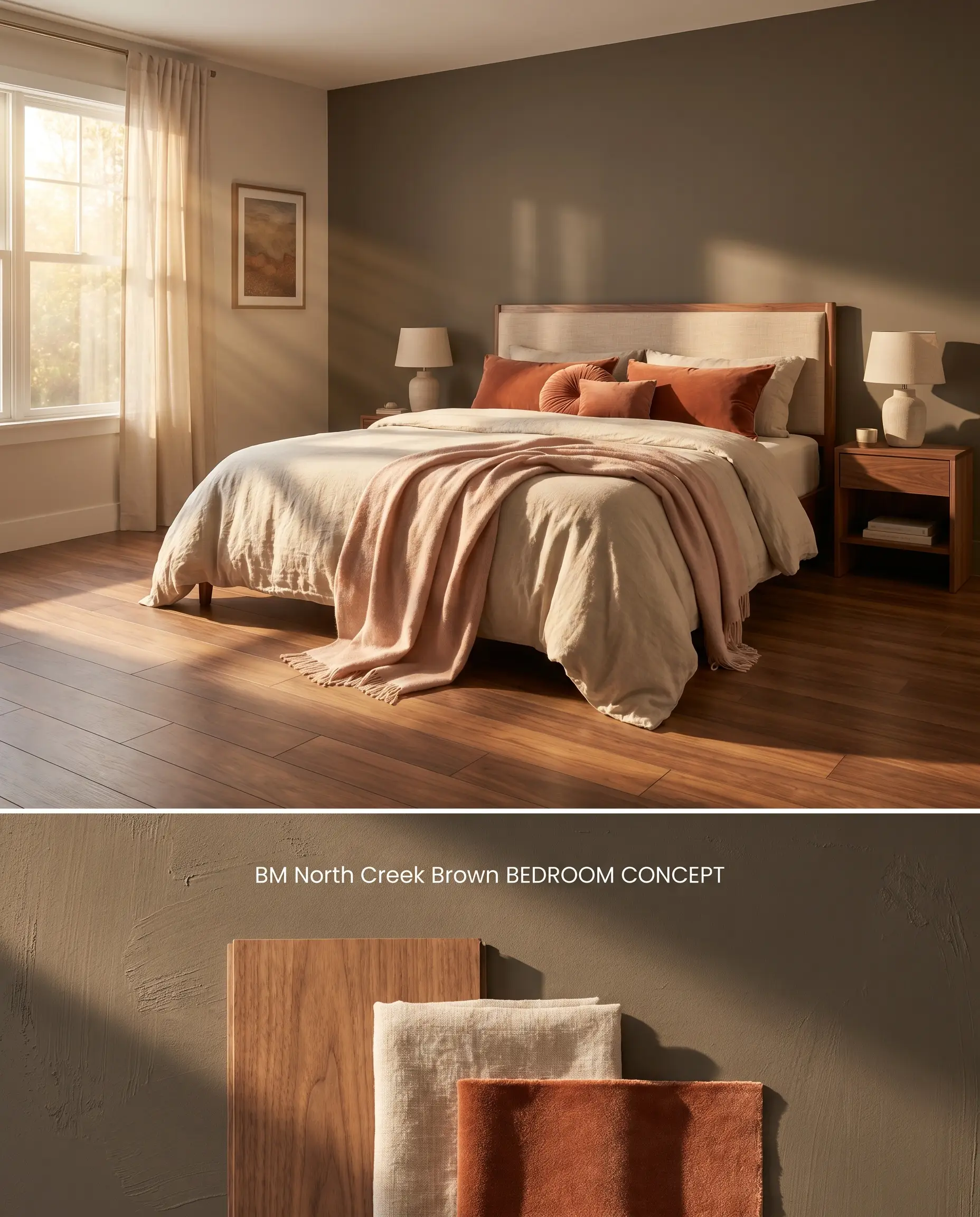
Applied directly behind a headboard, this earthy neutral absorbs ambient light to reduce glare and establish a clear focal boundary. The rich hue interacts dynamically with warm-toned linens and pink-toned beige textiles, creating a cohesive, enveloping sleeping environment.
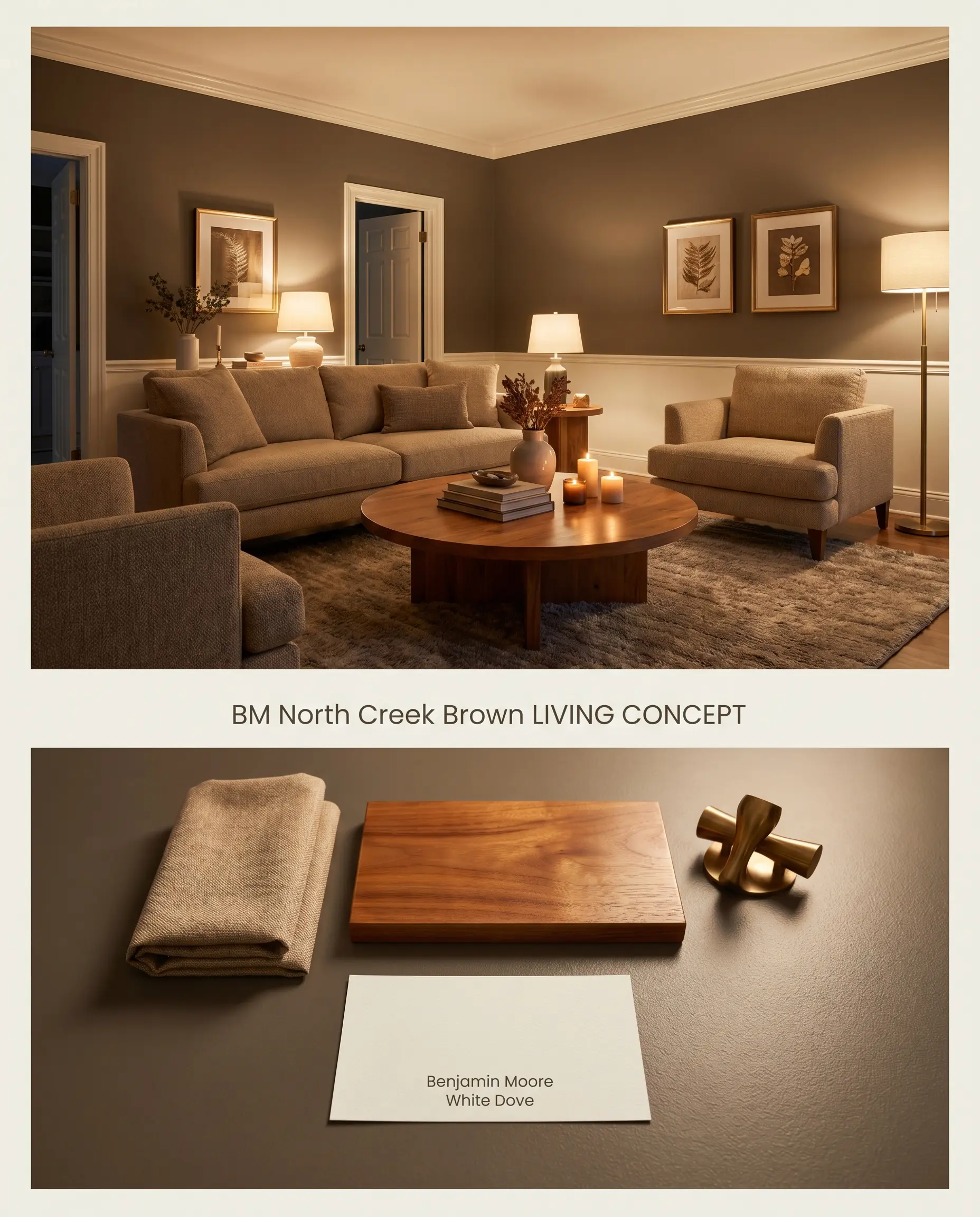
Living area walls
Will North Creek Brown work with your specific lighting, floor, or furniture?
Enveloping a living space in a shade with a low light reflectance compresses the room’s boundaries, drawing the eye inward toward central seating arrangements. The red-orange undertone radiates warmth when paired with incandescent evening lighting, counteracting the typical flatness of dark browns.
Exterior body and trim
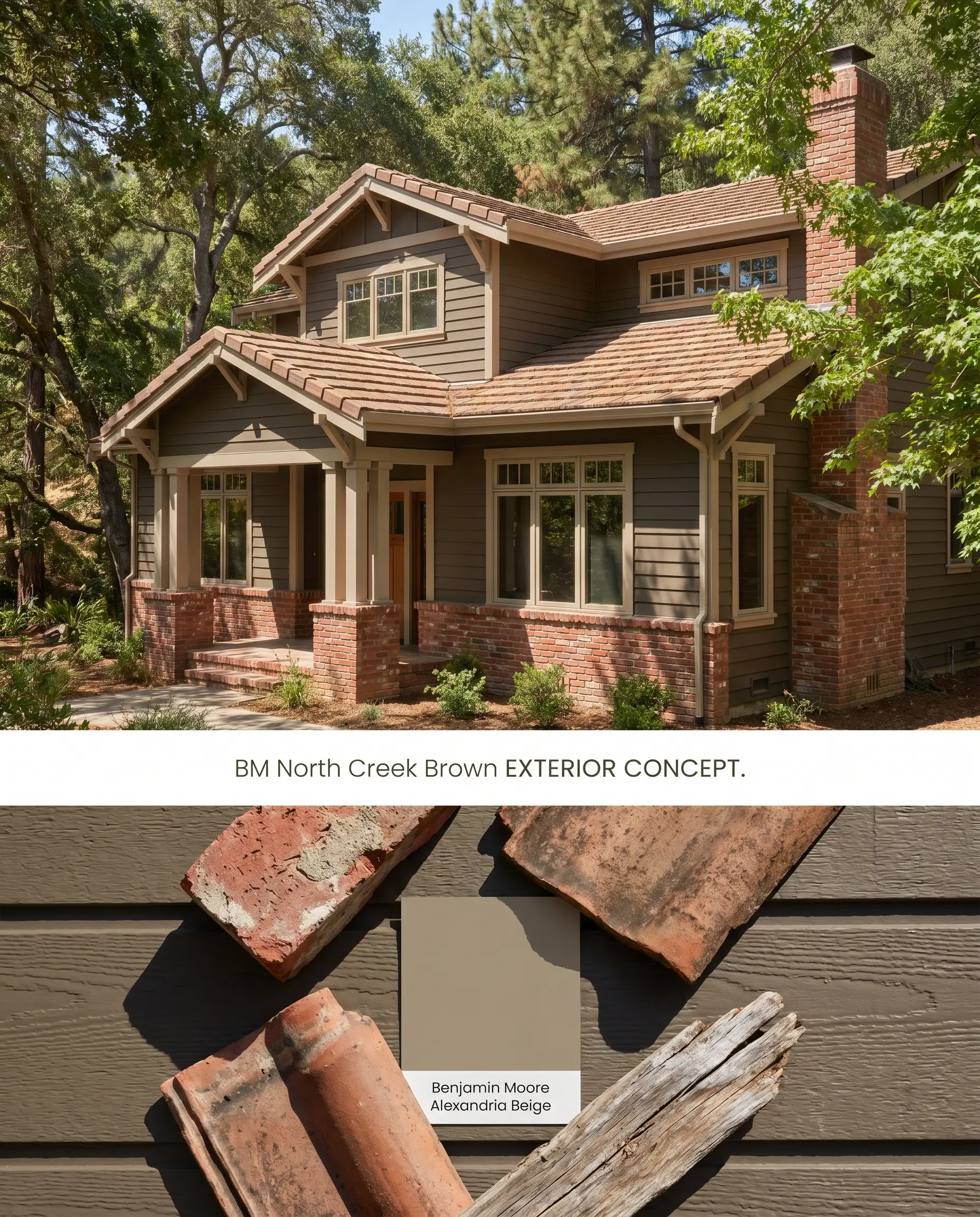
Will North Creek Brown work with your specific lighting, floor, or furniture?
On exterior facades, intense natural sunlight dilutes dark colors, allowing the underlying red-orange cast of this architectural finish to become highly visible. It pairs exceptionally well with brick and terracotta roofing, integrating the structure into natural, wooded landscapes.
Cozy home libraries or studies
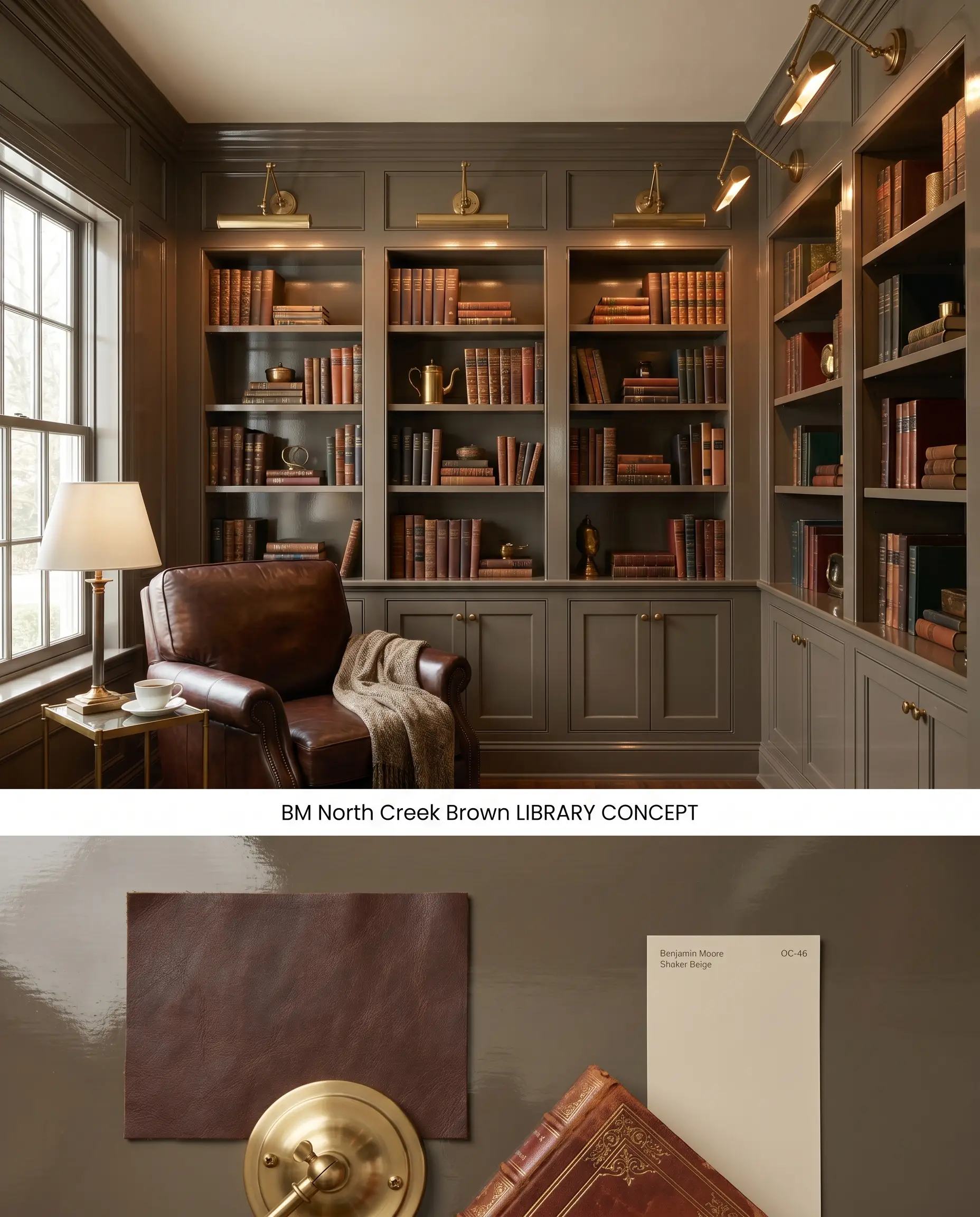
The dense color structure of this brown mimics traditional wood paneling, offering a rich backdrop that makes leather bindings and brass fixtures pop. By painting both walls and trim, the low light reflectance minimizes visual interruptions, allowing the built-in cabinetry to dictate the room’s architecture.
Evaluating the Chromatic Profile: Head-to-Head Comparisons
Benjamin Moore North Creek Brown vs. Benjamin Moore Silhouette AF-655
Silhouette features a slightly lighter LRV and carries a pronounced plum-red undertone, whereas North Creek Brown leans into a distinct red-orange cast. In southern exposures, Silhouette reads more purple-brown, making North Creek Brown the necessary choice when coordinating with rust, terracotta, or legacy cherry woods.
Benjamin Moore North Creek Brown vs. Sherwin-Williams Oak Leaf Brown SW 7054
Will North Creek Brown work with your specific lighting, floor, or furniture?
Oak Leaf Brown features a more neutralized, slightly greenish-yellow base compared to the fiery red-orange tint of North Creek Brown. If your space features green-gray profiles or honed slate, Oak Leaf Brown integrates smoothly, whereas North Creek Brown clashes directly with those cooler materials.
Benjamin Moore North Creek Brown vs. Farrow & Ball Salon Drab No. 290
Salon Drab is a classic chocolate with a subtle yellow-red undertone, lacking the aggressive orange push found in North Creek Brown. Salon Drab operates as a more versatile earthy neutral in western light, while North Creek Brown requires precise pairing with pink-toned beiges and warm metals to balance its highly activated warmth.
Technical FAQs on Low Light Reflectance and Undertones
Yes, in southern or western light, the red-orange cast becomes highly activated and prominent. To neutralize this warmth and keep the hue reading as a dense chocolate, restrict its application to north-facing rooms.
It fundamentally opposes pale white oaks, honed slate, and cooler natural stones. To maintain architectural harmony, pair it exclusively with legacy red-toned woods like cherry or pink-toned beiges.
With a low light reflectance value of 10, this shade absorbs nearly all ambient light, making windowless spaces feel visually compressed. It performs best in well-lit rooms or when applied selectively on wainscoting to prevent a dim, enclosed effect.
A deep gray or brown tinted primer is required to build an opaque base and prevent the red-orange undertone from reading unevenly. Skipping a tinted primer forces the application of multiple topcoats and risks a patchy final finish.
Room Compatibility & Clashes Diagnoses
Hackrea's reports evaluating the compatibility of North Creek Brown in real rooms.No compatibility tests for North Creek Brown yet.
Be the first to see how this color reacts to your space. Run a free architectural diagnostic now.
Paint Aesthetic & Practical Analysis
| Profile | Analysis | |
|---|---|---|
| Aesthetic | North Creek Brown by Benjamin Moore is a stunningly rich, earthy neutral that anchors a room without feeling overly heavy. Its underlying warmth keeps the brown base from looking muddy, making it a highly sophisticated choice for modern and transitional spaces alike. However, its strong red-orange cast requires careful pairing to avoid clashing with cool-toned finishes. | |
| The Lighting Shift | In southern or western light, the red-orange cast becomes highly activated and prominent. In north-facing rooms, the warmth is neutralized, making the hue read as a flatter, dense chocolate. | |
| The Clash Warning | Contains a pronounced red-orange undertone that fundamentally opposes green-gray profiles. It is highly compatible with legacy red-toned woods (like cherry) and pink-toned beiges, but will harshly clash with pale white oaks, honed slate, and cooler natural stones. |
Closest Cross-Brand Equivalents
The absolute closest scientific color matches for North Creek Brown across top paint brands.