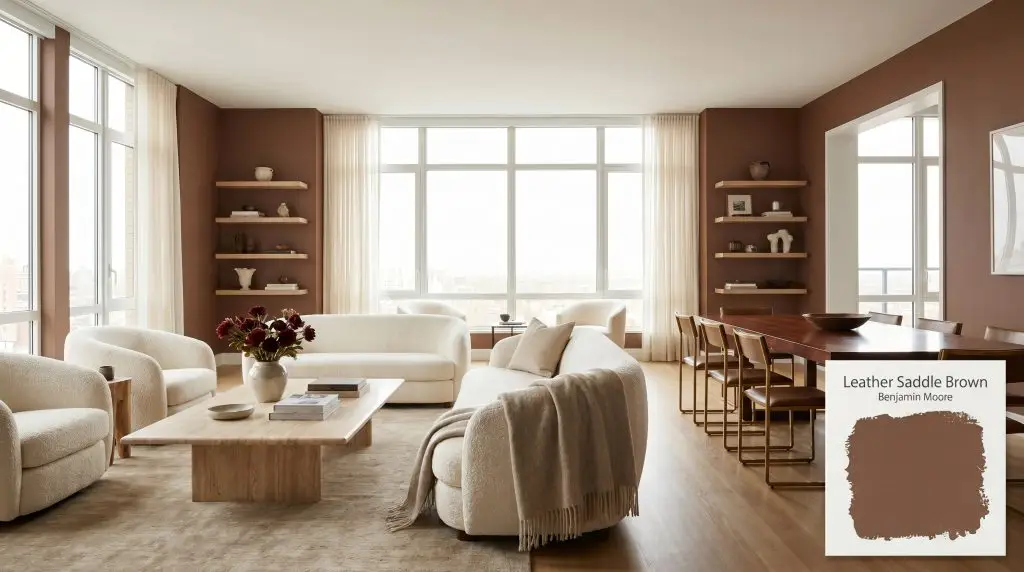
Benjamin Moore Leather Saddle Brown (2100-20) is a deep, warm chocolate brown with distinct oxblood and muted red-orange undertones. With a low LRV of 10.06, it reads as a rich, moody neutral that brings cozy, enveloping warmth to cabinetry, accent walls, and dining rooms.
Will Leather Saddle Brown clash with your room?
Paint Technical Profile
| Color ID / SKU | 2100-20 |
| HEX Code | #754E3F |
| Light Reflectance (LRV) | 10.06 |
| Temperature | Warm |
| Primary Undertone | Oxblood / Red |
| Hidden Undertones | Muted Orange, Earthy Clay |
| Use | Interior |
| Best Exposures | North-facing, East-facing |
| Best For | Accent walls, custom cabinetry, cozy living rooms, dining rooms, home offices |
Leather Saddle Brown Digital Design Concept Boards
Cozy Living Rooms
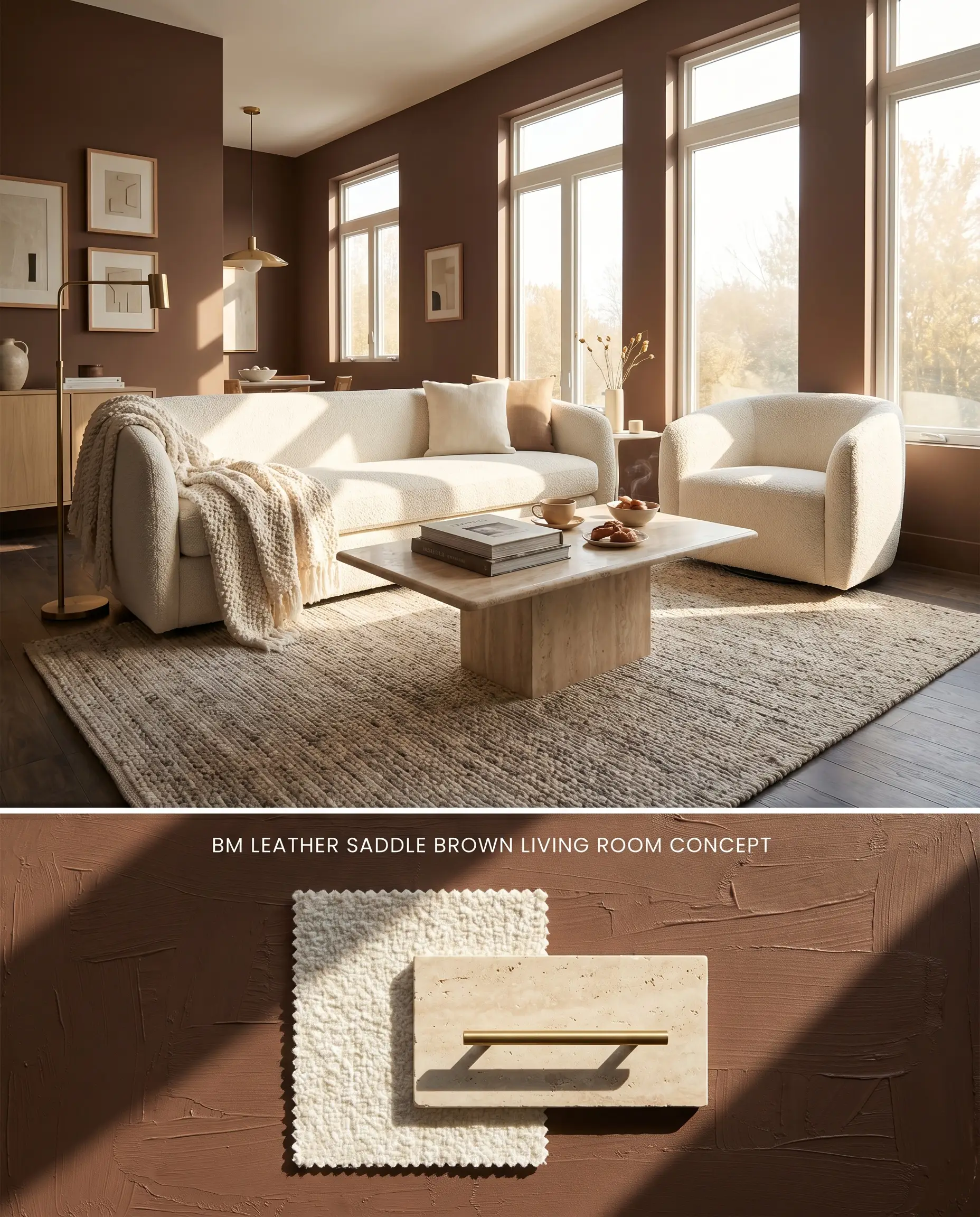
Grounding a sun-drenched living space with this earthy neutral requires structural balance to prevent the deep red undertones from dominating the room. By pairing the rich walls with expansive glazing and light-absorbing boucle textiles, the color structure remains grounded and dimensional rather than visually flat.
Dining Rooms
Will Leather Saddle Brown work with your specific lighting, floor, or furniture?
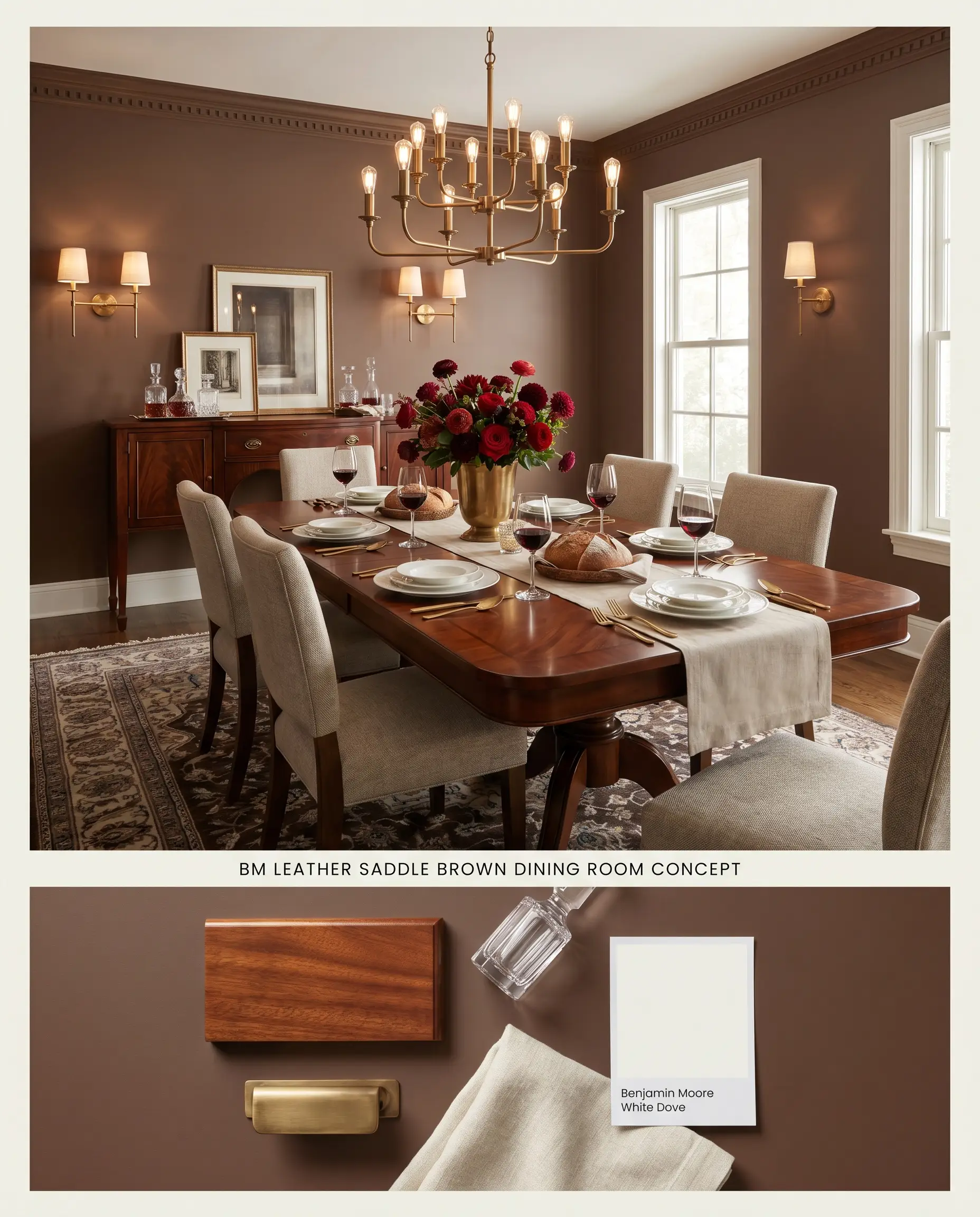
A formal dining room acts as the optimal vessel for this chocolate brown, leveraging warm artificial lighting to activate its leathery depth. The distinct oxblood undertones create a highly tailored envelope when paired with high-contrast, reflective architectural elements.
Home Offices
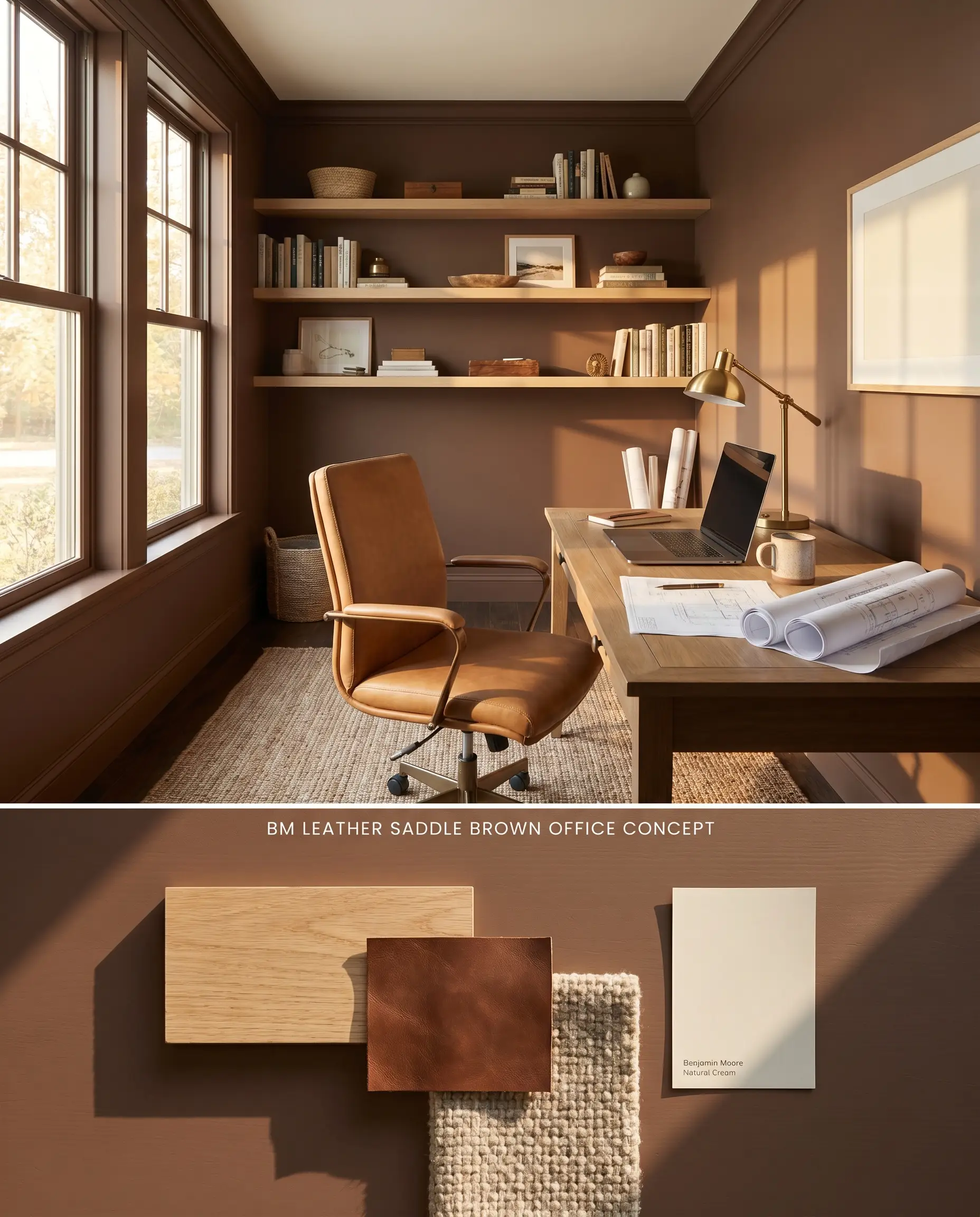
Wrapping a well-lit study in this warm architectural finish establishes immediate gravity and visual focus. The deep brown anchors floating white oak shelving while allowing the subtle orange nuances to emerge across the walls during the golden hour.
Accent Walls
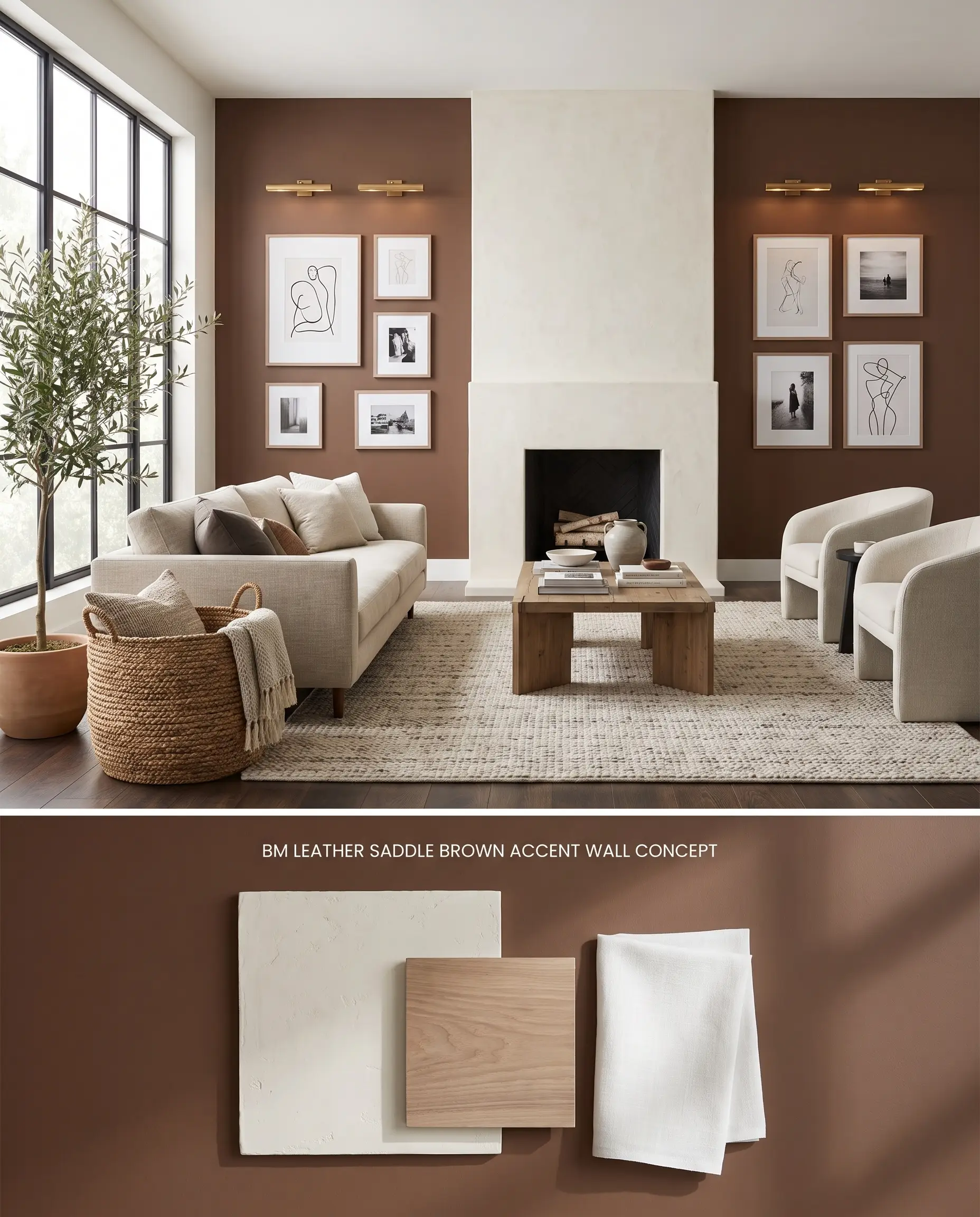
Limiting Benjamin Moore Leather Saddle Brown 2100-20 to a single focal plane mitigates the high labor costs associated with its mandatory tinted primer while injecting Color Trends 2025 energy into the architecture. It serves as a high-contrast backdrop behind a light-colored plaster fireplace or a gallery wall of monochromatic art.
Custom Cabinetry
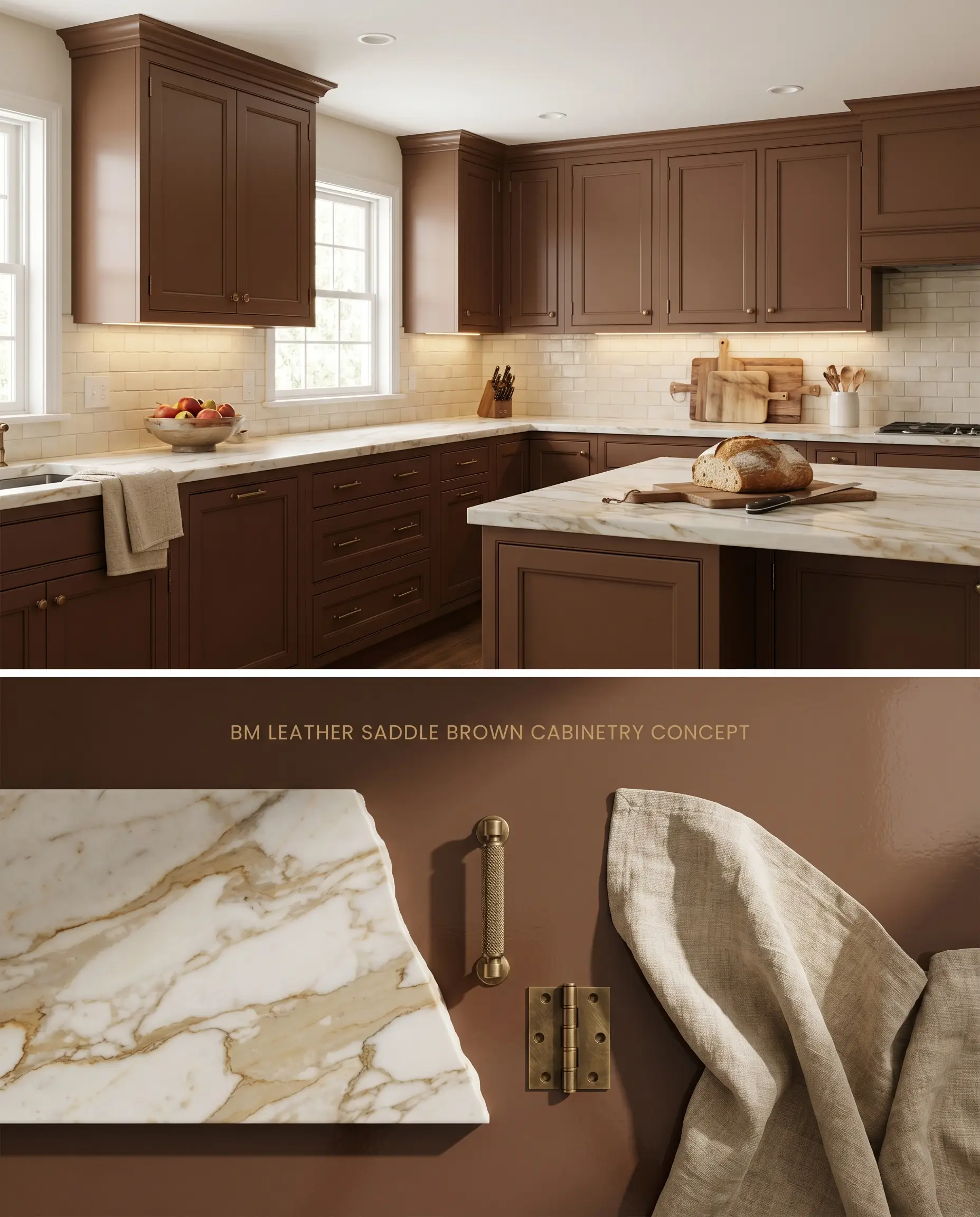
Coating built-in millwork translates the aesthetic of aged leather into a hard, tactile architectural surface. The sheen of the enamel reflects ambient light, preventing the dark pigment from absorbing all illumination in the room’s geometry.
Head-to-Head: Leather Saddle Brown 2100-20 Color Competitors
Benjamin Moore Leather Saddle Brown 2100-20 vs. Sherwin-Williams Turkish Coffee SW 6076
Will Leather Saddle Brown work with your specific lighting, floor, or furniture?
Sherwin-Williams Turkish Coffee SW 6076 possesses an LRV of 5.61, making it a significantly darker, cooler espresso brown that lacks a prominent red shift. Leather Saddle Brown sits higher on the LRV scale at 10.06 and actively pushes oxblood undertones under warm light. Specify Turkish Coffee for a stark, near-black grounding effect in modern spaces, and reserve Leather Saddle Brown for traditional rooms requiring radiating warmth.
Benjamin Moore Leather Saddle Brown 2100-20 vs. Sherwin-Williams Sable SW 6083
Sherwin-Williams Sable SW 6083 leans sharply into a muted, muddy taupe-brown compared to the saturated depth of the Benjamin Moore option. Sable operates as a safer neutral for spaces with inconsistent lighting due to its higher LRV of 14 and restrained undertones. Deploy Leather Saddle Brown 2100-20 when you intentionally want the red-brown base to act as a primary color statement in a sun-drenched room.
Benjamin Moore Leather Saddle Brown 2100-20 vs. Benjamin Moore Antler Brown 2095-20
Will Leather Saddle Brown work with your specific lighting, floor, or furniture?
Benjamin Moore Antler Brown 2095-20 carries distinct yellowish-bronze undertones, contrasting sharply with the red-orange base of Leather Saddle Brown. In North-facing light, Antler Brown maintains a woody, neutral posture, whereas Leather Saddle Brown will amplify its oxblood characteristics. Choose Antler Brown alongside golden oak floors, but select Leather Saddle Brown 2100-20 to complement cherry or mahogany woodwork.
Technical Color FAQs
Yes, the cool, indirect light of a North-facing room strips away the inherent warmth of the brown base, causing the deep red and subtle orange undertones to dominate. If your architectural goal is a true chocolate brown, you must actively avoid this exposure.
Dark, heavily pigmented browns with a low LRV absorb massive amounts of UV radiation and heat. This leads to accelerated fading, chalking, and severe thermal stress on standard exterior siding materials.
In spaces lacking adequate natural or layered artificial light, this color acts as a low-light trap, reading as flat, muddy, and visually restrictive. It requires abundant, directional illumination to activate its true leathery depth.
Room Compatibility & Clashes Diagnoses
Hackrea's reports evaluating the compatibility of Leather Saddle Brown in real rooms.No compatibility tests for Leather Saddle Brown yet.
Be the first to see how this color reacts to your space. Run a free architectural diagnostic now.
Paint Aesthetic & Practical Analysis
| Profile | Analysis | |
|---|---|---|
| Aesthetic | Leather Saddle Brown is a sophisticated, moody showstopper. While it demands careful lighting to prevent its red undertones from dominating, it rewards bold design choices with an incredibly rich, leathery depth that standard chocolate browns simply can't match. | |
| The Coverage Catch | Deep, rich hues like Leather Saddle Brown often require a tinted primer to ensure the red-brown base lays down evenly without streaking. | |
| The Lighting Shift | Designers and color experts note that this shade 'winks at the Oxblood world.' In certain lighting, its deep red and subtle orange undertones will heavily dominate the brown base. | |
| The Low Light Trap | Because of its low LRV of 10.06, users note that it can feel overly dark or muddy in spaces without adequate natural or layered artificial lighting. |