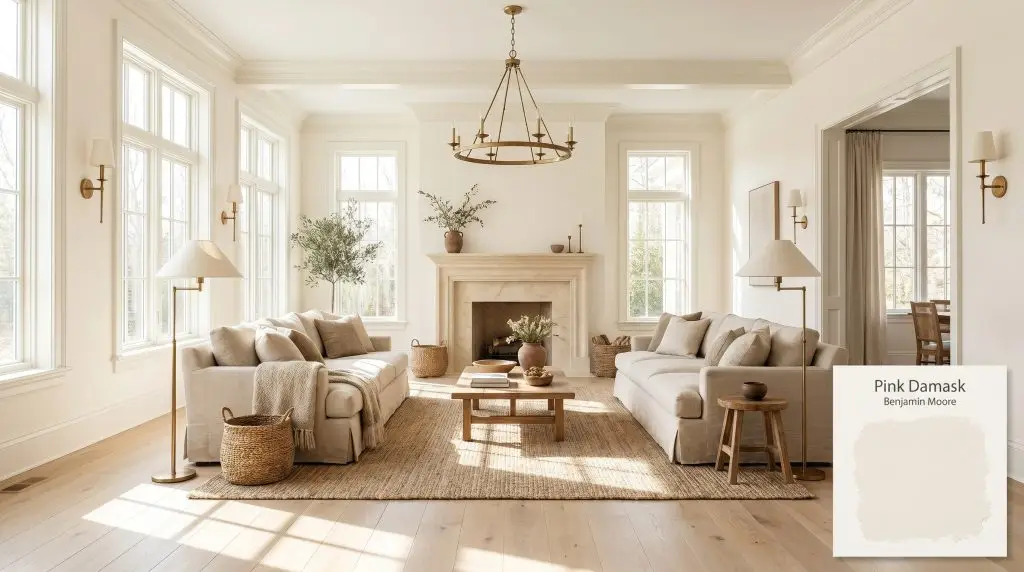
Benjamin Moore Pink Damask (OC-72) is a highly sophisticated, warm off-white with a delicate blush pink undertone. Rather than reading as a traditional pastel, it acts as a luminous neutral that infuses spaces with a gentle, elegant warmth, perfect for bedrooms and living areas.
Will Pink Damask clash with your room?
Paint Technical Profile
| Color ID / SKU | OC-72 |
| HEX Code | #F6F0E7 |
| Light Reflectance (LRV) | 85.46 |
| Temperature | Warm |
| Primary Undertone | Soft Pink / Blush |
| Hidden Undertones | Subtle Peach, Orange, And A Hint Of Beige |
| Use | Interior, Exterior |
| Best Exposures | North-facing or East-facing |
| Best For | Master Bedrooms, Nurseries, Living Rooms, Bathrooms, Kitchen Cabinets |
Pink Damask Digital Design Concept Boards
Master Bedrooms
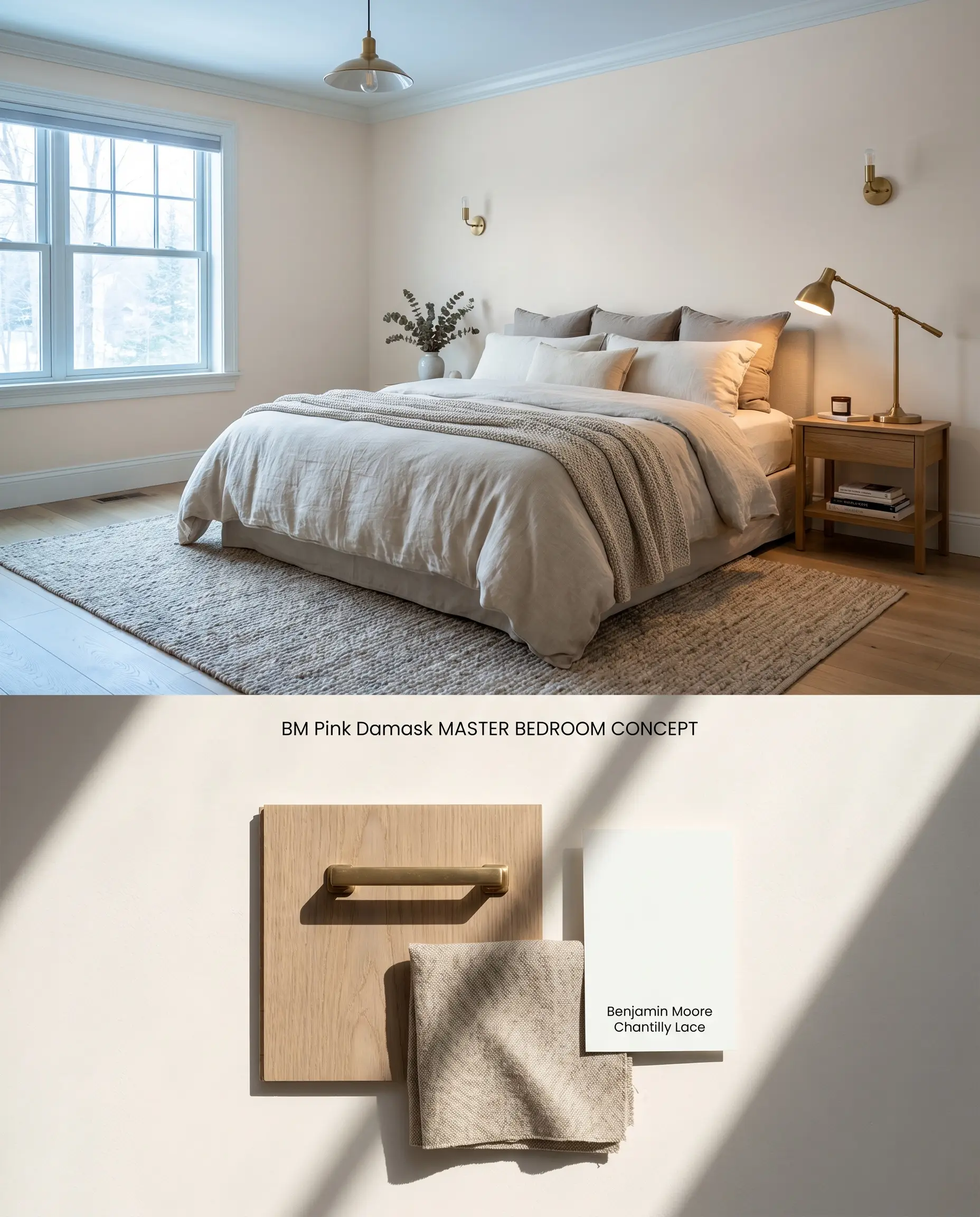
In spaces requiring a soft, sophisticated neutral, this shade provides a gentle thermal shift without overwhelming the architecture. The blush undertones remain grounded when paired with warm, natural textiles, avoiding the juvenile sweetness of traditional pastels.
Nurseries
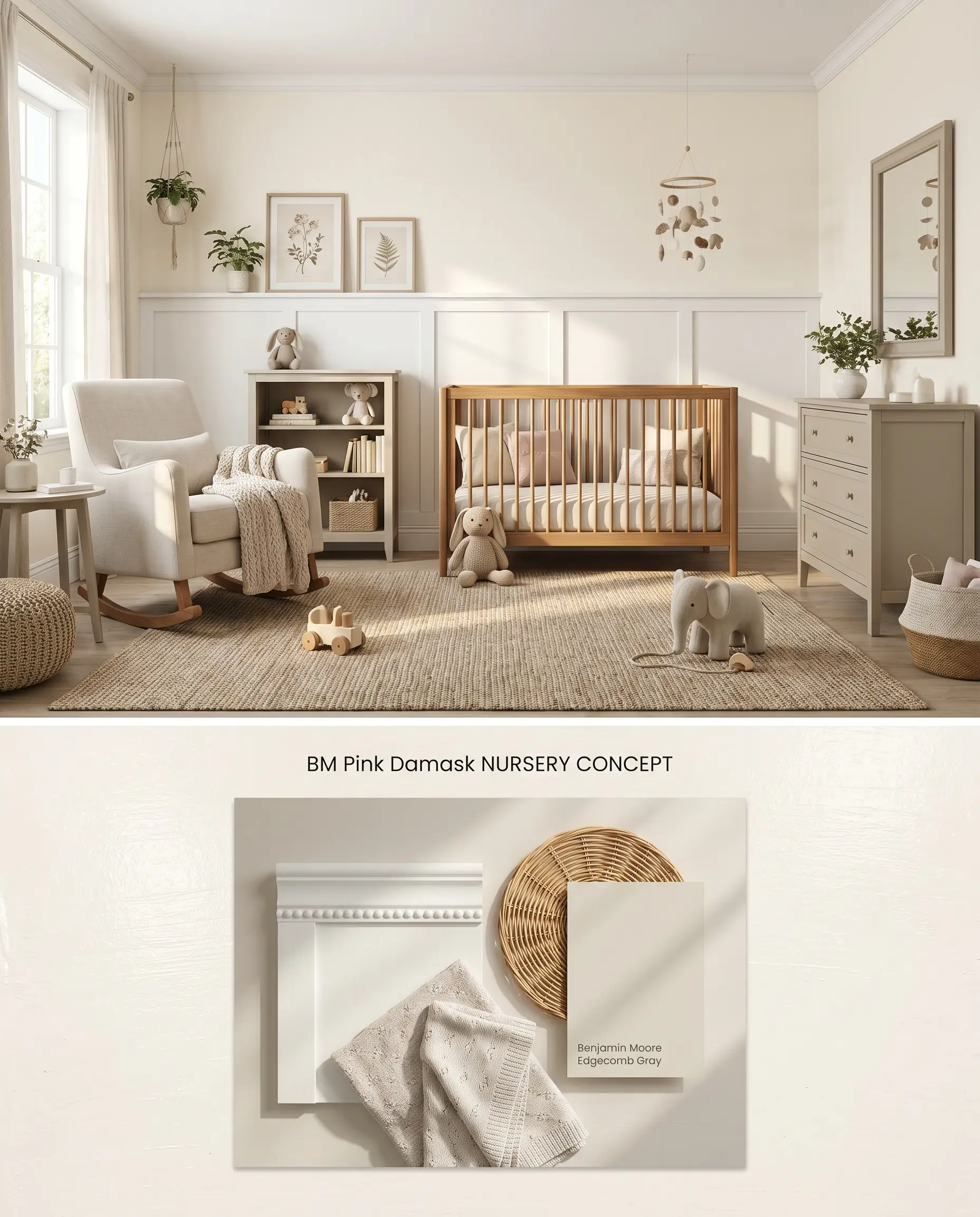
Functioning as a refined millennial pink alternative, this color adapts to evolving room designs long past the infant years. Its high light reflectance value of 85.46 ensures the room retains a spacious, airy volume even with minimal square footage.
Living Rooms
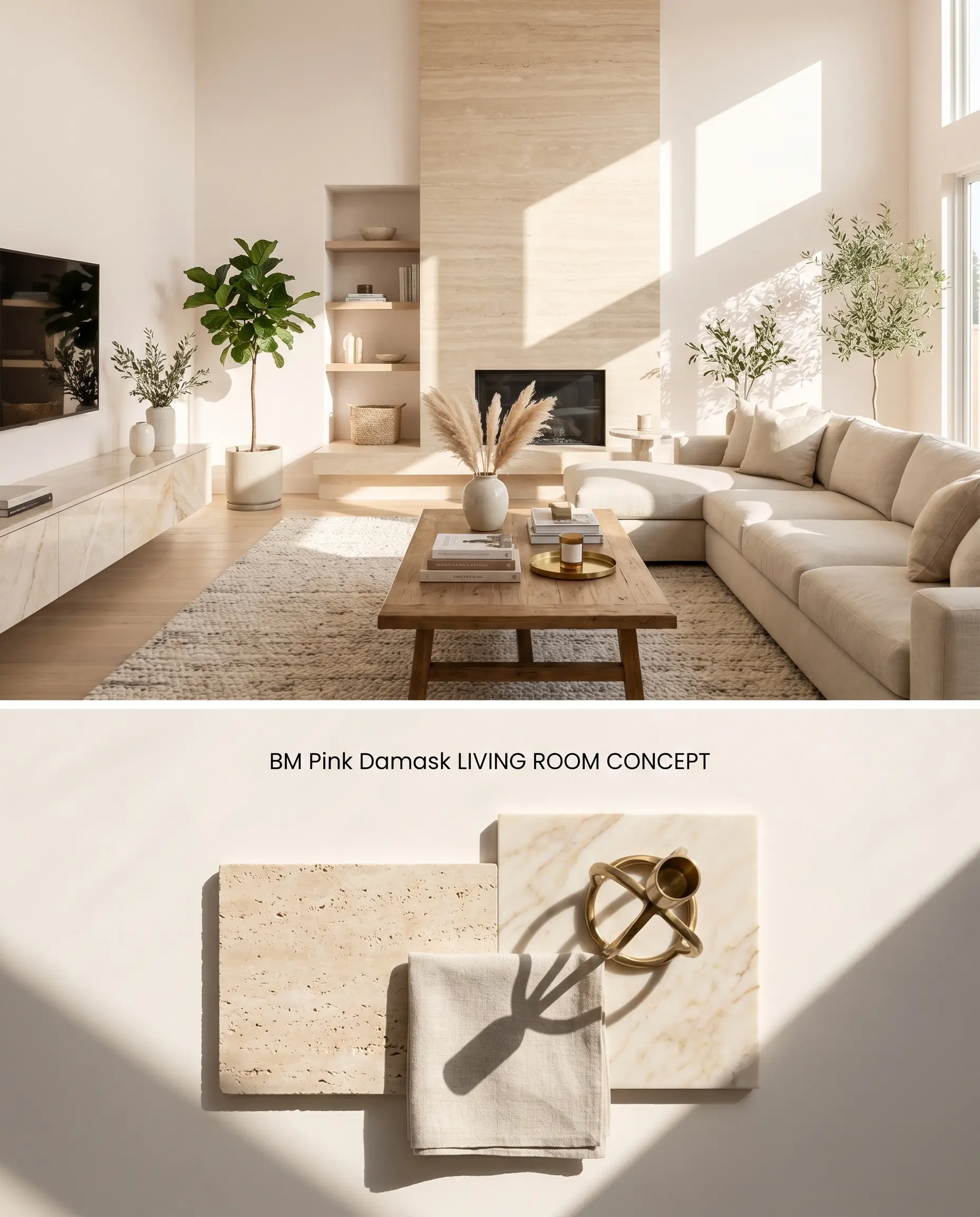
Expanding this chromatic profile across large, open-concept walls requires careful attention to natural light direction and interior design layout. The color temperature actively responds to solar heat, warming up significantly as the sun arcs across the sky.
Bathrooms
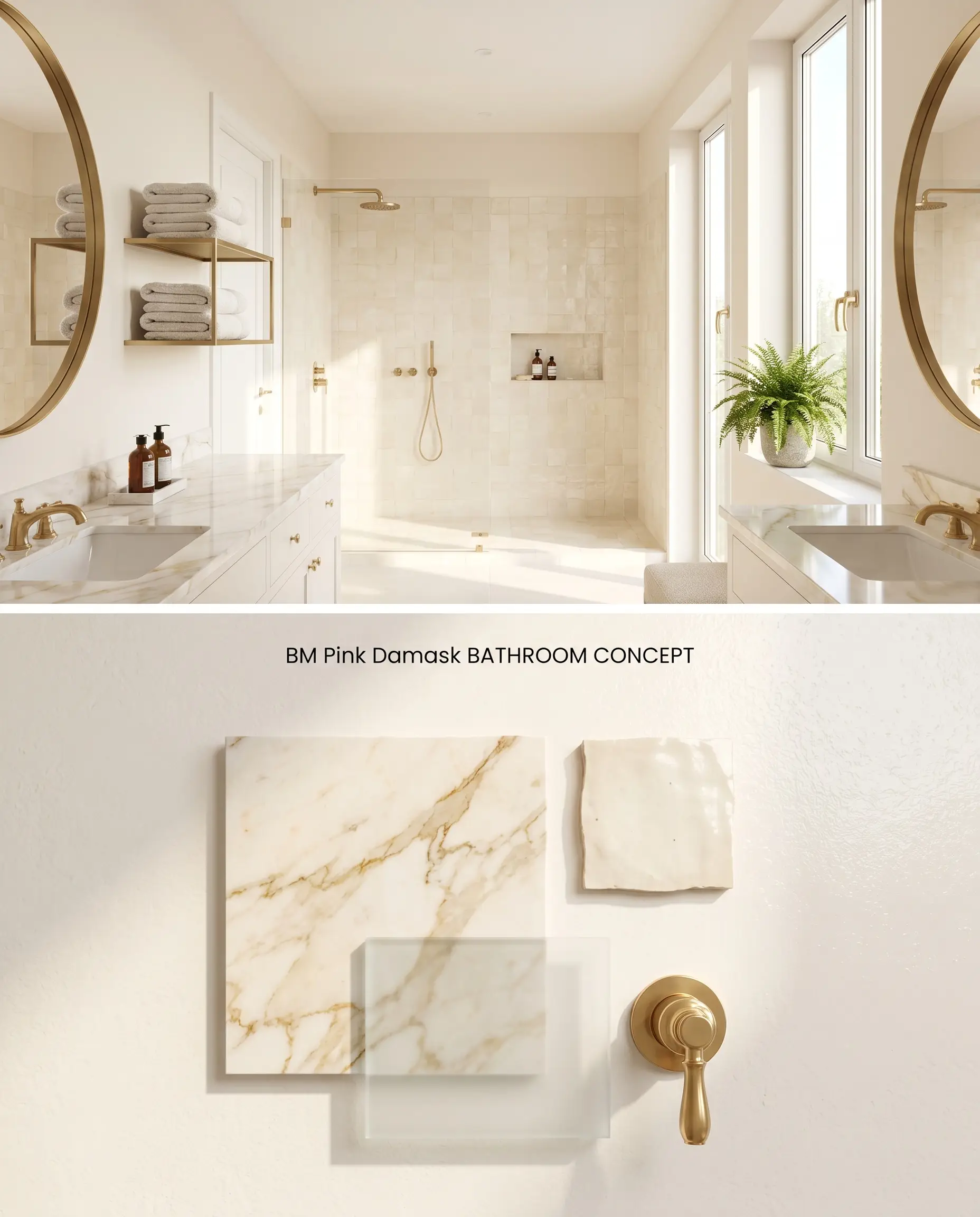
This shade transforms sterile, cold washrooms into flattering, warm environments, provided there is ample exterior glazing. It must strictly be kept out of windowless layouts where the lack of natural photons flattens the pigment into a muddy beige.
Kitchen Cabinets
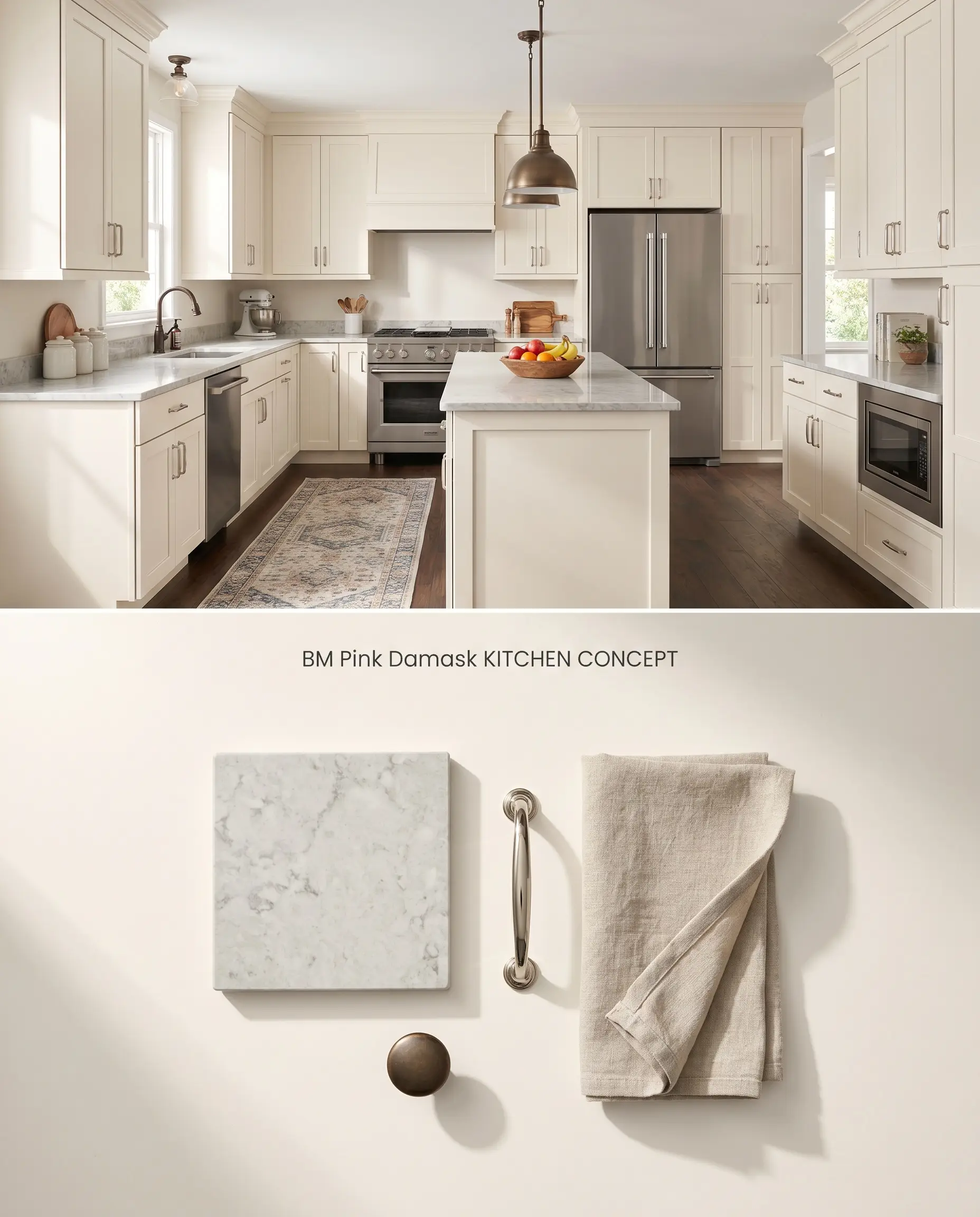
Applying this delicate tone to cabinetry injects immediate warmth into utilitarian spaces, softening the hard lines of stone counters and stainless appliances. A high-quality tinted primer is mandatory when covering dark or highly saturated existing wood to prevent the underlying tone from bleeding through and muddying the finish.
Color Theory: Pink Damask OC-72 vs. Industry Alternatives
Benjamin Moore Pink Damask OC-72 vs. Benjamin Moore Pink Bliss 2093-70
Benjamin Moore Pink Bliss 2093-70 possesses a lower LRV and a cooler, more undeniable pink base, lacking the neutralizing beige elements found in Pink Damask. When applied in North-facing light, Pink Bliss retains its pastel identity, whereas Pink Damask shifts toward a warm off-white. Specify Pink Bliss for intentional, saturated color statements, and reserve Pink Damask for subtle architectural warmth.
Benjamin Moore Pink Damask OC-72 vs. Sherwin Williams Intimate White SW 6322
Sherwin Williams Intimate White SW 6322 carries a slightly deeper saturation level with more pronounced peach undertones. In South-facing rooms, Intimate White SW 6322 will aggressively project orange hues, while Pink Damask maintains a higher light reflectance value, keeping the space brighter. Utilize Intimate White SW 6322 to close in and cozy up large, expansive rooms, and deploy Pink Damask to maximize volume in tight quarters.
Benjamin Moore Pink Damask OC-72 vs. Farrow & Ball Setting Plaster No. 231
Farrow & Ball Setting Plaster No. 231 is a profoundly darker, earthier tone with a muddy, historic yellow-ochre base that mimics aged architectural finishes. Pink Damask is highly reflective and airy by comparison. Choose Setting Plaster No. 231 for low-light studies or moody dining rooms where deep shadows enhance its complexity, as Pink Damask will fall flat and dingy in those exact same dim conditions.
Technical FAQs: Benjamin Moore Pink Damask
Yes, intense afternoon light and Southern exposure will amplify its peach and orange undertones, shifting it from a warm off-white to a noticeably pink hue.
Yes, stark cool grays and yellow-heavy wood tones force the delicate pink cast to read as overly fleshy or dingy. Pair it instead with warm greiges, matte white oak, or creamy natural stone.
Without adequate natural light, the paint loses its subtle blush characteristics entirely and flattens into a muddy, uninspiring beige.
Room Compatibility & Clashes Diagnoses
Hackrea's reports evaluating the compatibility of Pink Damask in real rooms.No compatibility tests for Pink Damask yet.
Be the first to see how this color reacts to your space. Run a free architectural diagnostic now.
Real Experiences 1
Insights from people who have used Pink Damask.Paint Aesthetic & Practical Analysis
| Profile | Analysis | |
|---|---|---|
| Aesthetic | Pink Damask is an absolute triumph for those who want just a whisper of color. It avoids the sickly-sweet trap of traditional pinks, offering a grown-up, sophisticated blush that feels both modern and timeless. It is an exceptional architectural finish for creating serene, elevated spaces. | |
| The Coverage Catch | As a very light off-white, it generally covers well over light colors, but may require a high-quality tinted primer over dark or highly saturated walls to prevent the delicate blush tone from muddying. | |
| The Lighting Shift | In North-facing rooms, it reads as a warm, comforting off-white that counters cool light. However, in South-facing or intense afternoon light, the peach and orange undertones amplify, making it look noticeably more pink. | |
| The Clash Warning | This shade can clash with stark, cool grays and yellow-heavy wood tones, which can make the delicate pink cast look dingy or overly fleshy. | |
| The Bounce Effect | In small, brightly lit spaces, the pink tint can reflect onto itself and intensify slightly, though its high LRV keeps the room feeling airy. | |
| The Low Light Trap | In windowless spaces or dim corridors, it can lose its delicate blush quality and fall flat into a standard, slightly muddy beige. | |
| The Touch Up | It is highly stable with a high LRV, making touch-ups relatively easy in flat or matte finishes, though higher sheens may flash. |
Closest Cross-Brand Equivalents
The absolute closest scientific color matches for Pink Damask across top paint brands.