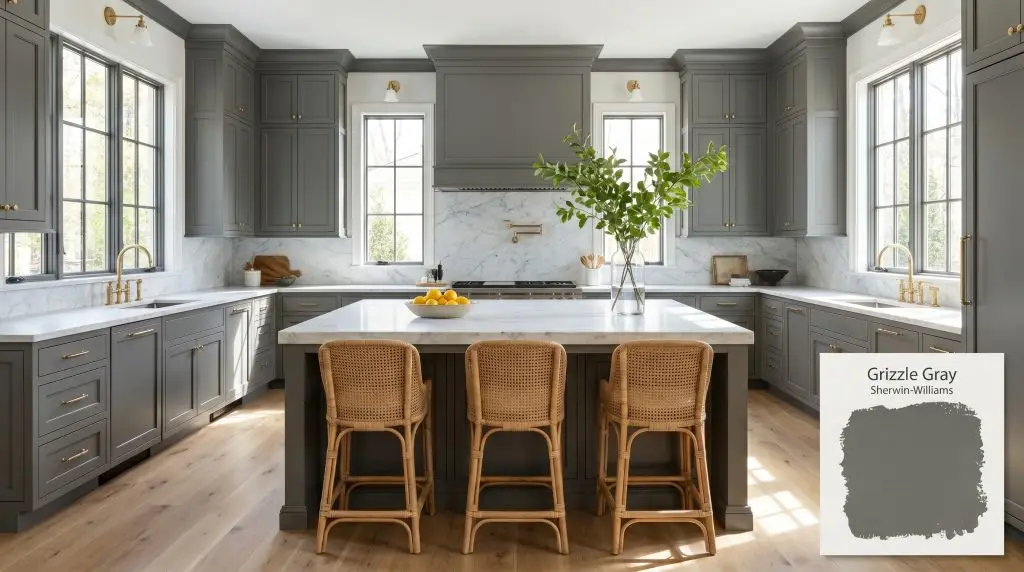
Sherwin-Williams Grizzle Gray (SW 7068) is a dark, brooding charcoal gray with distinct cool green and subtle blue undertones. With an LRV of 13, it provides dramatic depth and contrast, making it an excellent choice for moody accent walls, cabinetry, and striking modern exteriors.
Will Grizzle Gray clash with your room?
Paint Technical Profile
| Color ID / SKU | SW 7068 |
| HEX Code | #636562 |
| Light Reflectance (LRV) | 13 |
| Temperature | Cool |
| Primary Undertone | Green |
| Hidden Undertones | Blue |
| Use | Interior, Exterior |
| Best Exposures | South, West |
| Best For | Kitchen cabinets, exterior siding, accent walls, interior doors, wainscoting |
Grizzle Gray Digital Design Concept Boards
Kitchen Cabinets
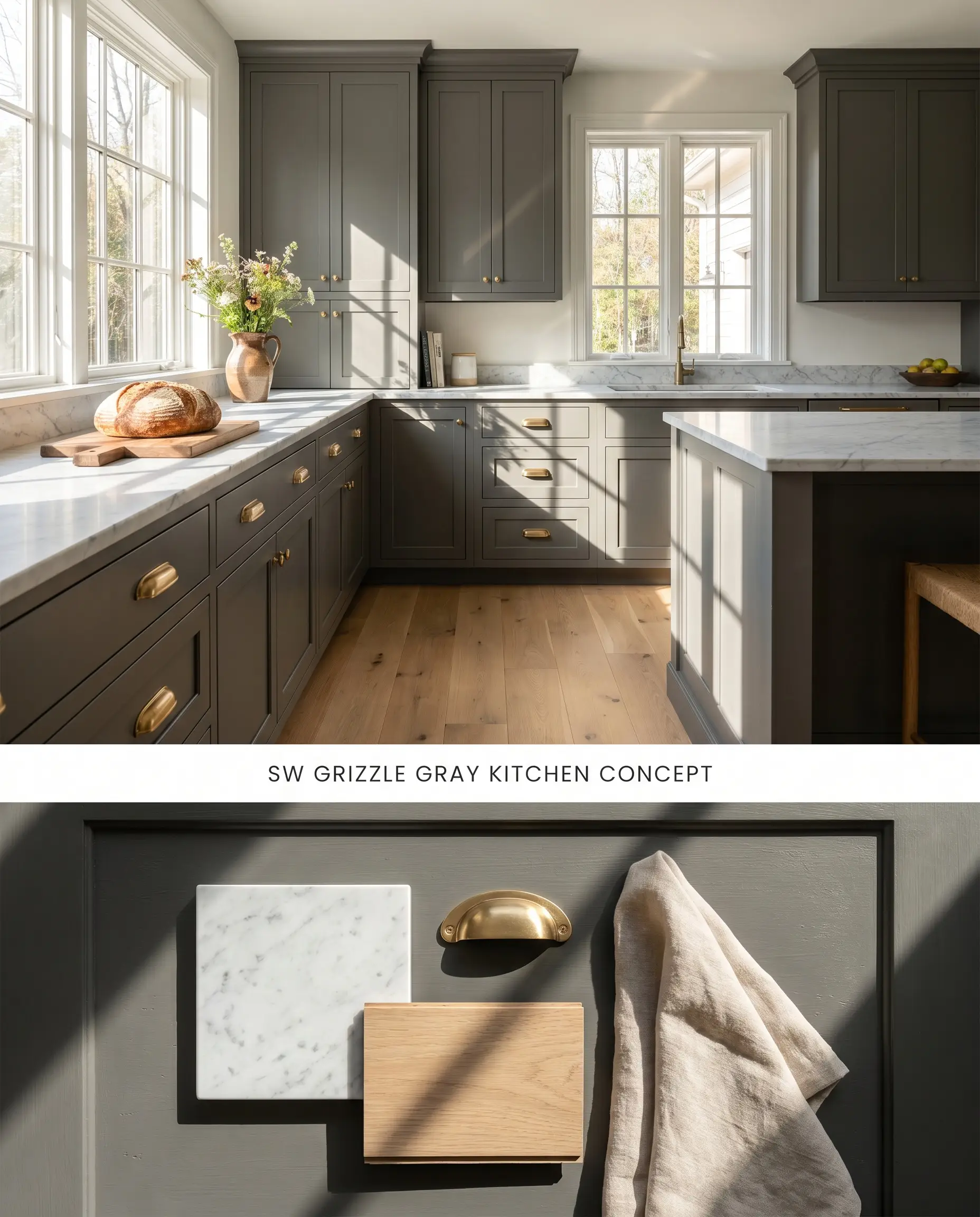
Grizzle Gray anchors a kitchen layout by pulling visual weight downward, grounding the space without resorting to a stark black. Its subtle green undertones harmonize with cool-toned natural stone counters, absorbing excess glare from bright task lighting. Avoiding cherry wood flooring is critical here, as the complementary red tones will aggressively force the cabinets to flash teal.
Exterior Siding
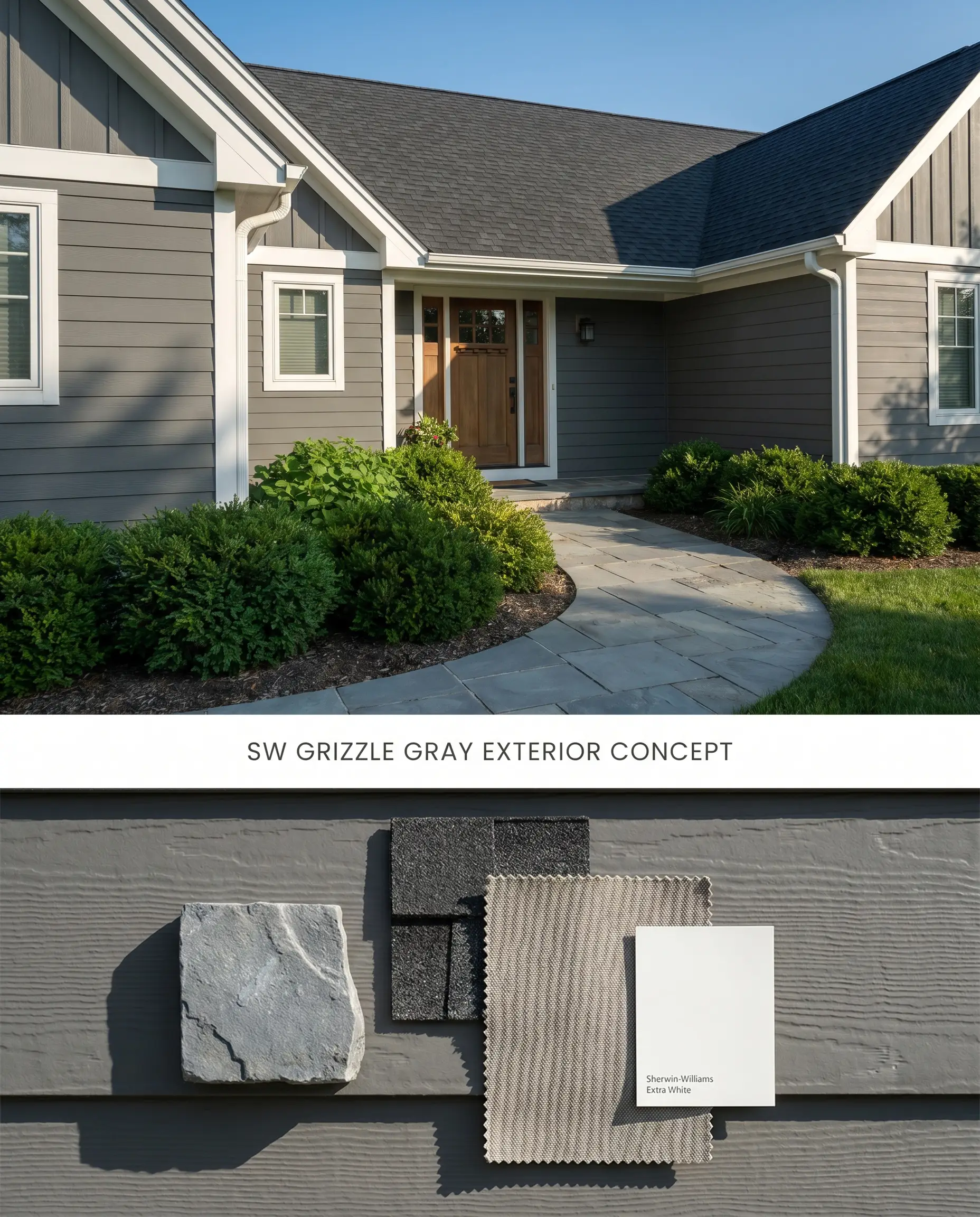
When pushed outside, intense sunlight strips away the immediate depth of this charcoal gray, rapidly amplifying its green undertones. This chromatic profile bridges the gap between the built environment and natural landscaping, provided the foundation or surrounding hardscape lacks yellow-toned concrete. To prevent patchiness across large facades, a tinted primer is non-negotiable before applying the topcoats.
Accent Walls
Will Grizzle Gray work with your specific lighting, floor, or furniture?
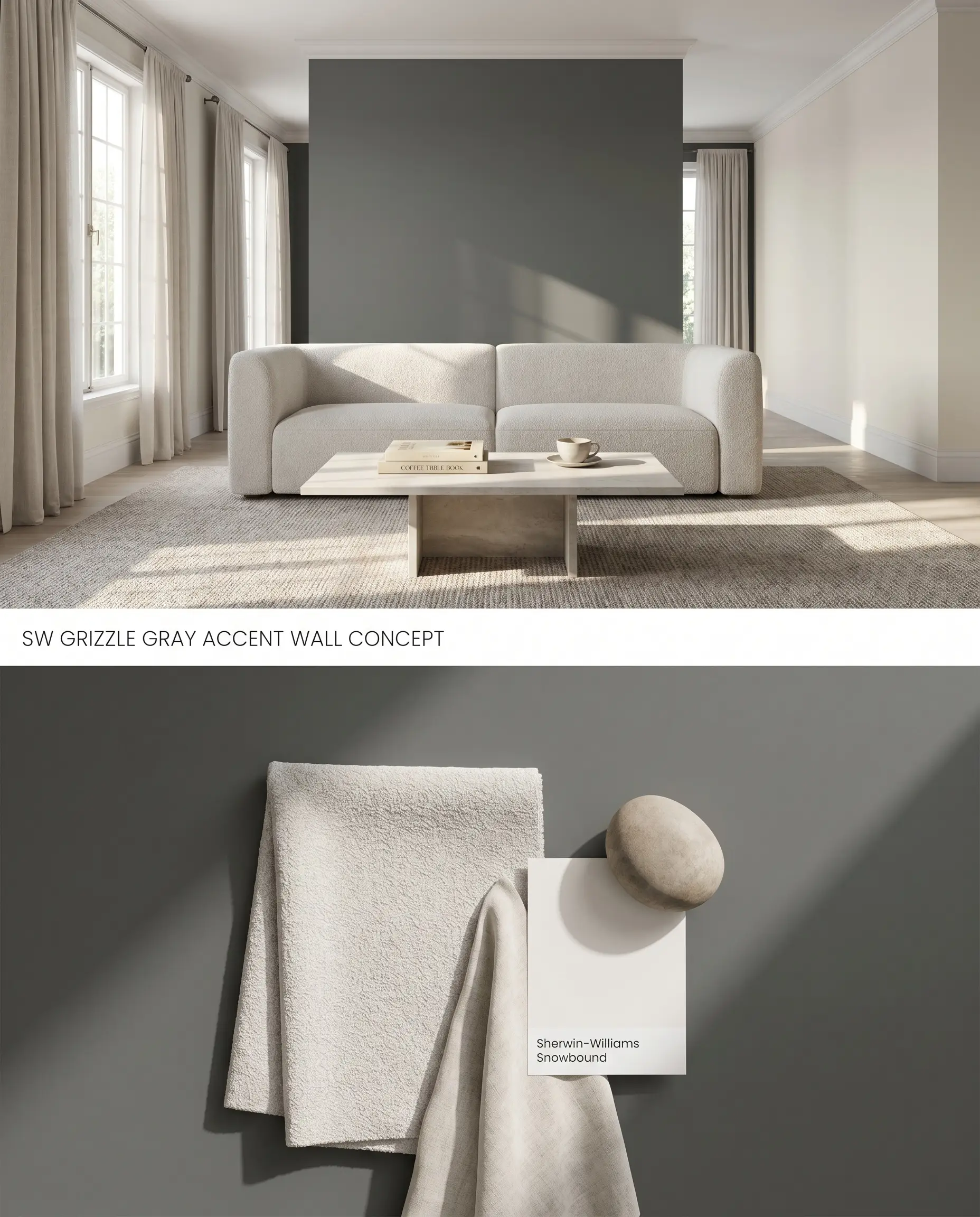
Confining this deeply saturated shade to a single focal wall prevents it from becoming a low-light trap in rooms with average fenestration. The dark architectural finish recedes visually, pushing the wall back to create an illusion of expanded depth. You must pair this application with ample natural light to keep the color structure intact and prevent it from reading as a flat, brooding void.
Interior Doors
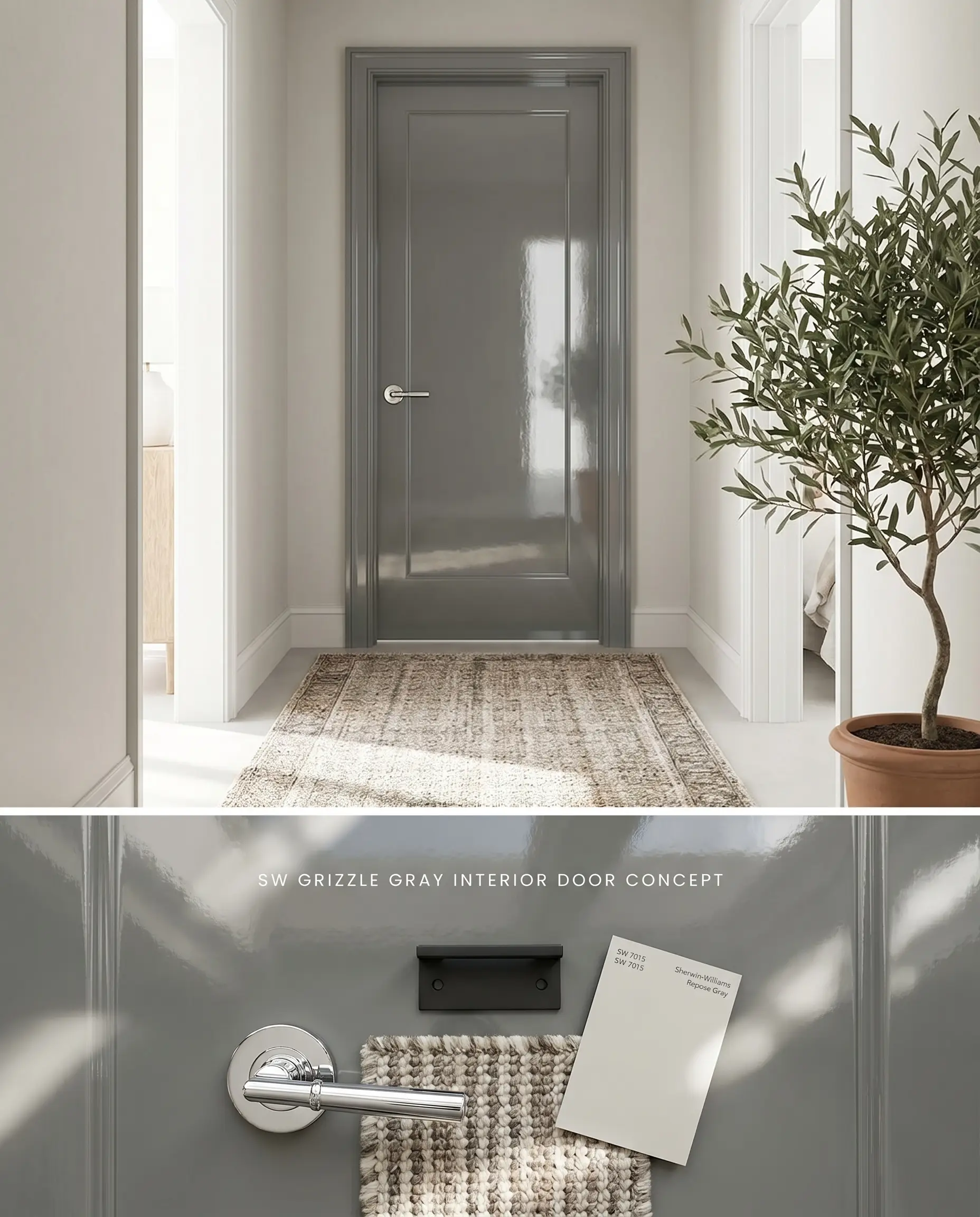
Upgrading interior doors with a moody aesthetic instantly elevates builder-grade hallways, provided the adjacent spaces are flooded with light. The deep gray acts as a grounding anchor against lighter walls while concealing daily fingerprints on high-touch surfaces. Because this shade is prone to burnishing, utilizing a high-performance, hardened enamel is critical for longevity.
Wainscoting
Will Grizzle Gray work with your specific lighting, floor, or furniture?
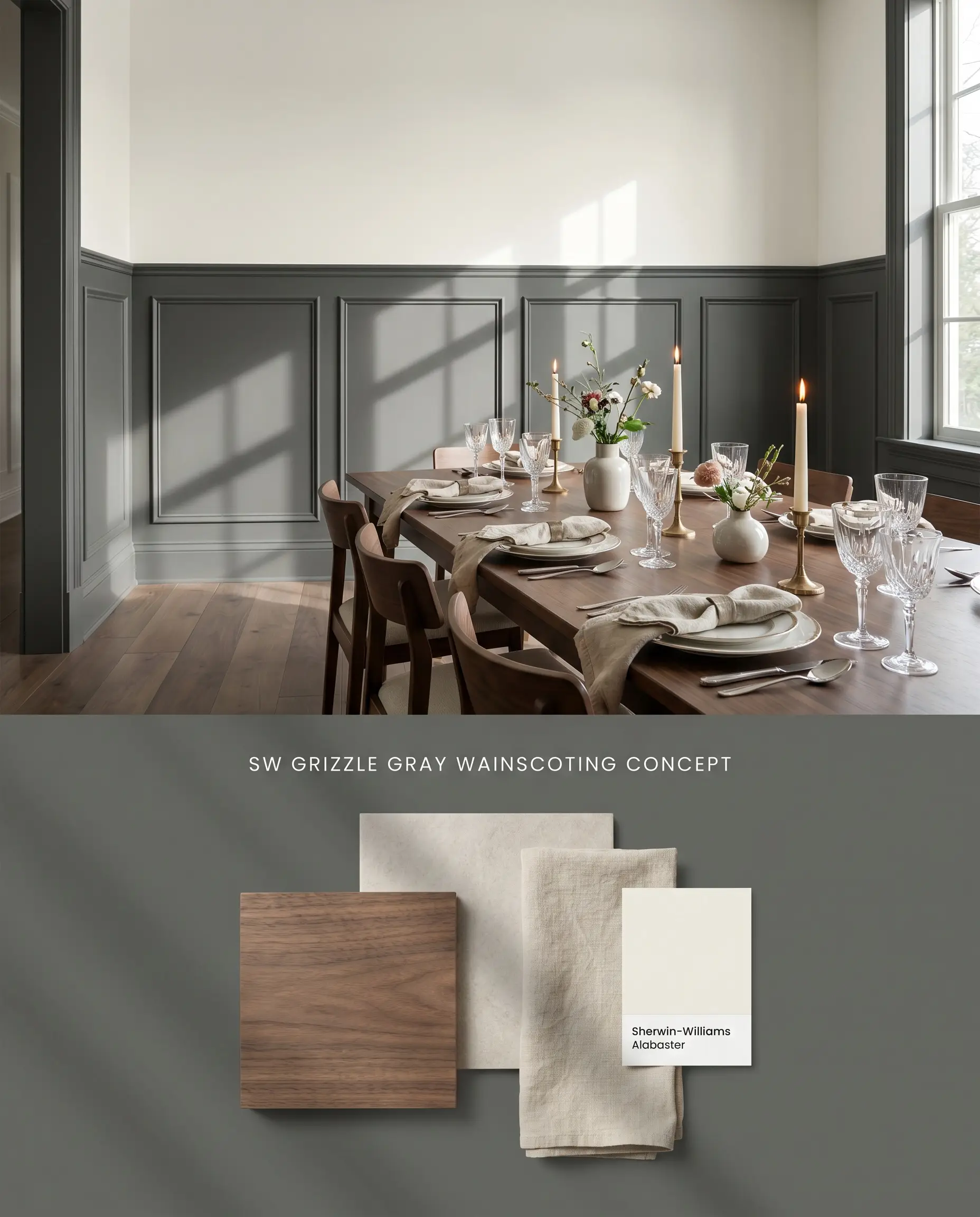
Applying this shade below the chair rail grounds the room’s architecture while allowing a lighter color above to bounce ambient light around the ceiling. The physical shadow lines created by the millwork paneling deepen the charcoal base, subtly shifting the undertones throughout the day. This split-wall application mitigates the risk of the dark paint overwhelming smaller, well-lit dining rooms or studies.
Comparative Color Theory: Charcoal Grays
Sherwin-Williams Grizzle Gray SW 7068 vs. Sherwin-Williams Peppercorn SW 7674
Peppercorn (LRV 10) is a true, neutral dark gray that lacks the specific blue-green cast found in Grizzle Gray (LRV 13). When placed in a cool, North-facing room, Peppercorn will maintain a stark, charcoal appearance, whereas Grizzle Gray will aggressively shift toward a dark teal-gray. Specify Peppercorn if you are working with cherry wood floors or red brick, as it will not clash or pull unwanted complementary green tones.
Sherwin-Williams Grizzle Gray SW 7068 vs. Benjamin Moore Amherst Gray HC-167
Amherst Gray (LRV 17.12) is noticeably lighter and leans strongly into a warm, brown-green undertone, making it feel more earthy and traditional. Grizzle Gray’s lower LRV and cooler blue-green structure give it a sharper, more contemporary edge. Choose Amherst Gray for exteriors surrounded by warm stone or yellow-toned concrete, reserving Grizzle Gray for crisp, cool-toned hardscapes like slate or bluestone.
Sherwin-Williams Grizzle Gray SW 7068 vs. Sherwin-Williams Cityscape SW 7067
Will Grizzle Gray work with your specific lighting, floor, or furniture?
Cityscape sits one shade lighter on the same color strip with an LRV of 22, offering a slightly more forgiving depth for spaces with moderate natural light. Both share the same green undertone DNA, but Cityscape reflects significantly more light, reducing the risk of creating a low-light trap in standard bedrooms. If your room lacks expansive Southern exposure but you still want this specific color structure, Cityscape is the safer architectural choice.
Technical FAQs
On exterior siding, intense natural sunlight washes out the deep charcoal base and strongly emphasizes the green undertones. While it has a blue-green cast, the green becomes the dominant flashing color in full daylight.
Yes, pairing this paint with stark red brick or cherry wood floors is a severe clash warning. The red tones act as a complementary contrast that aggressively pulls out and magnifies the green undertones in the gray, unbalancing the space.
In cool, North-facing light, the blue-green undertones become highly pronounced, often causing the paint to read as a dark teal-gray. If the room is severely lacking in natural light, the color will absorb what little ambient light exists, appearing flat and overly brooding.
Room Compatibility & Clashes Diagnoses
Hackrea's reports evaluating the compatibility of Grizzle Gray in real rooms.No compatibility tests for Grizzle Gray yet.
Be the first to see how this color reacts to your space. Run a free architectural diagnostic now.
Paint Aesthetic & Practical Analysis
| Profile | Analysis | |
|---|---|---|
| Aesthetic | Grizzle Gray is a sophisticated chameleon. While it masquerades as a standard charcoal, its cool green-blue cast brings a rugged, earthy depth that prevents it from feeling stark. It's a phenomenal choice for exteriors and cabinetry, provided you carefully manage its surrounding warm tones. | |
| The Coverage Catch | Due to its deep charcoal base, expect to apply at least two solid coats. Using a tinted gray primer is highly recommended to achieve true color depth and prevent patchiness. | |
| The Lighting Shift | In cool, North-facing light, the blue-green undertones become highly pronounced, sometimes making the paint read as a dark teal-gray. On exteriors, intense sunlight washes out the depth, emphasizing the green. | |
| The Clash Warning | Avoid pairing Grizzle Gray with stark red brick or cherry wood floors. The complementary contrast will aggressively pull out the green undertones. Yellow-toned concrete floors can also cause the paint to flash blue. | |
| The Low Light Trap | In windowless rooms or hallways, this shade absorbs light heavily and can lose its nuanced green cast, appearing flat and overly brooding. | |
| The Touch Up | As a dark color with an LRV of 13, it is prone to burnishing and touch-ups may flash if the sheen isn't perfectly blended. |
Closest Cross-Brand Equivalents
The absolute closest scientific color matches for Grizzle Gray across top paint brands.