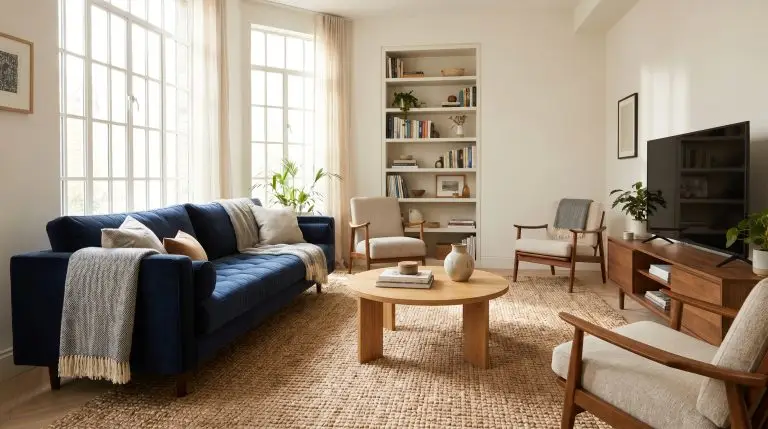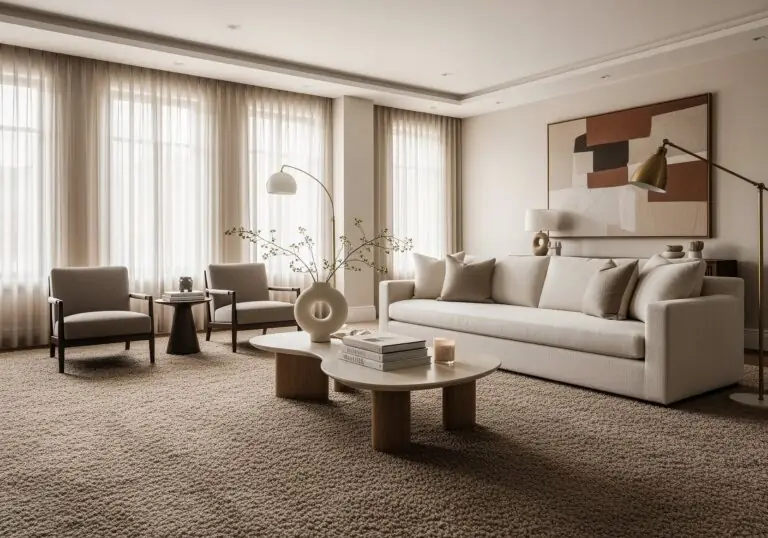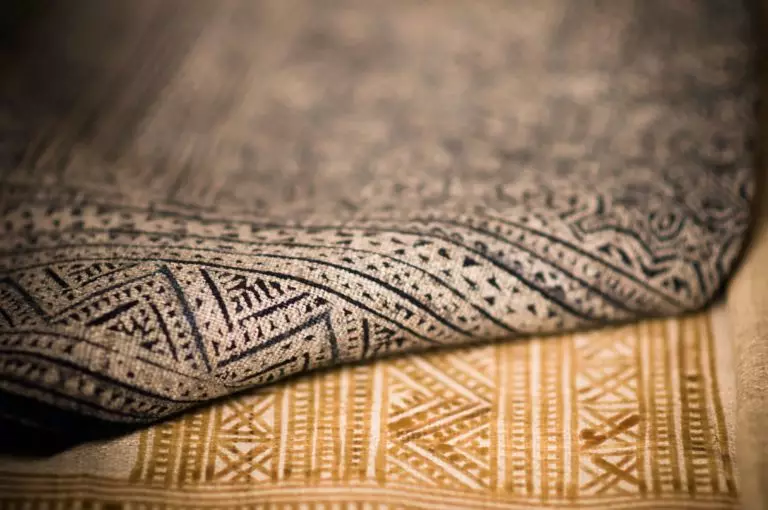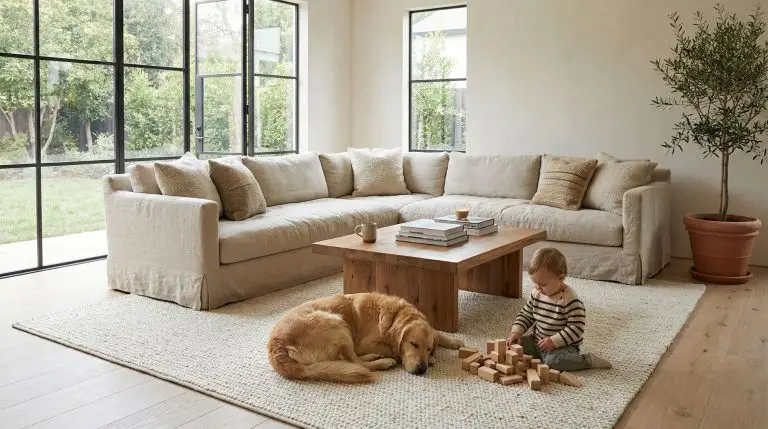
Let me guess: you’ve been scrolling through Pinterest, saving images of stunning, sun-drenched, modern organic living rooms. You see those expansive, creamy, cloud-like rugs anchoring the space. Then, you look at your own living room—currently occupied by a toddler with a juice box and a golden retriever who just discovered a mud puddle—and you sigh. You assume a light, cozy rug is a luxury reserved for catalog homes and empty nesters.
As a designer (and a parent who has scrubbed their fair share of mystery stains), I understand the fear. Buying a light rug feels like making a very expensive mistake. The most common problem readers submit to our platform is the desire for a bright, neutral aesthetic fundamentally clashing with the chaotic reality of their daily lives.
If you’re desperately searching for a light, cozy rug that won’t be immediately destroyed by heavy foot traffic, dirty paws, or spilled drinks, you’re in the right place. The secret isn’t avoiding neutrals; it’s choosing high-density, low-pile performance materials like PET yarn or treated wool that repel stains while maintaining a plush, sink-in feel.
But here is the truth: you don’t have to sacrifice a soft, inviting aesthetic just because you have a busy home. The interior design industry has evolved. We are no longer limited to scratchy, dark-patterned carpets to hide the dirt. Today’s market is flooded with virtually indestructible performance rugs that look and feel like high-end luxury pieces. This guide is your blueprint for finding a light, cozy rug that can survive your family’s beautiful mess.
Why “Cozy” and “High-Traffic” Don’t Have to Be Opposites
For decades, the design rule of thumb was simple: if an area sees heavy foot traffic, you put down a dark, flat, densely patterned rug. The assumption was that “cozy” automatically meant a high-pile shag, and high-pile shag gets instantly flattened and matted in a busy hallway.
A collaborating interior designer recently told us that the biggest misconception clients have is confusing pile height with softness. They think they need a two-inch shag to get that plush feeling underfoot. In reality, modern performance yarns have completely rewritten the rules.
We are seeing a massive shift toward advanced synthetics and treated natural fibers. Materials like PET (Polyethylene Terephthalate) yarn—which is spun from recycled plastic bottles—can be woven to feel as soft as cotton but possess the durability of outdoor patio furniture. Similarly, modern wool blends are treated to be remarkably resilient.
The secret to a rug surviving high traffic isn’t the length of the fibers; it’s the pile height vs. density equation.
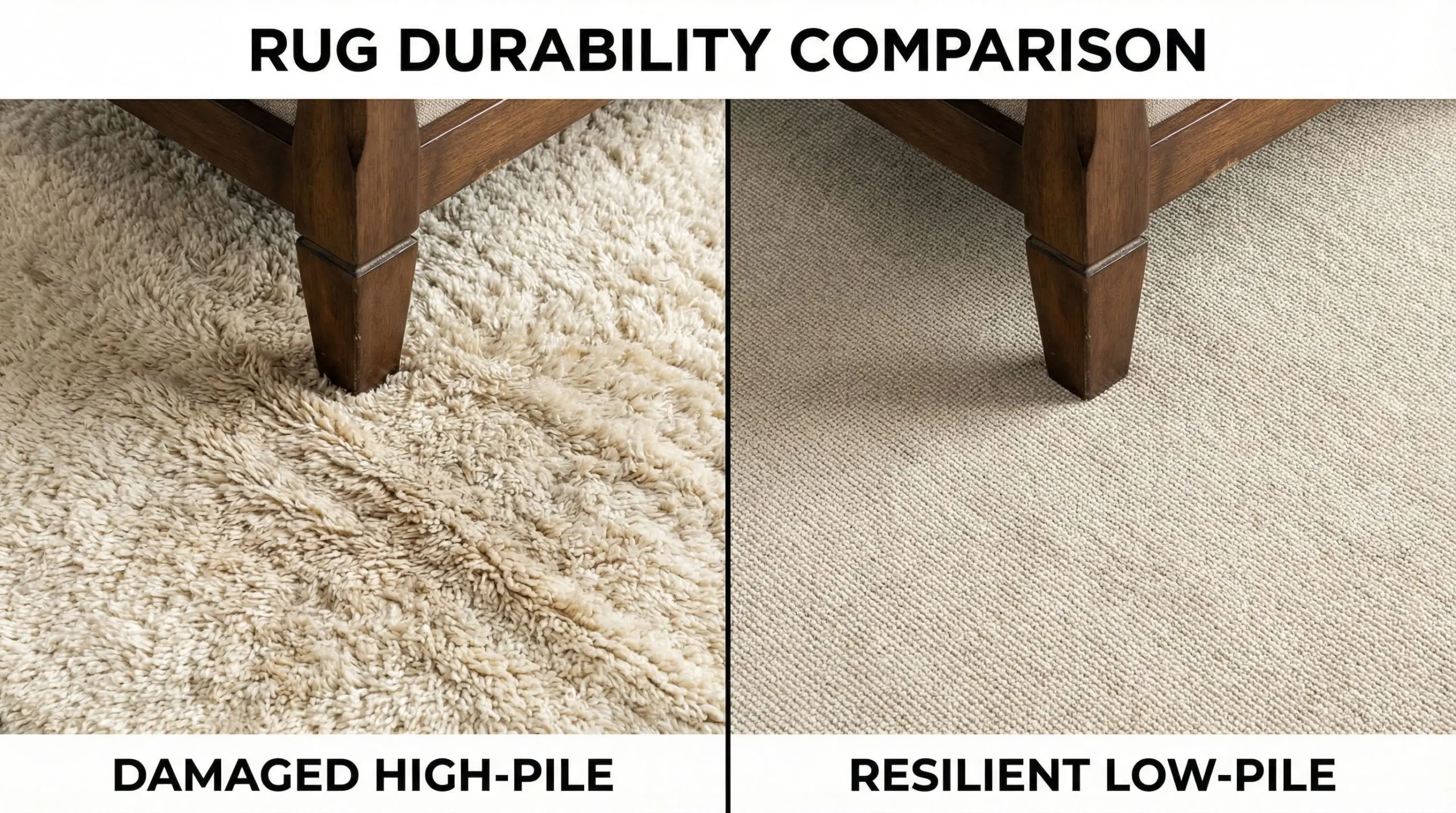
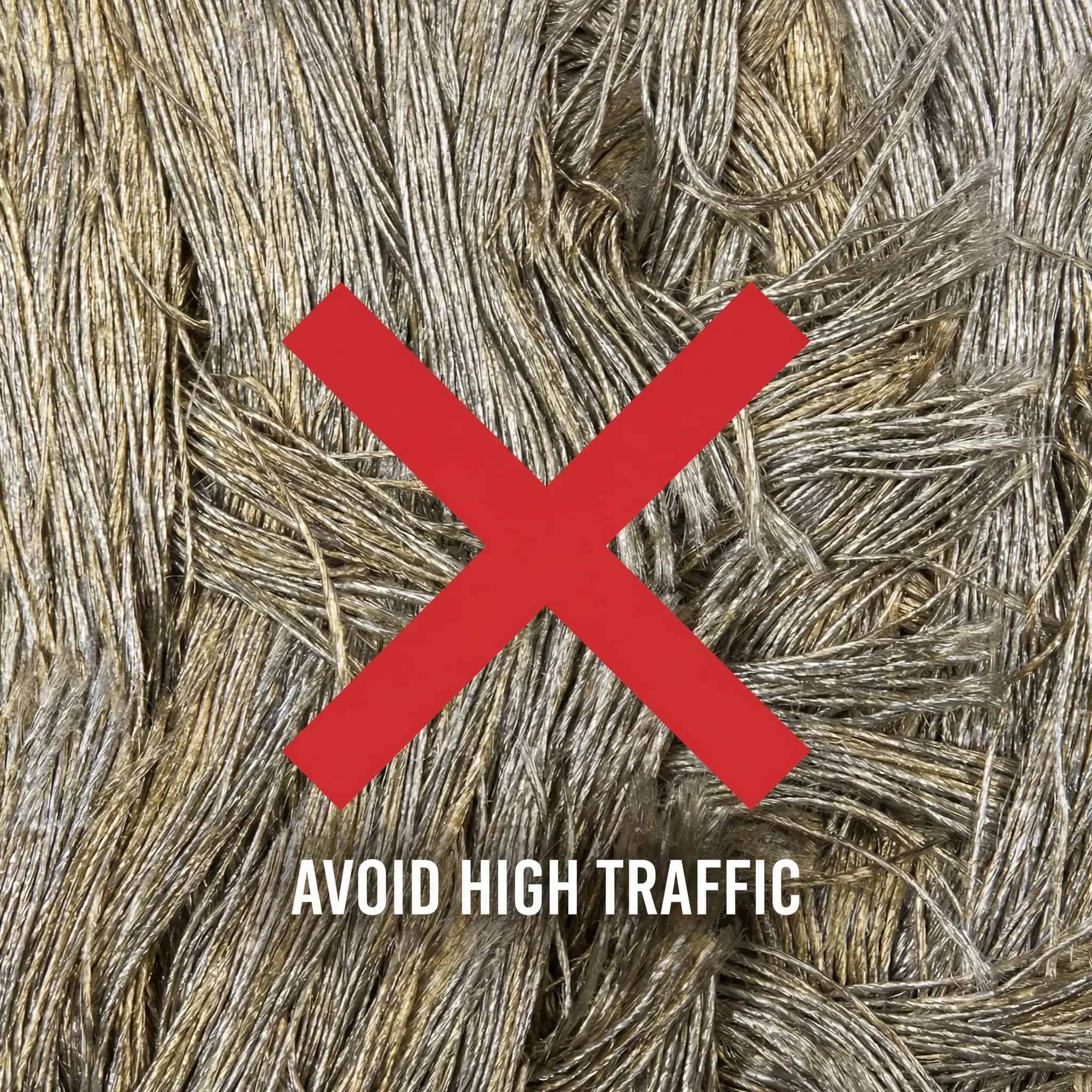
When shopping for high-traffic areas, always bend the corner of the rug back. If you can easily see the backing through the fibers, the density is too low. It will crush within months.
💡 Hackrea Styling Tip
The Best (and Worst) Materials for Busy Homes
Before you fall in love with a pattern, you must look at the fiber content. The material dictates how the rug will respond to friction, spills, and your vacuum cleaner. When a reader recently asked us how to fix their living room rug that looked ruined after six months, one glance at the fiber content told the whole story.
Here is the definitive breakdown of how different materials perform in the trenches of a busy home.
| Material | Softness Level | Stain Resistance | Price Point |
|---|---|---|---|
| PET (Recycled Polyester) | High (Plush/Cotton-like) | Exceptional (Hydrophobic) | Affordable to Mid-Range |
| Polypropylene | Moderate (Can feel slick) | High (Wipes clean) | Very Affordable |
| Wool (Tight Weave) | High (Naturally springy) | Moderate (Repels water initially) | Premium |
| Viscose | Very High (Silk-like) | Zero (Water ruins it) | Mid-Range to Premium |
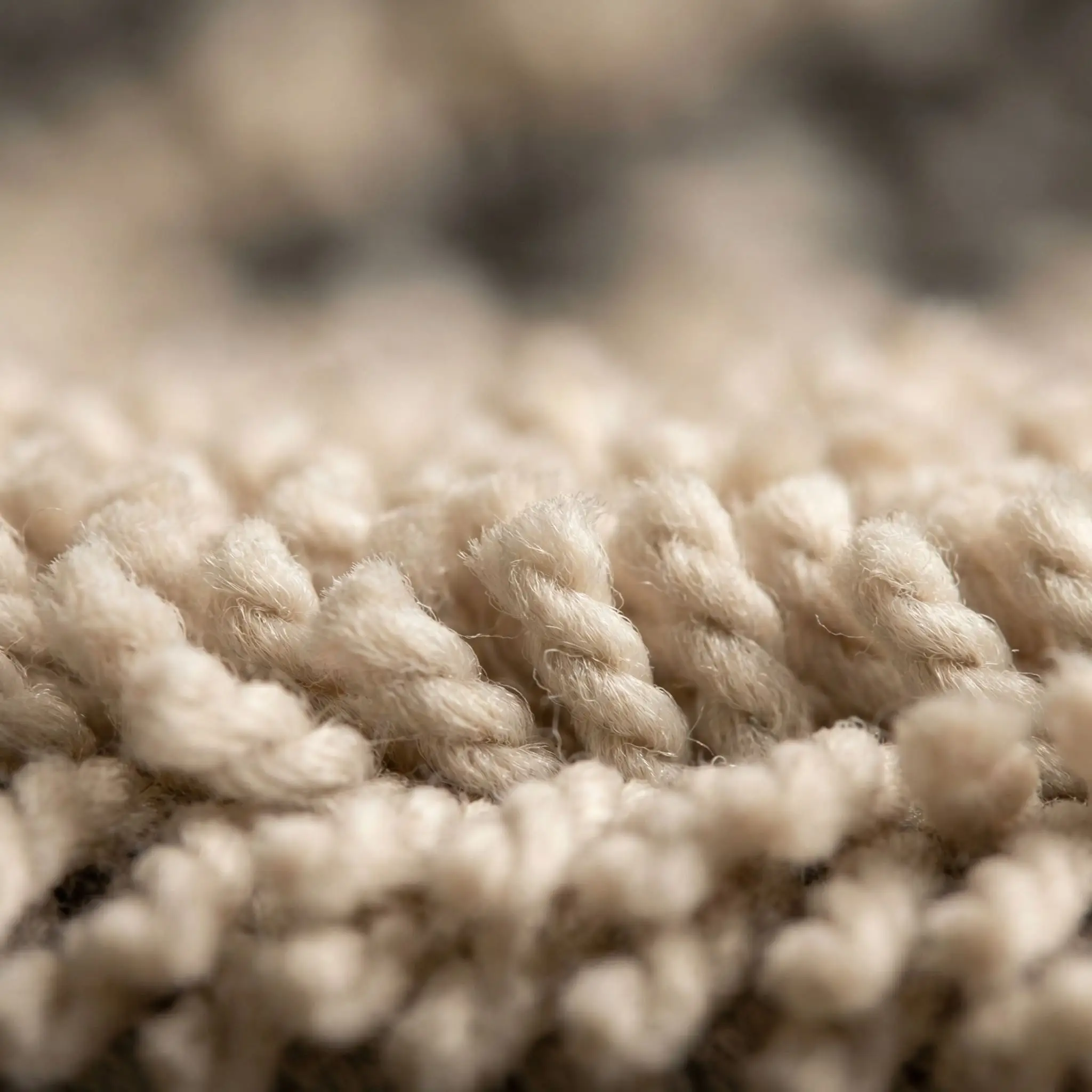
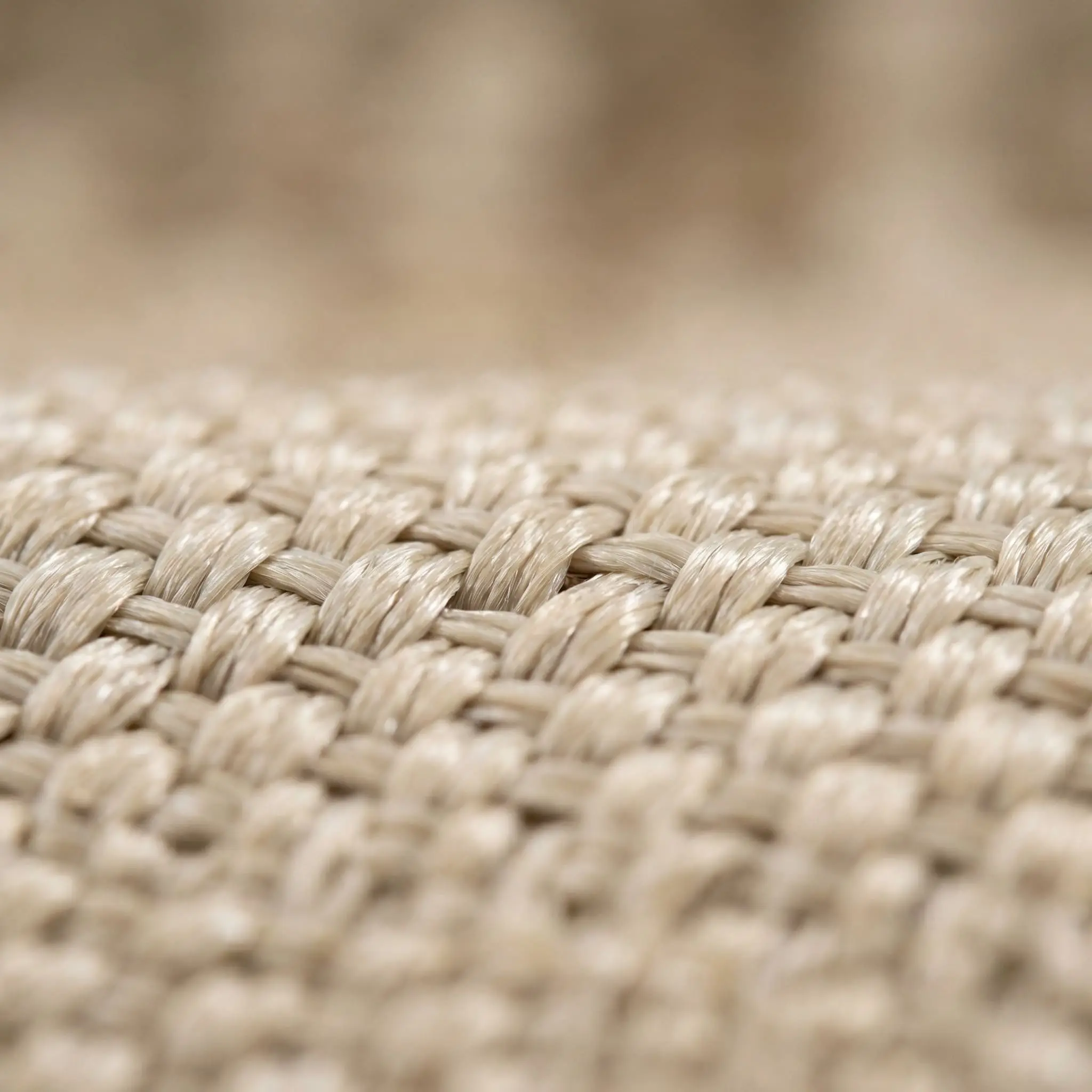
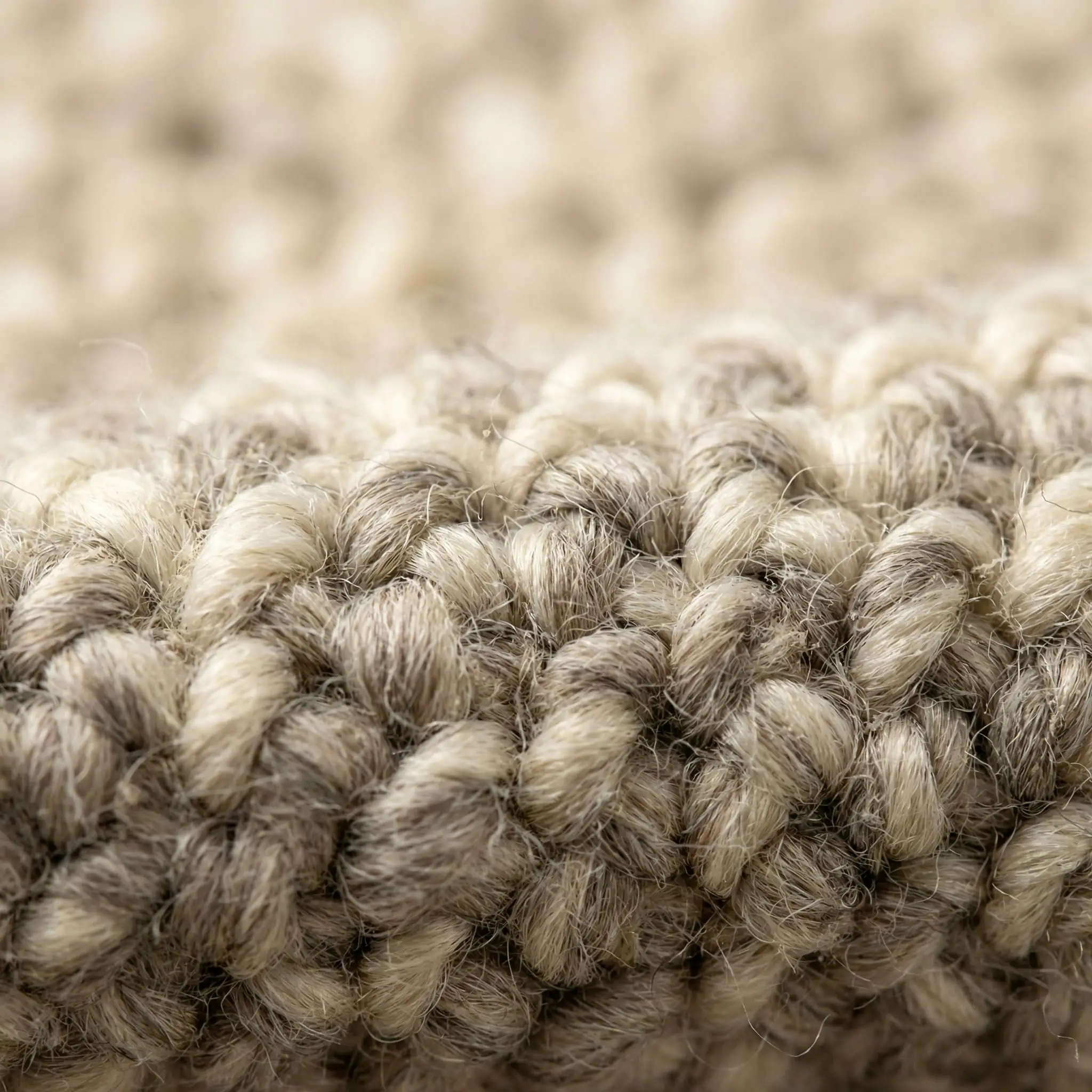
Let’s break down exactly what these materials mean for your daily life.
Top 7 Cozy Neutral Rugs That Can Take a Beating
Finding the perfect intersection of a soft, neutral palette and bulletproof durability requires sifting through thousands of options. To save you the headache, we’ve curated the top seven types of rugs that consistently perform in busy homes.
Whether you need a runner for a muddy entryway or a massive area rug for family movie nights, these styles deliver.
1. The Washable Wonder: Ruggable’s Tufted Line
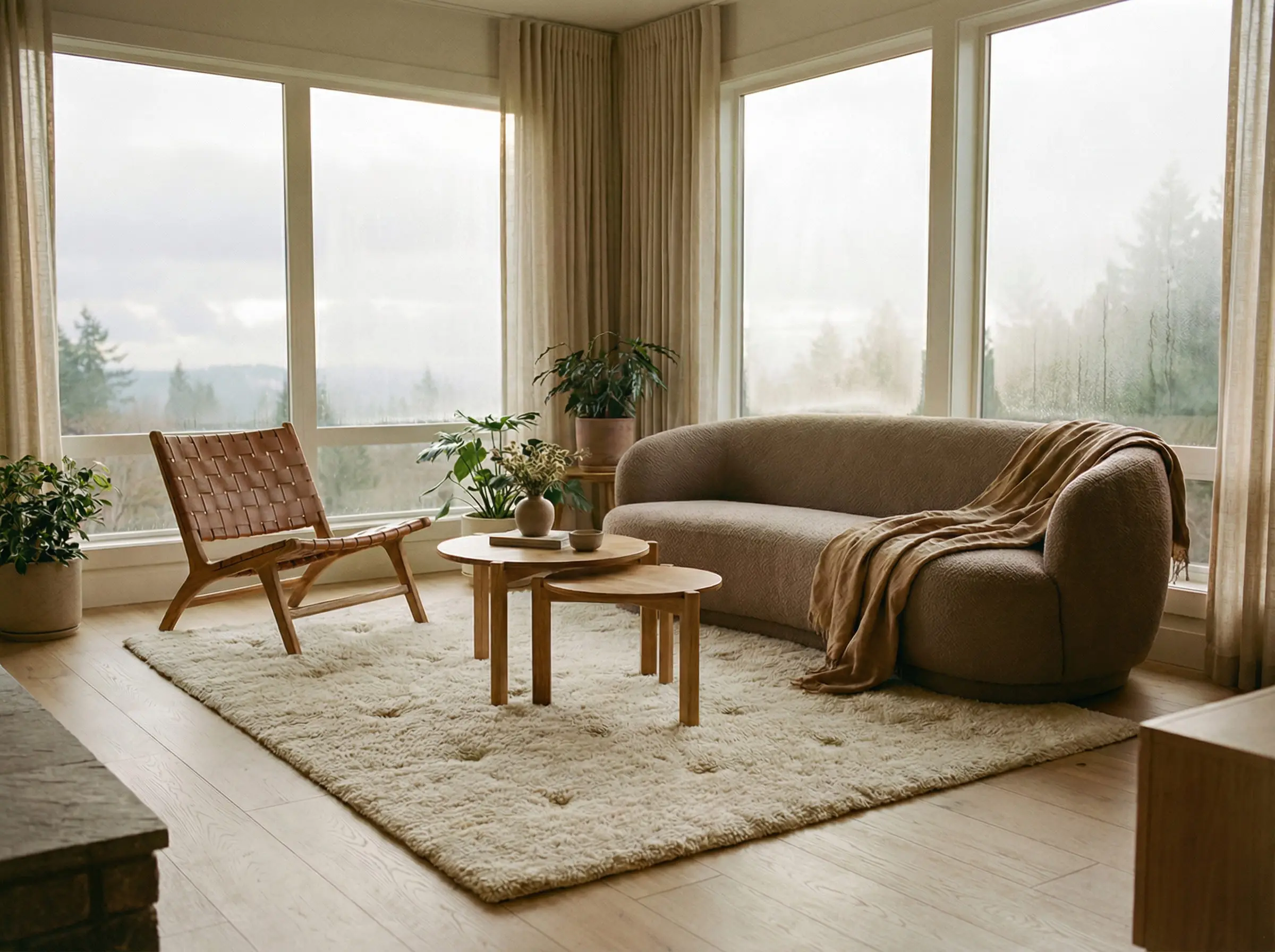
When you have pets prone to accidents or kids who treat the living room like a dining room, a two-piece washable system is life-changing. Ruggable (or similar 2-piece washable rug systems) revolutionized the market, but their original flatweaves lacked that cozy, living-room feel. Their newer Tufted line solves this entirely. It features a thicker, cushioned pile that feels substantial underfoot while remaining entirely machine washable. This is our top recommendation for homes with pets.
Pros:
Cons:
2. The Performance Wool: Hand-Loomed Heathered Neutrals
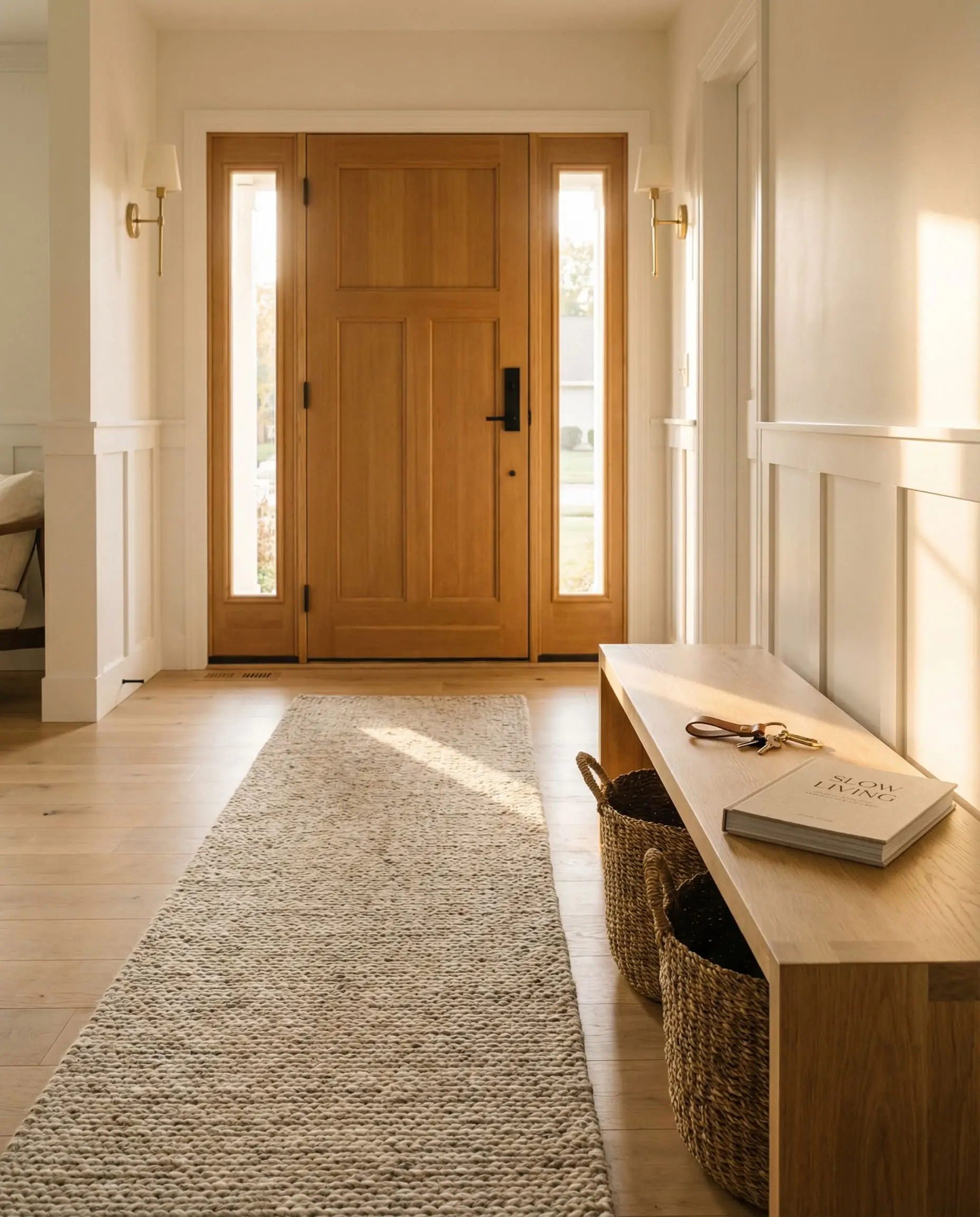
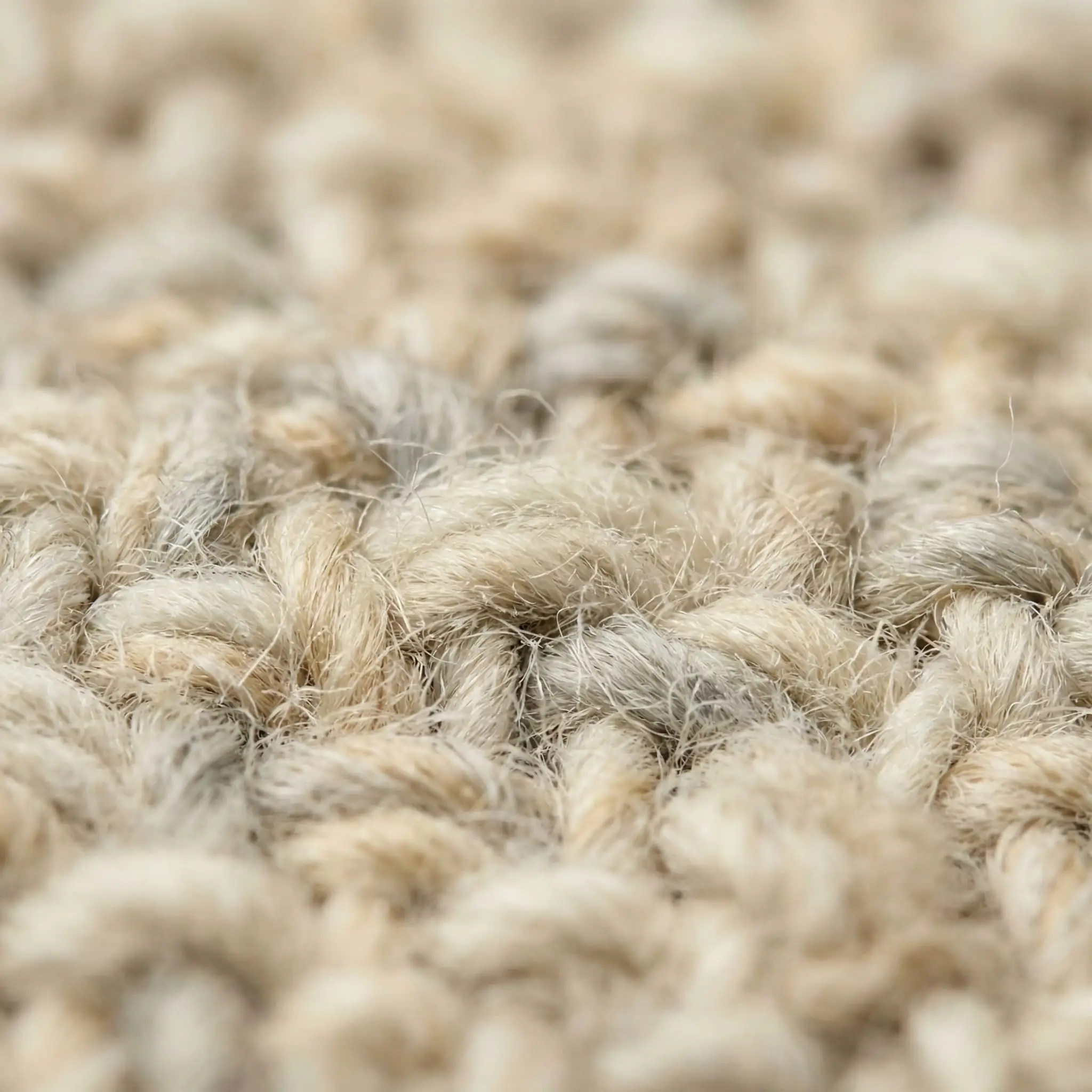
If you prefer natural materials over synthetics, a hand-loomed, densely woven wool rug in a heathered neutral is your best investment. The “heathered” aspect—meaning the yarn is spun with multiple subtle shades of cream, beige, and light gray—is crucial. This subtle color variation acts as optical camouflage, hiding minor dirt and lint between vacuuming sessions. Because wool is naturally springy, it resists crushing in busy hallways better than almost anything else.
Pros:
Cons:
3. The Soft Jute-Blend: Sisal Look without the Scratch
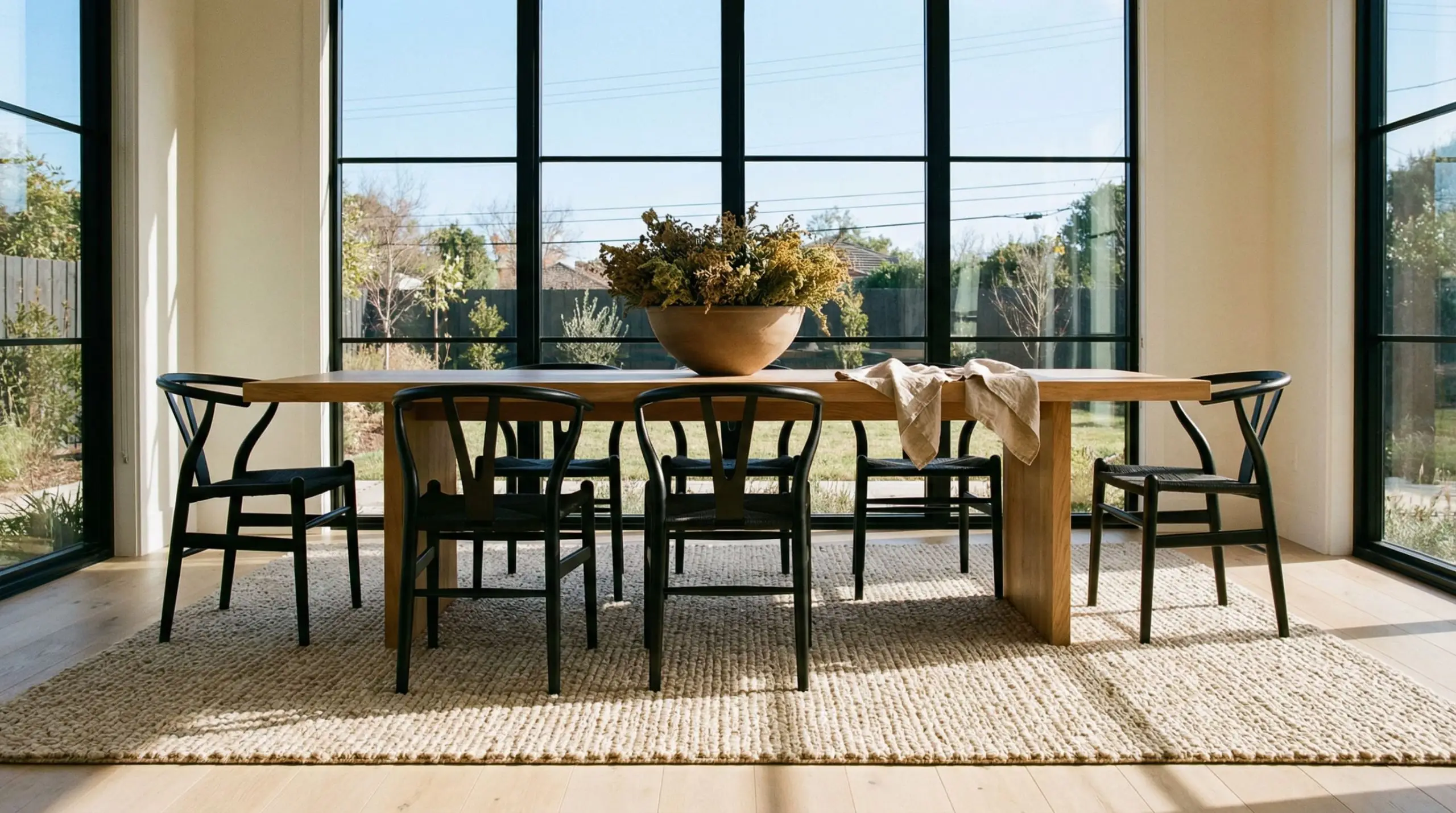
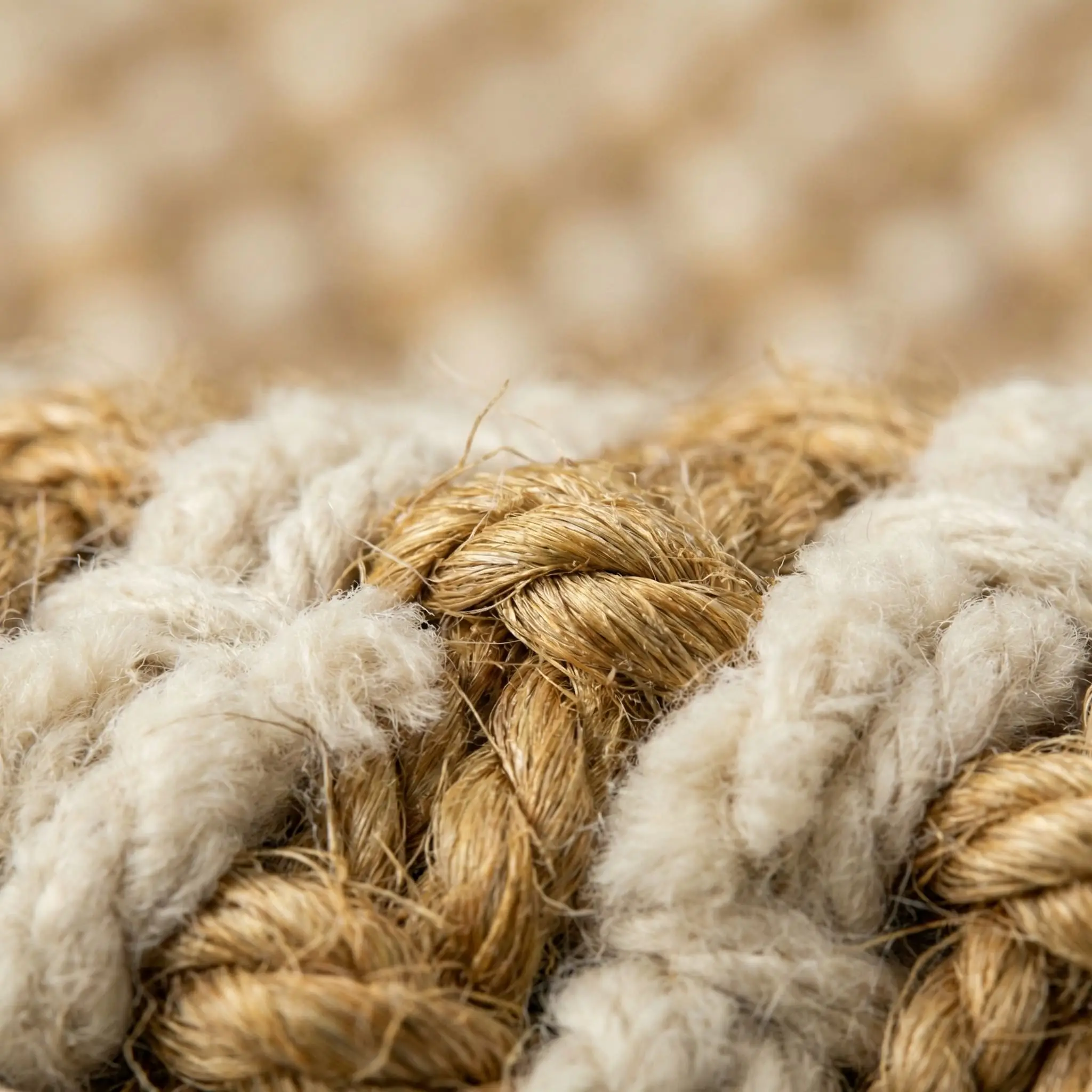
We love the earthy, grounded look of a natural sisal or jute rug, especially when layering rugs like a professional designer. However, 100% natural jute can feel like walking on dried pasta, making it terrible for lounging. The solution is a Jute-Chenille or Jute-Cotton blend. By weaving soft cotton or chenille yarns alongside the natural jute, you get that chunky, organic texture but with a surprisingly soft, flexible hand-feel.
Pros:
Cons:
4. The Cloud-Like PET: Recycled Bottle Shag
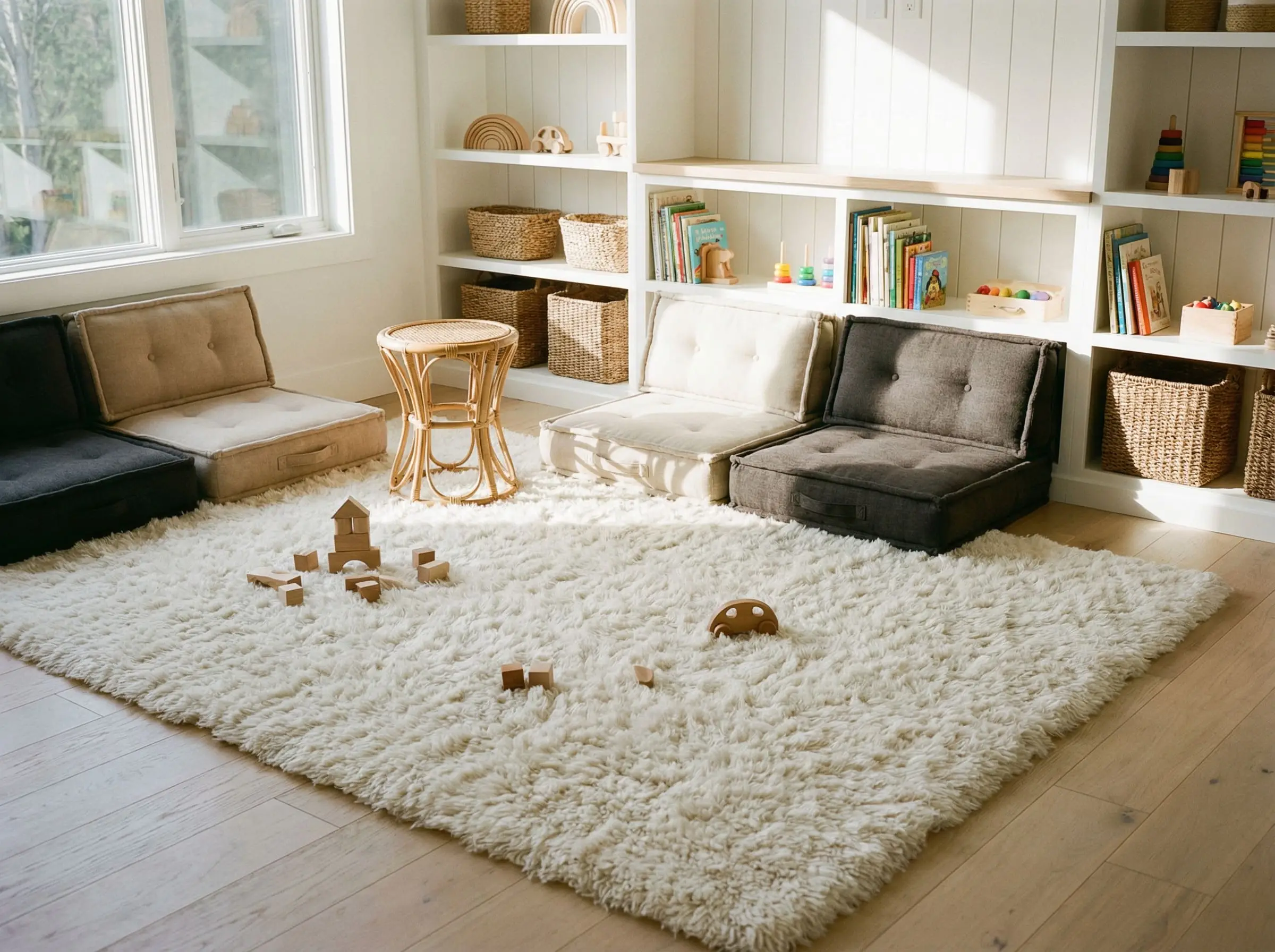
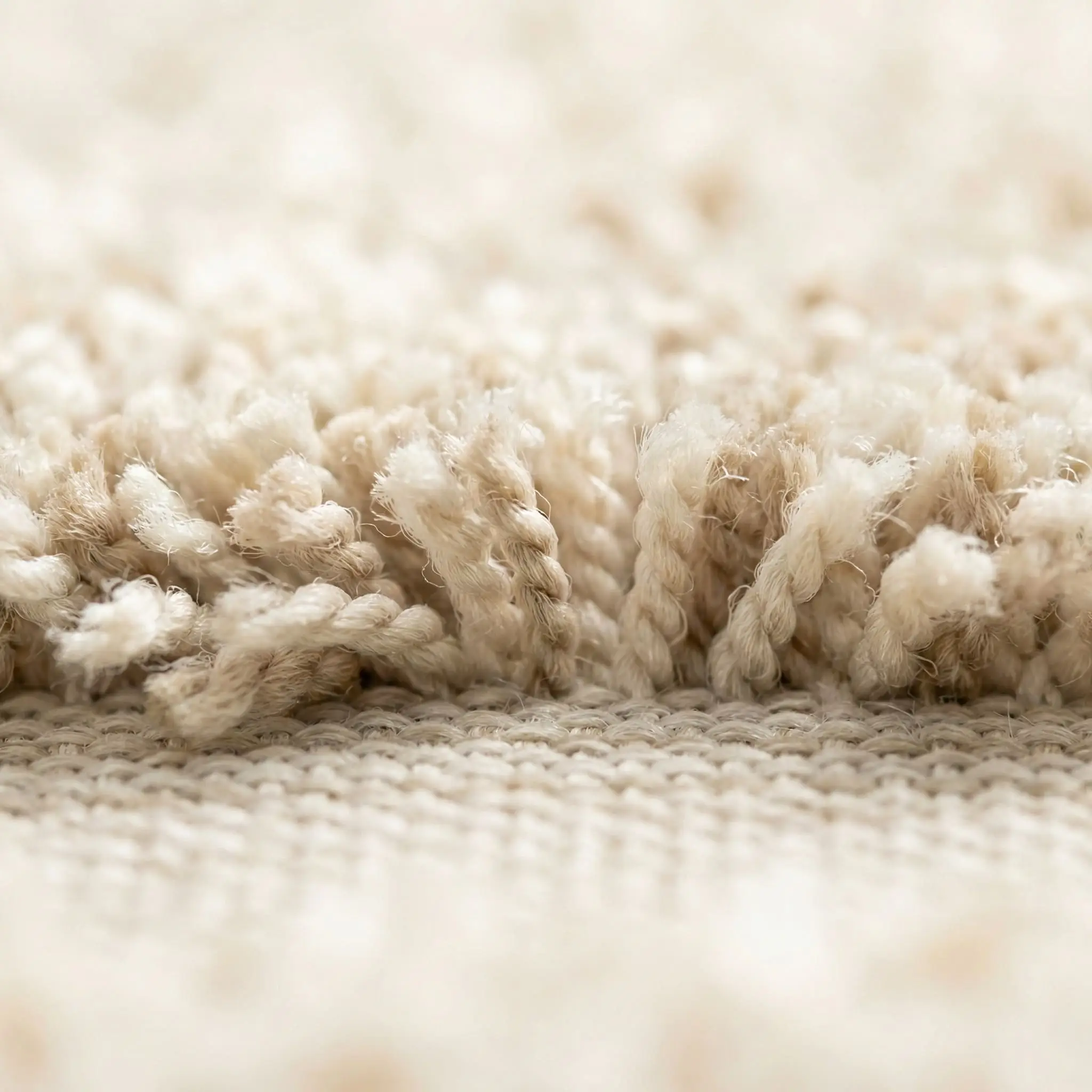
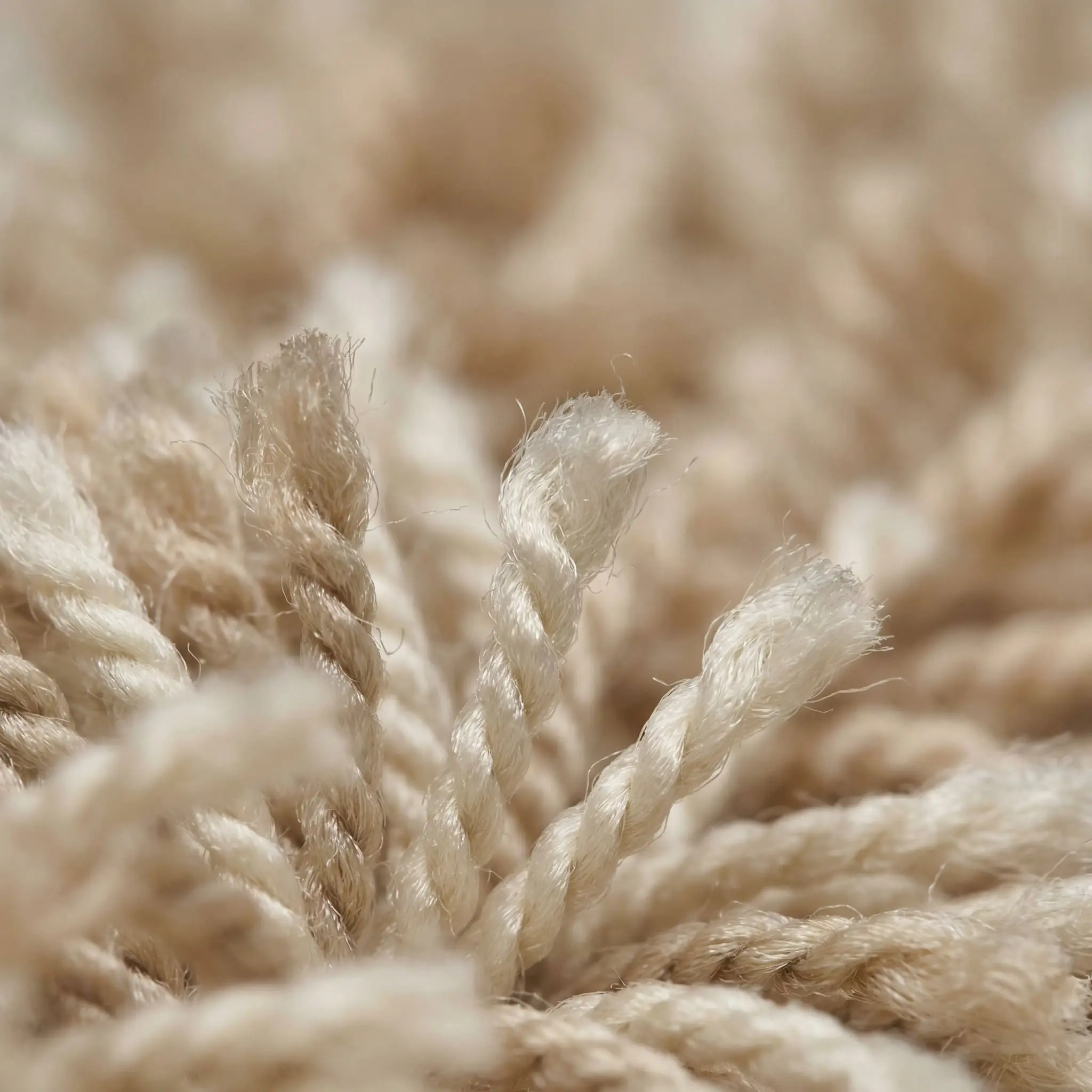
If you refuse to give up the dream of a sink-in, ultra-plush shag rug, you must choose one made from PET (Polyethylene Terephthalate) yarn. Traditional synthetic shags mat down and look ragged within months. A high-density PET shag, however, maintains its loft and is incredibly easy to clean. Because the fibers are essentially plastic, stains cannot penetrate the yarn. This makes it the ultimate choice for nurseries, playrooms, or cozy bedrooms.
Pros:
Cons:
5. The Distressed Vintage Print: Power-Loomed Perfection
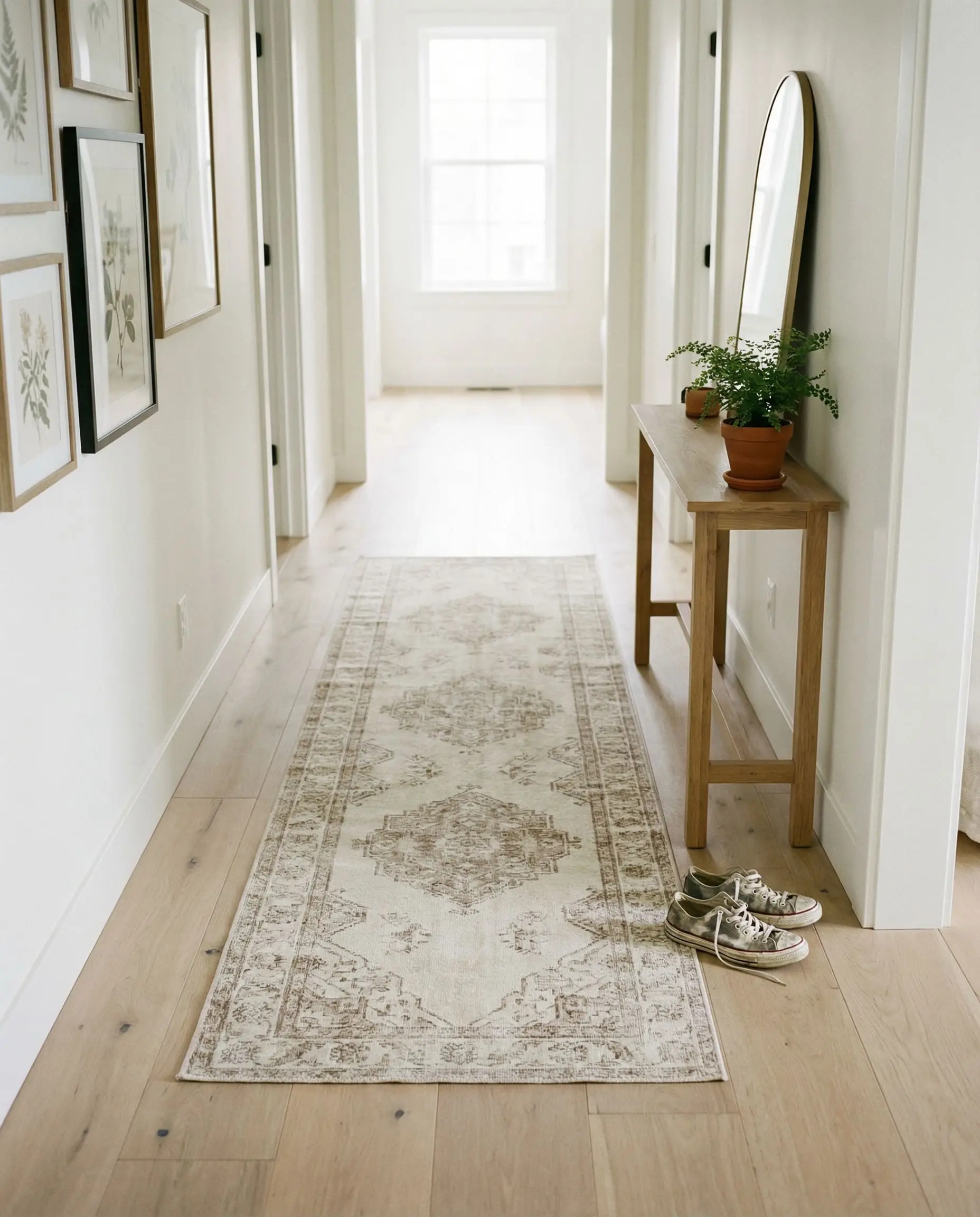
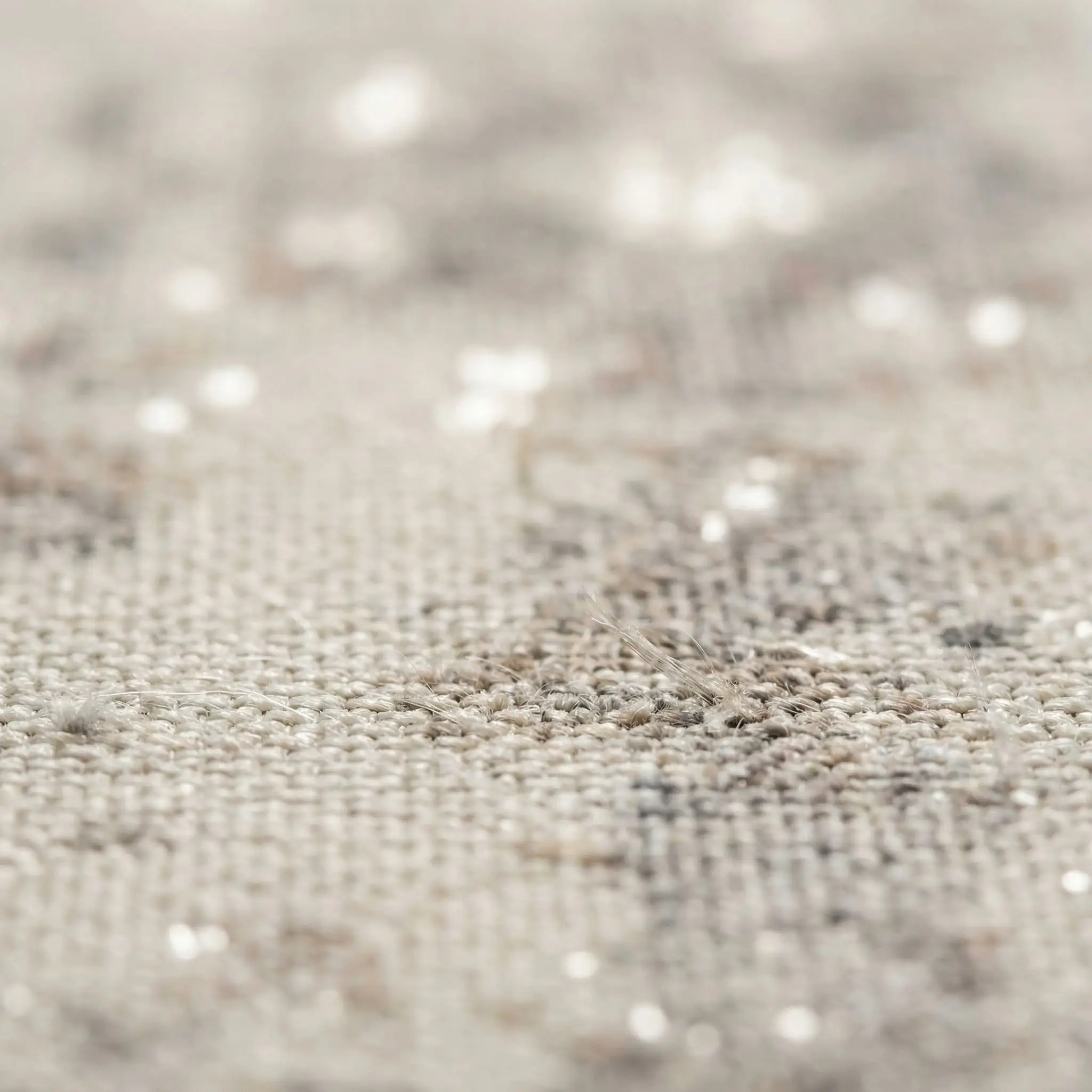
The “vintage distressed” look isn’t just a trend; it’s a brilliant functional design choice for busy homes. These rugs are typically power-loomed from a tight blend of polyester and polypropylene, creating a very low, dense pile. The genius lies in the printed pattern. The intentionally faded, distressed areas of cream, taupe, and gray create a busy visual field that perfectly masks minor spots, pet hair, and daily grime.
Pros:
Cons:
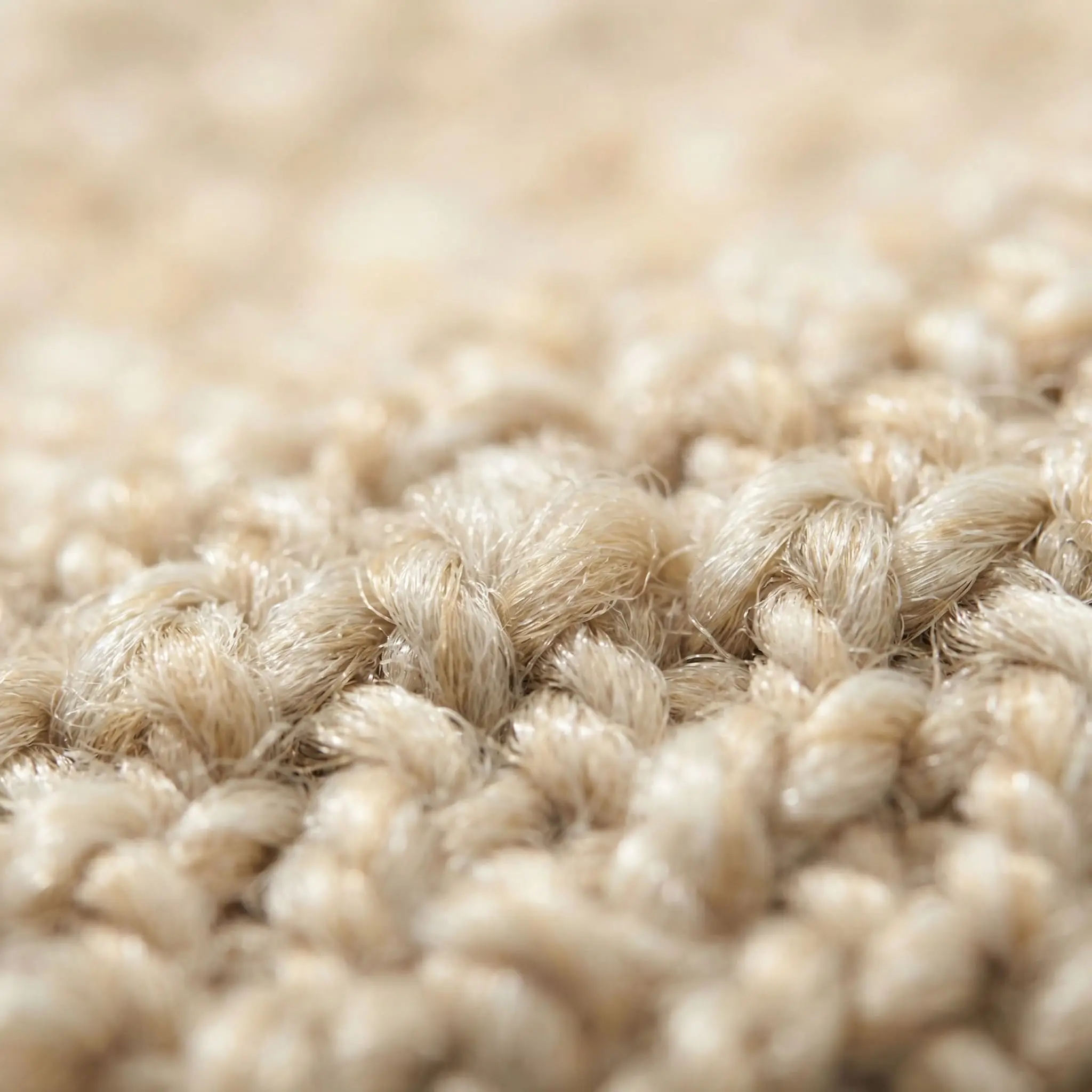
6. The Indoor/Outdoor Crossover: Soft Polypropylene
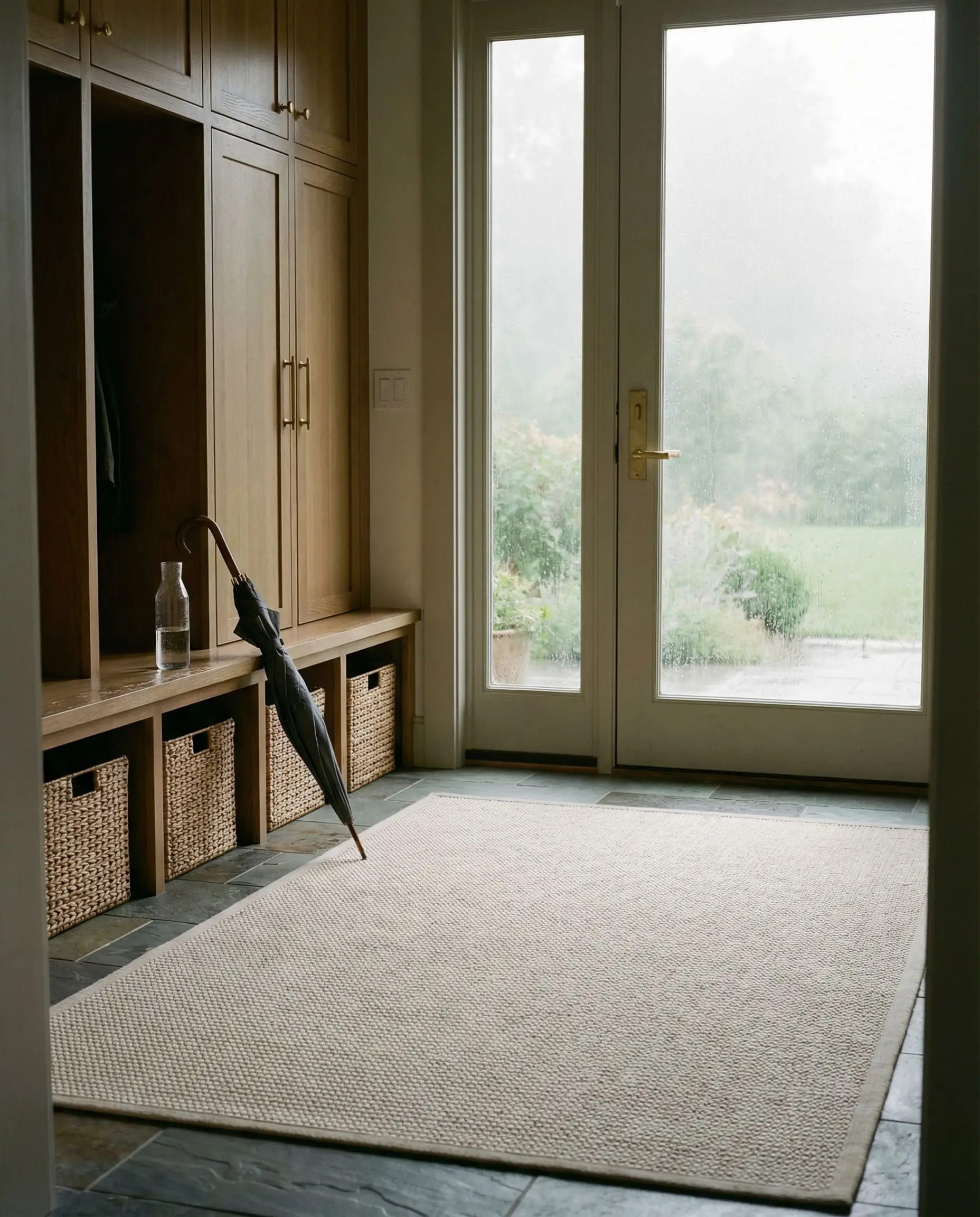
Outdoor rugs have come a long way from the stiff, plastic mats of the past. Today’s premium indoor/outdoor rugs are woven from finely spun soft polypropylene that feels remarkably similar to indoor flatweaves. These are the absolute most indestructible options on this list. If you have a chaotic mudroom, a kitchen that sees heavy cooking, or a dining space prone to massive spills, this is your answer. You can literally take them outside and hose them off.
Pros:
Cons:
7. The Stain-Treated Cotton Flatweave
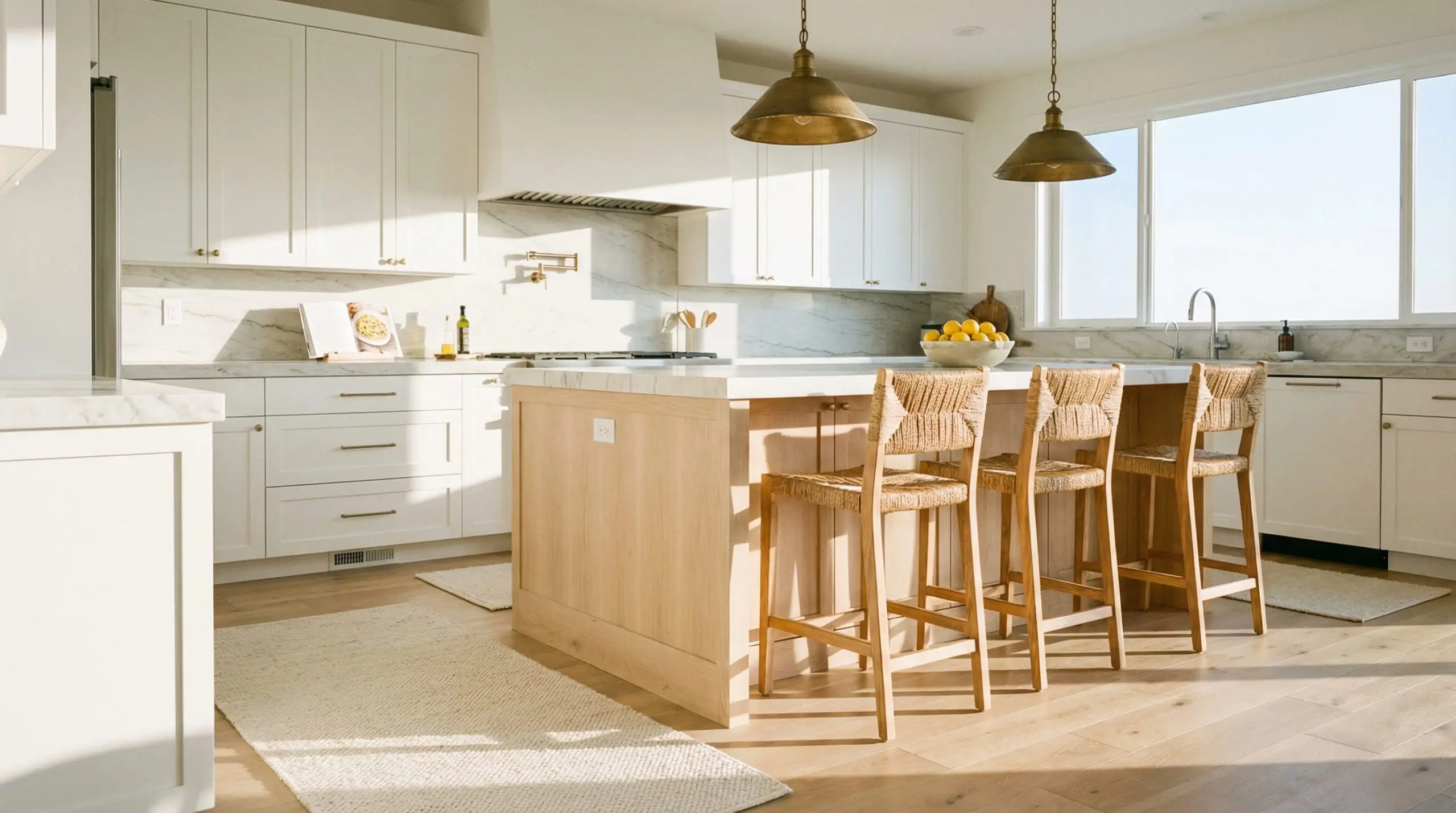
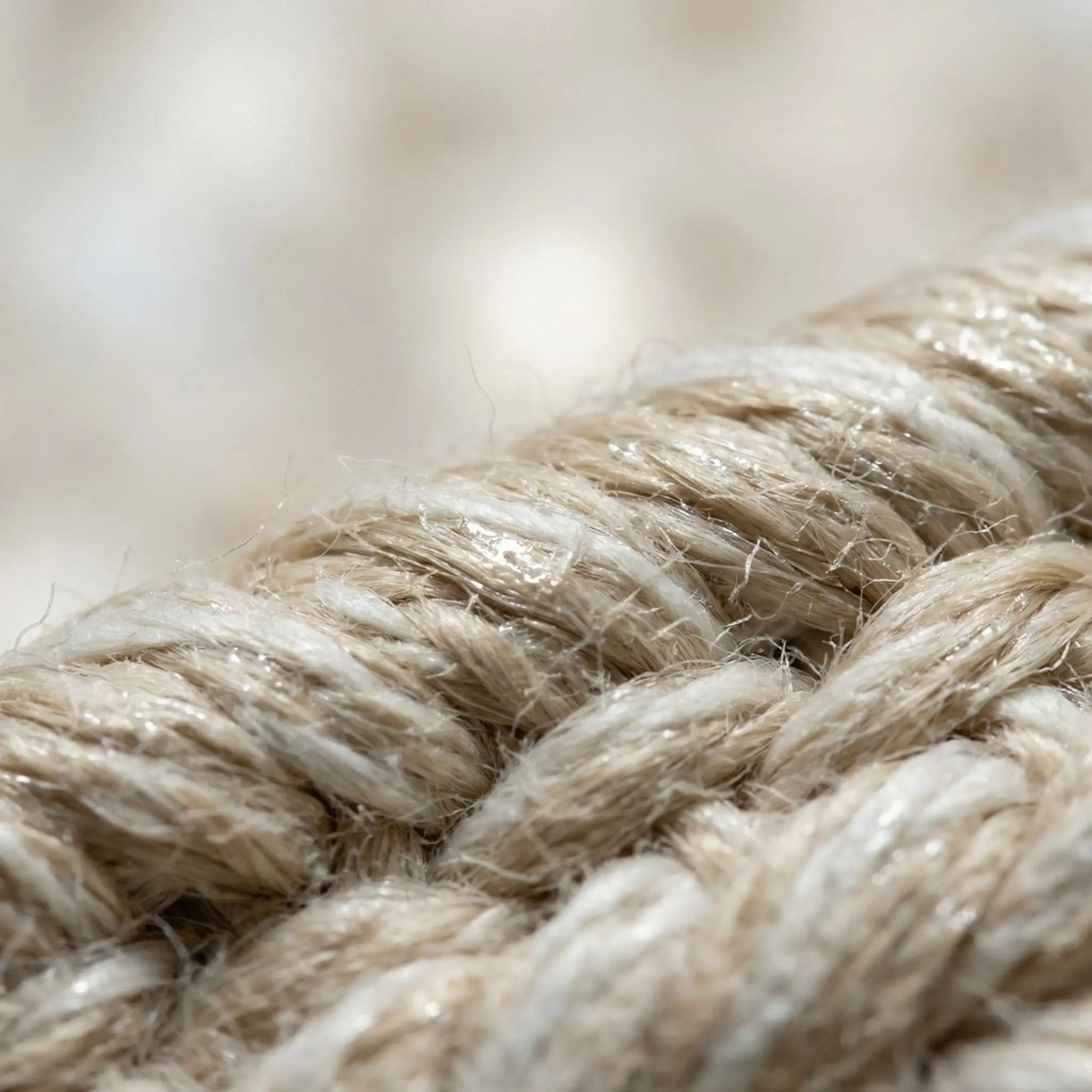
For a casual, breezy, slipcovered aesthetic, a cotton flatweave is a classic choice. However, raw cotton absorbs stains instantly. The modern upgrade is a cotton flatweave that has been pre-treated with a commercial-grade stain repellent (like Teflon or Scotchgard) during the manufacturing process. This gives you the casual, breathable feel of cotton but allows you to wipe up spills before they set.
Pros:
Cons:
Room-by-Room Guide: Placing Neutral Rugs in Heavy Foot Traffic Zones
Choosing the right material is only half the battle. You must also contextualize the type of traffic a room receives. The kind of wear and tear in a mudroom is vastly different from the wear and tear in a living room.
Looking at the floor plan photos sent to our team, the biggest mistake people make is putting a high-pile rug in a friction zone, or a flatweave in a lounging zone. Here is how to place your neutral rugs strategically.
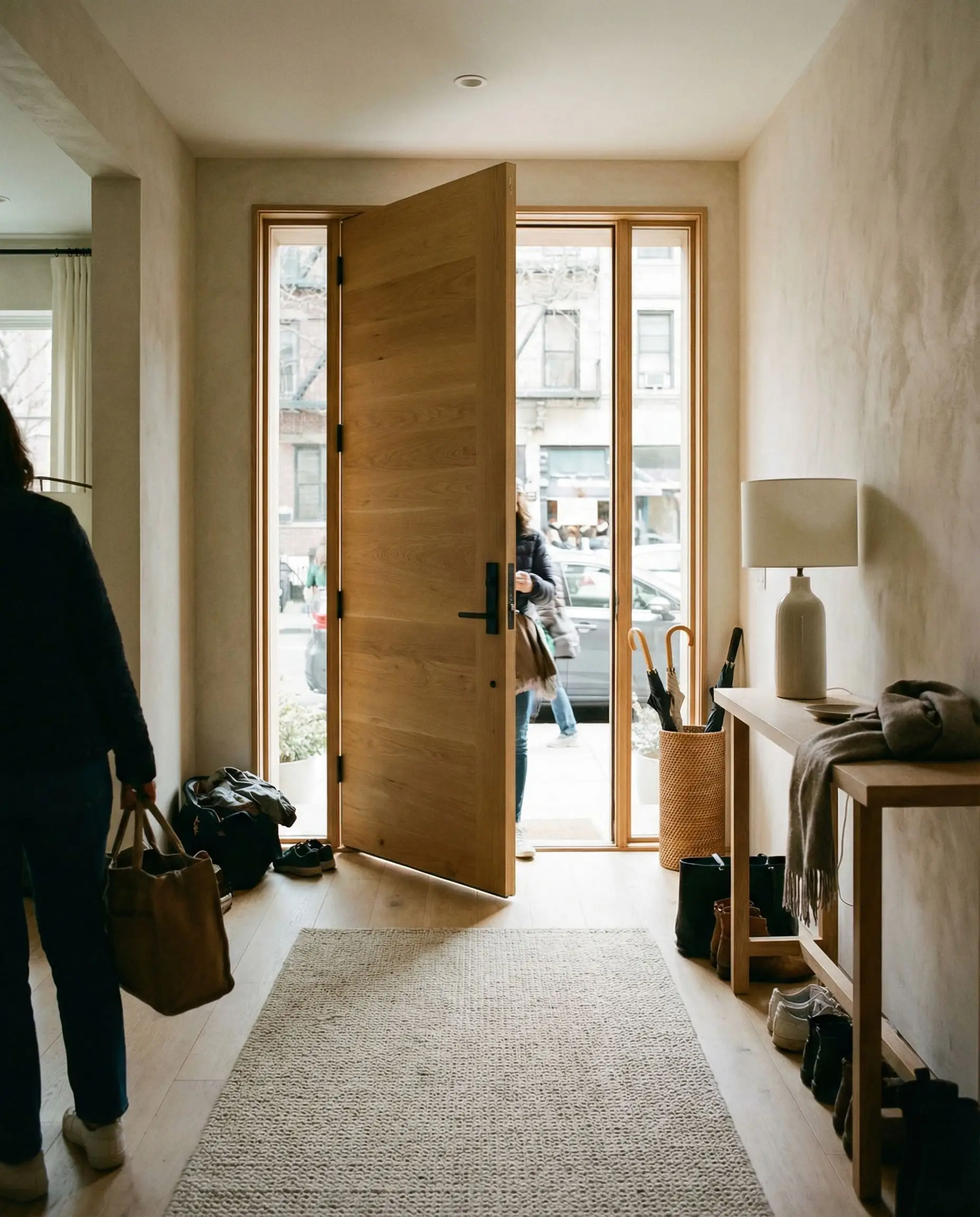
Entryways & Mudrooms
This is the highest-friction, highest-dirt zone in your home. The primary concern here is clearance for doors opening and closing, and the ability to handle abrasive dirt and mud.
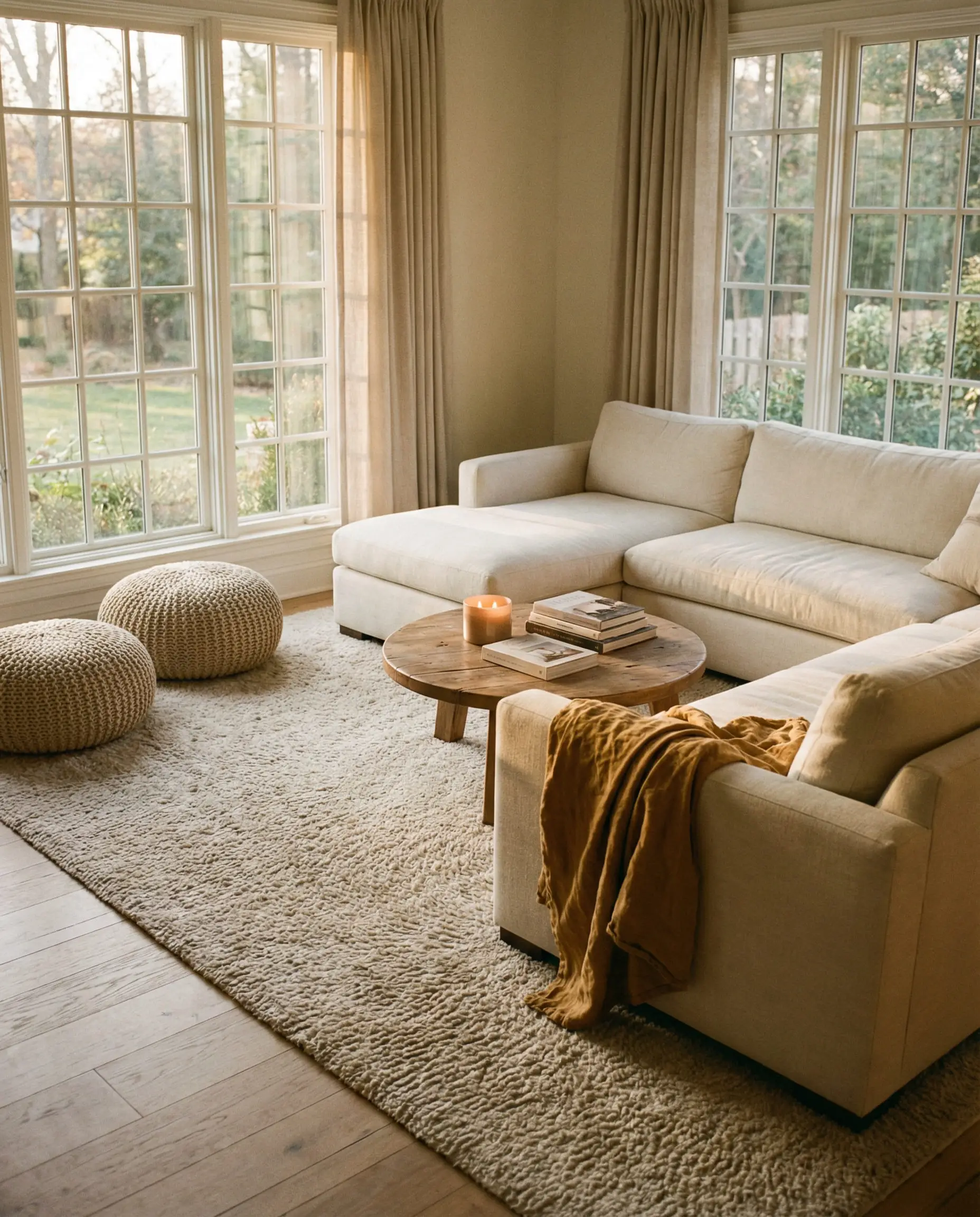
Living Rooms & Family Rooms
This is your primary lounging zone. The traffic here is heavy, but it’s mostly in socks or bare feet. The main threats are friction from people shifting on the sofa and occasional food/drink spills.
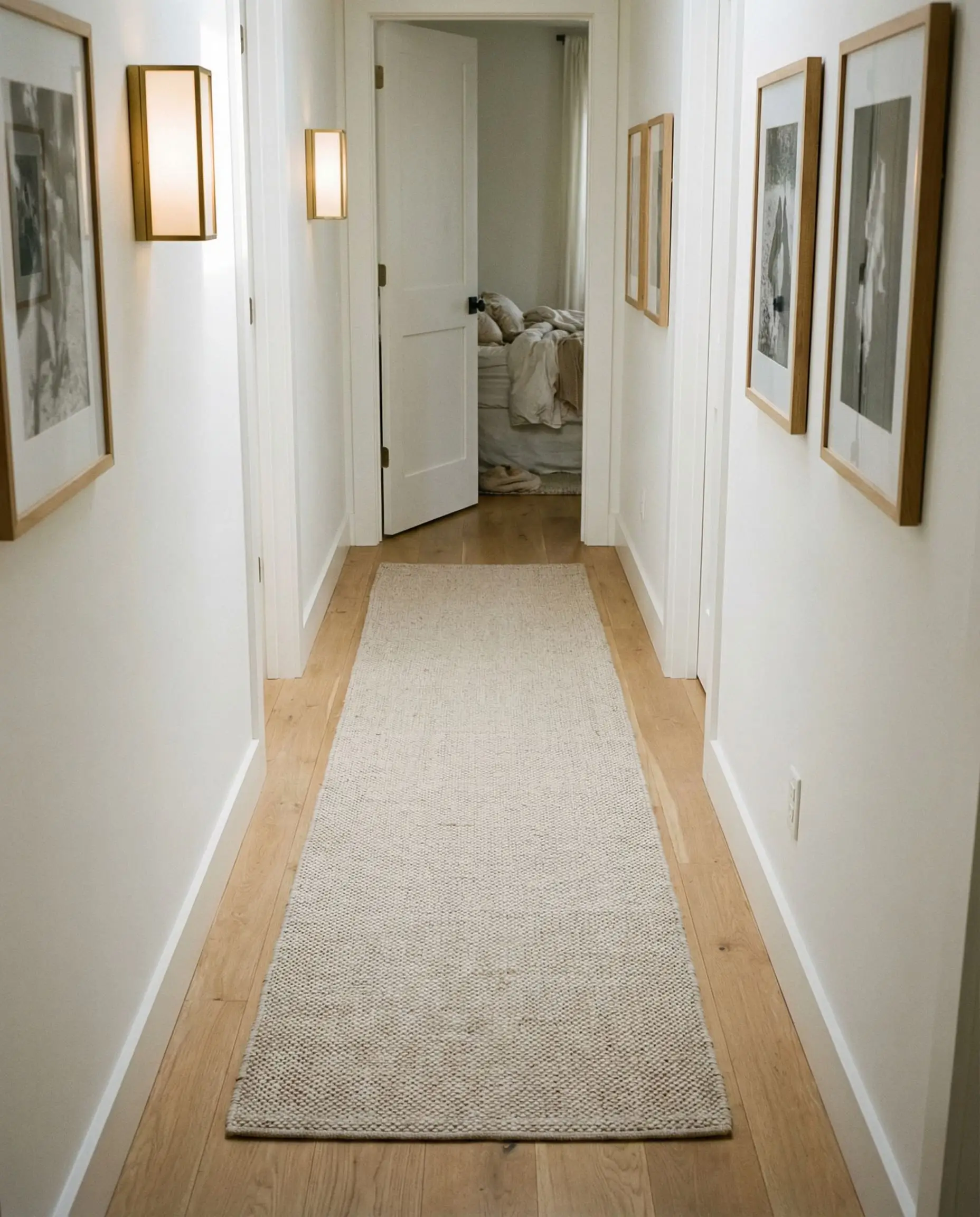
Hallways & Stairs
Hallways are pure friction zones. People walk in a concentrated, straight line, repeatedly compressing the exact same fibers day after day.
Designer Secrets for Keeping Light Rugs Clean
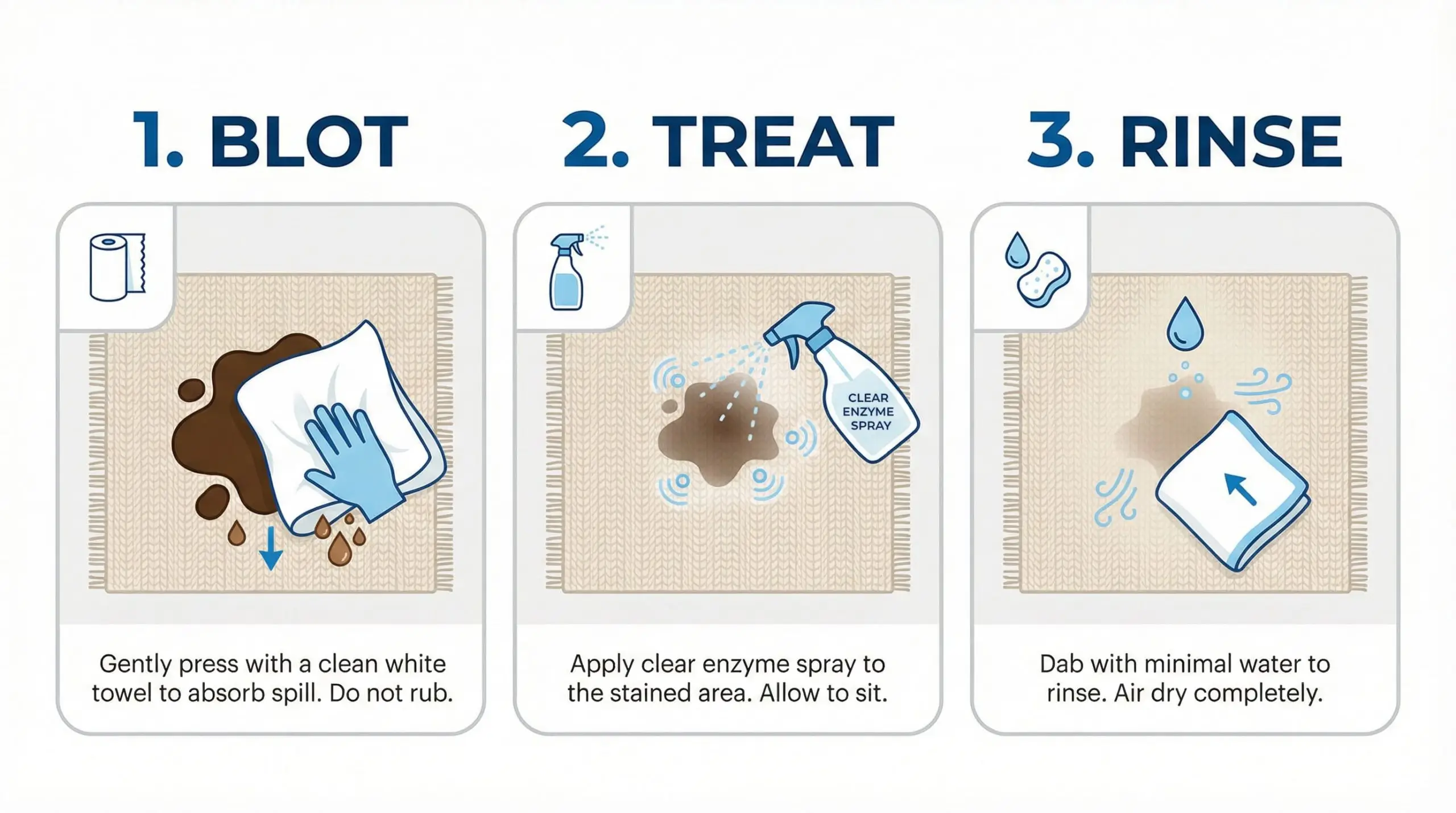
You’ve purchased the perfect, durable, cozy neutral rug. Now, how do you keep it looking pristine? Real-world experience dictates that regular vacuuming isn’t enough for light-colored fibers. Our studio partners are seeing a massive shift toward preventative maintenance rather than reactive scrubbing.
Here are the professional secrets to keeping your cream rugs looking showroom-ready.
Never use a beater-bar vacuum on a looped rug (like a chunky wool or jute blend). The rotating bristles will catch the loops, pull them out, and cause the rug to sprout and fuzz. Always switch your vacuum to the “suction-only” hard floor setting.
🛋️ Hackrea Pro Tip
The Secret Weapon: Why Your Rug Pad Matters More Than the Rug
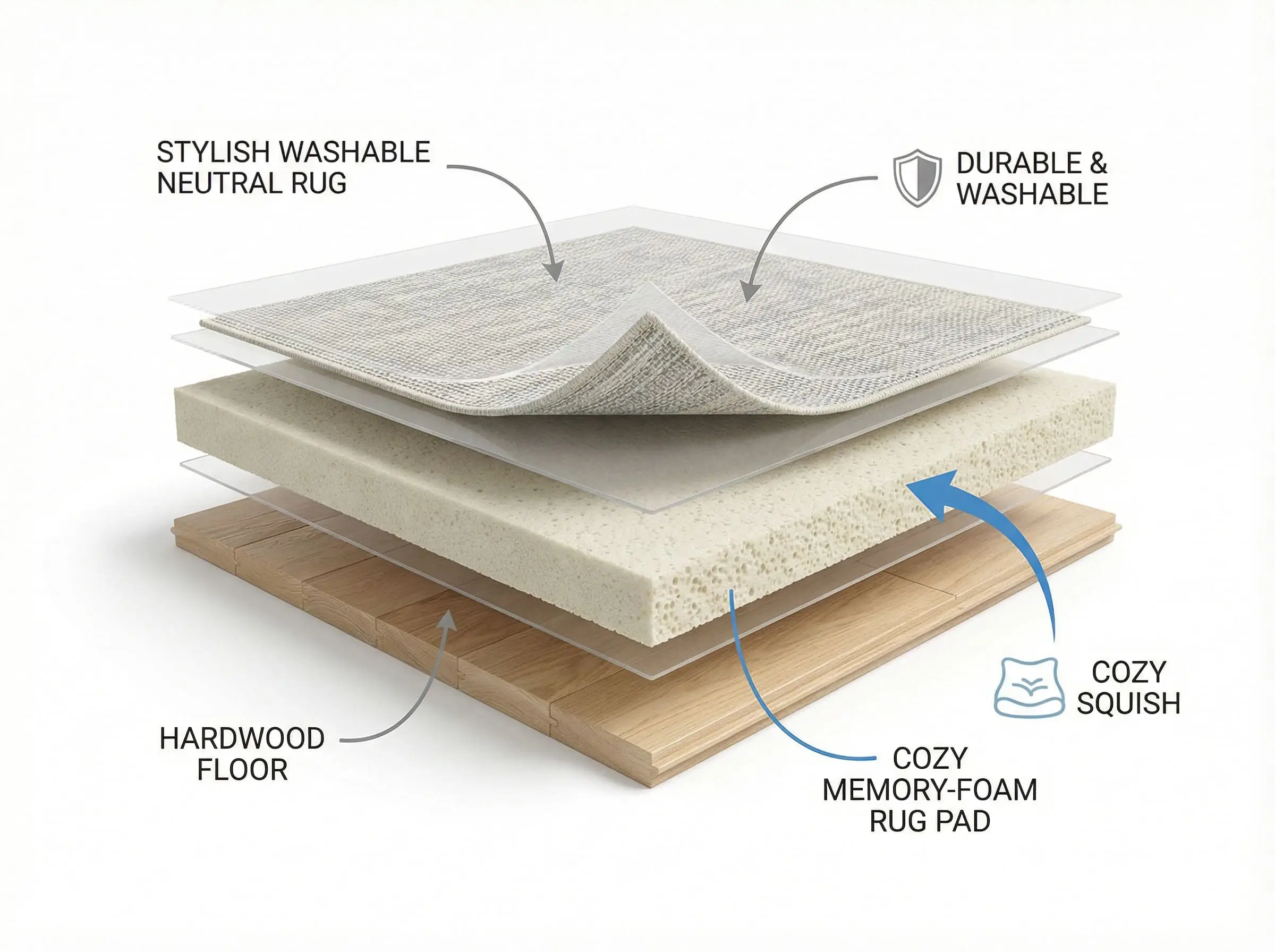
Here is the ultimate design hack for busy homes: buy a highly durable, thin, easily washable flatweave rug and make it feel like a luxury, sink-in plush rug. The secret isn’t the rug itself; it’s what you put underneath it.
Most people treat rug pads as an afterthought, grabbing the cheapest waffle-weave grip pad they can find. But a high-quality pad completely transforms the tactile experience of the rug. It also dramatically extends the rug’s life by absorbing friction between the backing and your hard floors.
Final Thoughts
Designing a beautiful, comfortable home shouldn’t mean living in constant fear of a spilled cup of coffee. You deserve a space that feels light, bright, and deeply cozy, regardless of how chaotic your household might be.
Remember, choosing a neutral palette doesn’t mean you are choosing fragility. By prioritizing high-density weaves, embracing performance materials like PET and treated wool, and investing in a quality rug pad, you can have the stunning cream rug of your dreams. It’s all about working smarter, not harder, with your textiles. Now that your floors are sorted, take the next step and explore our guides on styling your space to perfection.