How to Style Throw Pillows on a Leather Couch (Without Them Slipping)
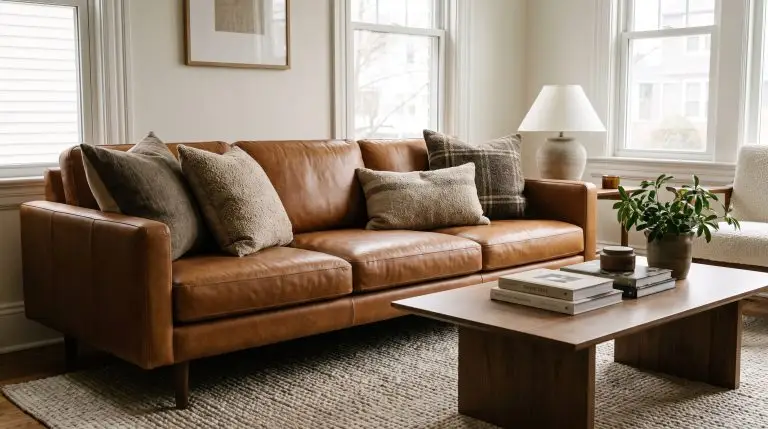
Leather is an incredible investment, highly durable, and naturally sophisticated, but it can quickly turn into a visually heavy, slick black hole in your living room if left unstyled. The surface feels cold to the touch and actively resists standard decor attempts, leaving many homeowners frustrated when their carefully arranged accents end up sliding onto the floor.
Styling a leather piece requires a completely different approach than a standard fabric sofa because you are actively battling friction and temperature. To bridge the gap between a harsh, rigid seating area and a truly inviting space, you must prioritize tactile contrast and structural slip-resistance.
This guide covers the exact methods for domesticating your leather furniture. We break down the heavy inserts that actually stay put, the friction-heavy fabrics you need to source, and the specific color palettes that complement every undertone from warm cognac to cool black.
The Physics of the Couch: Why Inserts Matter Most
Before addressing color theory, we have to solve the primary mechanical failure of leather styling: standard pillows will constantly slide off smooth aniline or top-grain surfaces. You must weigh the pillow down to create a structural anchor that firmly grips the slick upholstery.
| Insert Material | Friction & Leather Performance | Pros | Cons |
|---|---|---|---|
| 90/10 Down/Feather Blend | Excellent. The heavy, moldable mass settles into the leather grain. | Dense, structured, allows for a deep “karate chop” that flattens the base. | Higher price point, requires occasional fluffing. |
| Standard Polyfill | Terrible. Bounces off slick surfaces and rolls out of corners. | Budget-friendly, hypoallergenic. | Too lightweight, visually stiff, zero grip on leather. |
Always buy a heavyweight down or dense down-alternative insert sized exactly 2 inches larger than your pillow cover to create a firm, structural block that anchors itself securely into the corners of your sofa.
Hackrea Styling Rule
Color Combinations for Brown and Cognac Leather
The brown leather sofa is a classic anchor piece, but its specific undertones dictate your color wheel complements. Whether you are working with a warm, orange-leaning cognac or a deep, cool espresso, styling requires fabrics that absorb light rather than compete with the leather’s natural sheen.
Warm Rust and Terracotta Linens
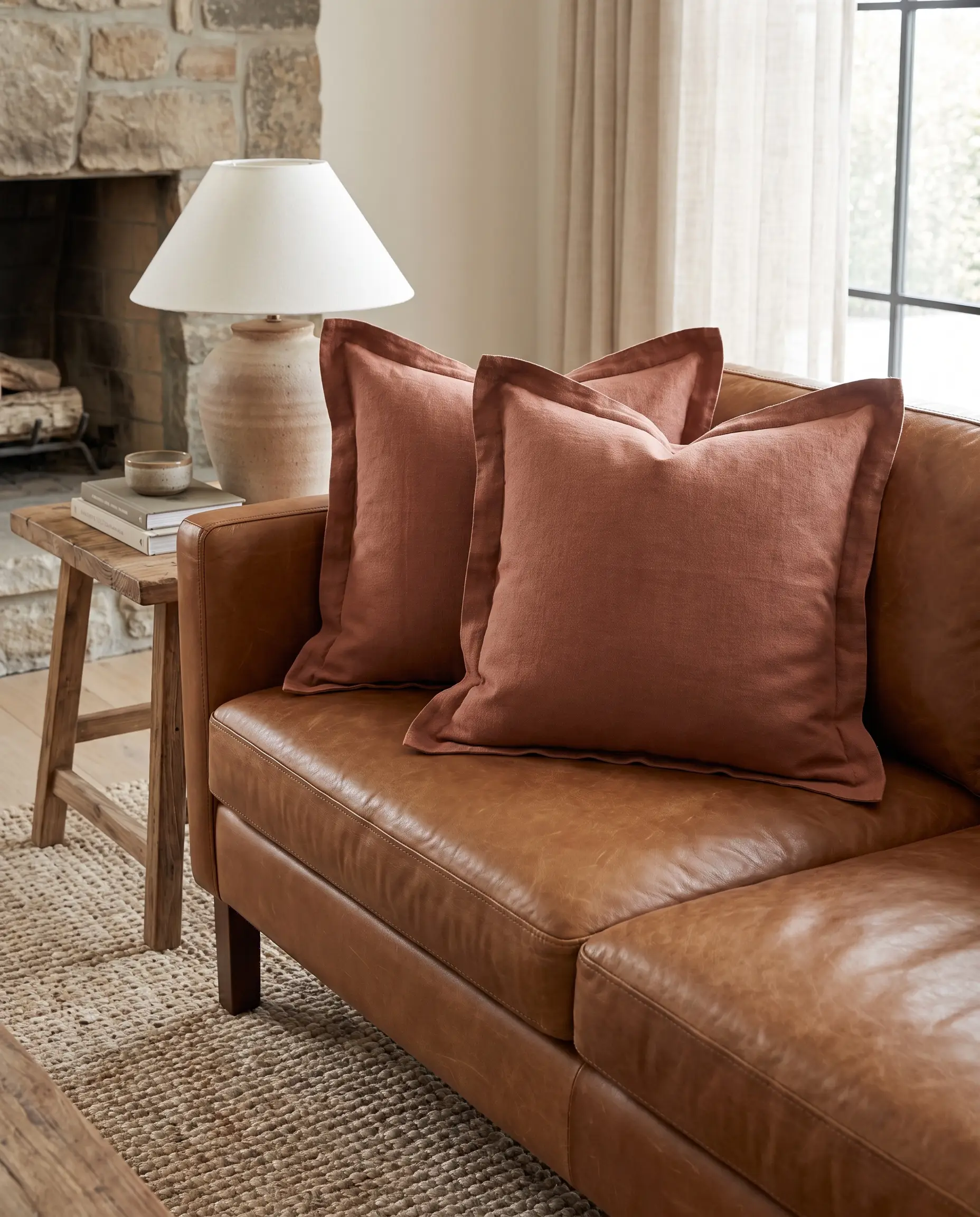
The Vibe: Earthy, grounding, and effortlessly warm. Rust pulls out the rich orange undertones inherent in cognac leather, while the matte finish of heavy linen absorbs light to counter the slickness of the upholstery.
- Key Material: Heavyweight stonewashed linen.
- Color Match: Sherwin-Williams Cavern Clay (SW 7701).
- Styling Pro-Tip: Use a flanged edge to add structured volume without extra physical weight.
Muted Olive Green and Sage
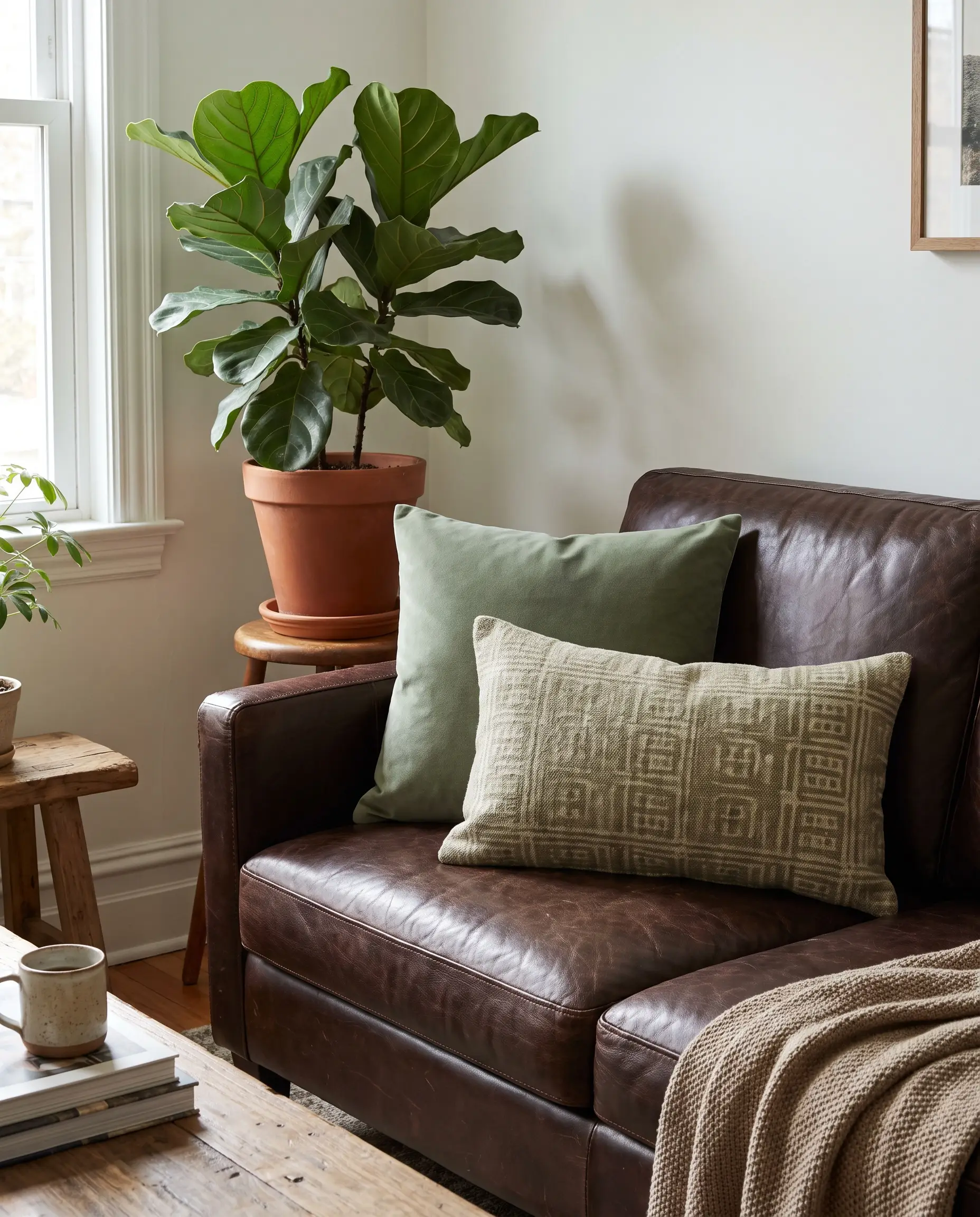
The Vibe: Organic modern sanctuary. Green serves as a natural, earthy complement to warm brown, grounding the visual weight of the leather while bringing the outside in.
- Key Material: Matte cotton velvet or woven wool.
- Color Match: Benjamin Moore Rosemary Sprig (2144-30).
- Styling Pro-Tip: Mix one solid olive pillow with a subtle, tonal geometric pattern to avoid a flat color block.
Cream and Oatmeal Bouclé
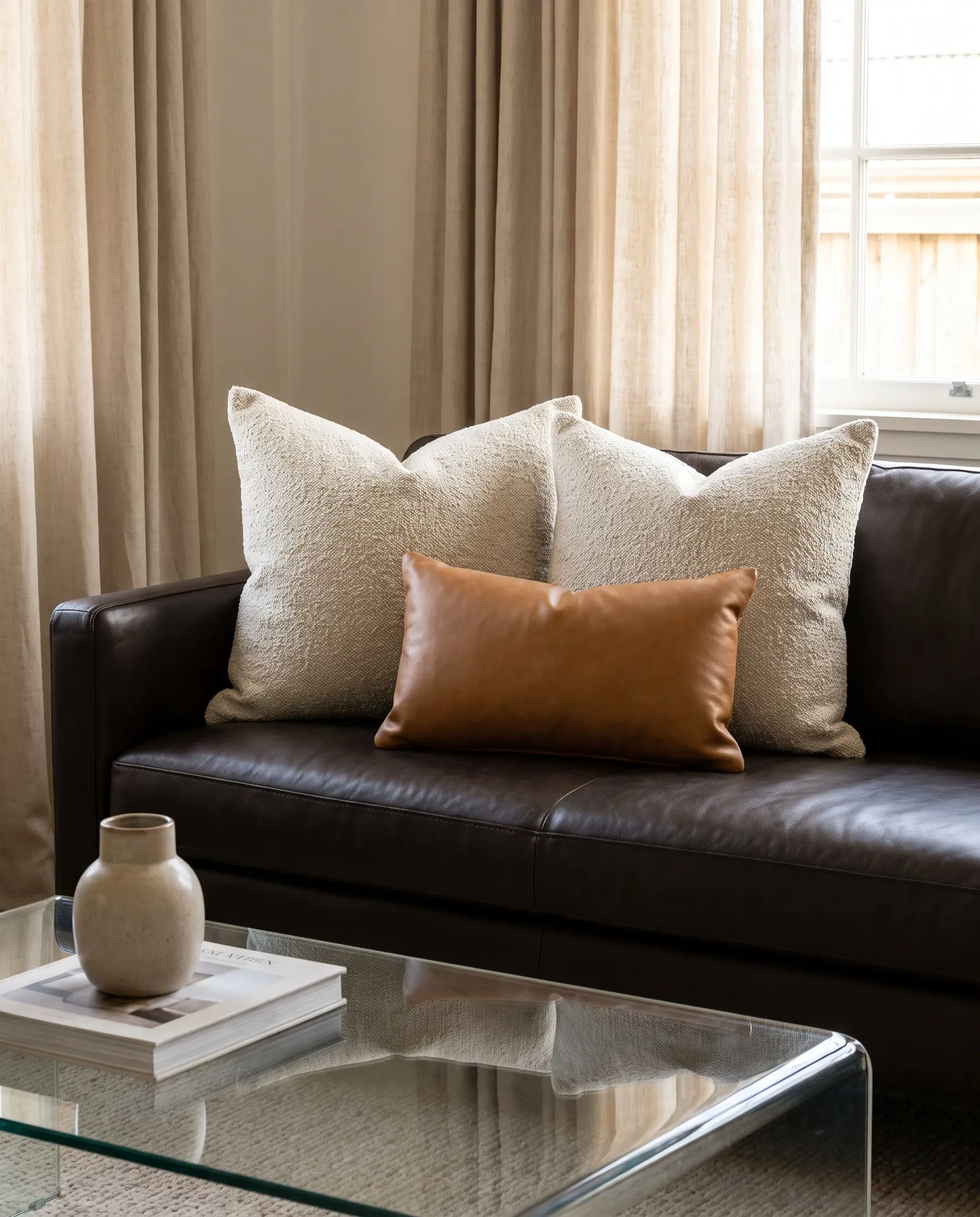
The Vibe: High-contrast, accessible luxury. Cream instantly lifts the heavy, dark mass of a brown sofa without resorting to stark, clinical white that would feel jarring against the earthy base.
- Key Material: Dense, nubby bouclé.
- Color Match: Sherwin-Williams Alabaster (SW 7008).
- Styling Pro-Tip: Pair a heavily textured oatmeal cover with a smooth leather lumbar for inverted contrast.
Indigo and Faded Denim
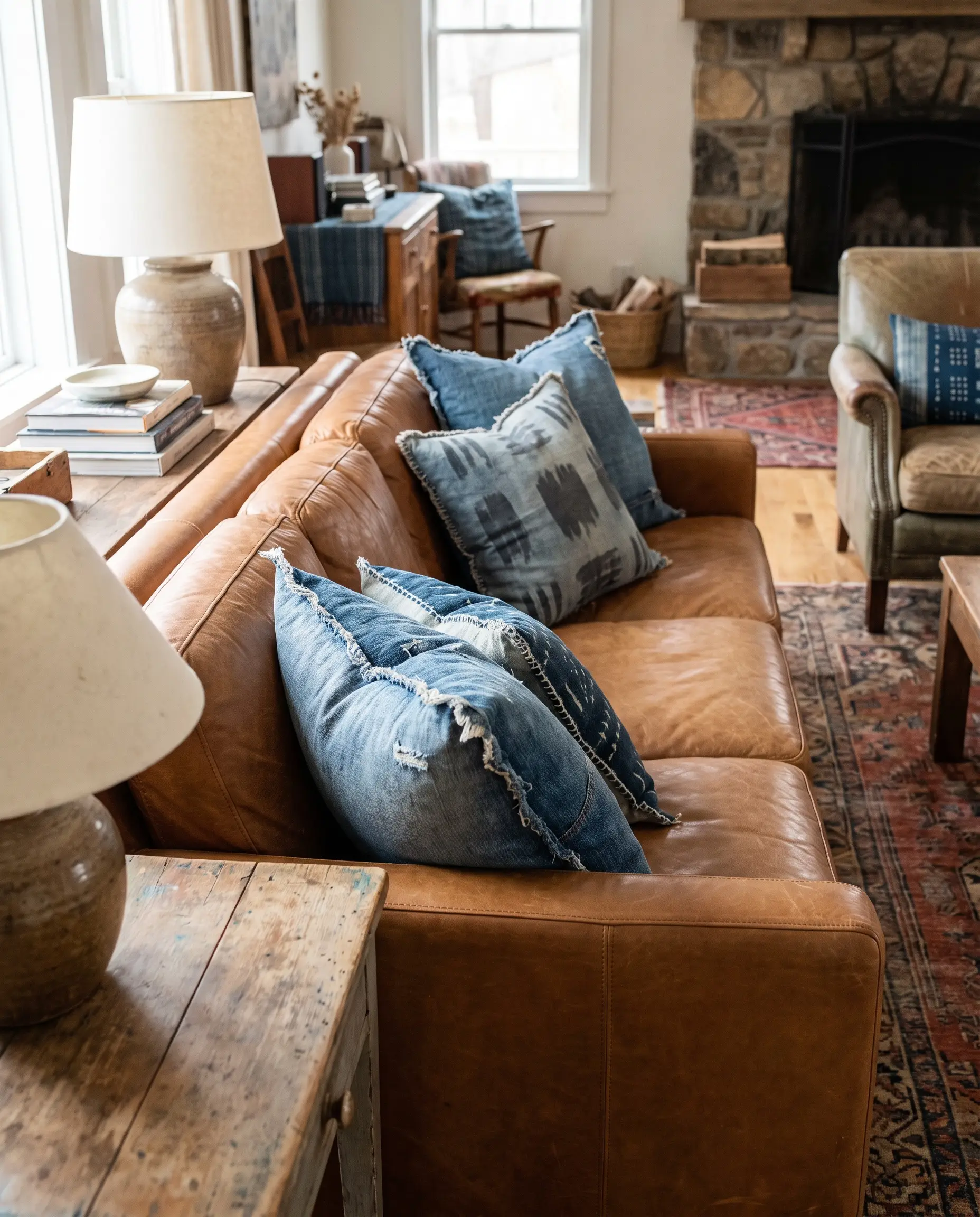
The Vibe: Relaxed, lived-in Americana. Blue and orange are direct complements on the color wheel, making faded indigo the absolute best partner for warm cognac leather.
- Key Material: Vintage indigo mudcloth or heavy denim.
- Color Match: Farrow & Ball Hague Blue (No. 30).
- Styling Pro-Tip: Look for textiles with visible stitching or raw edges to enhance the rustic appeal.
Mustard Yellow Woven Wool
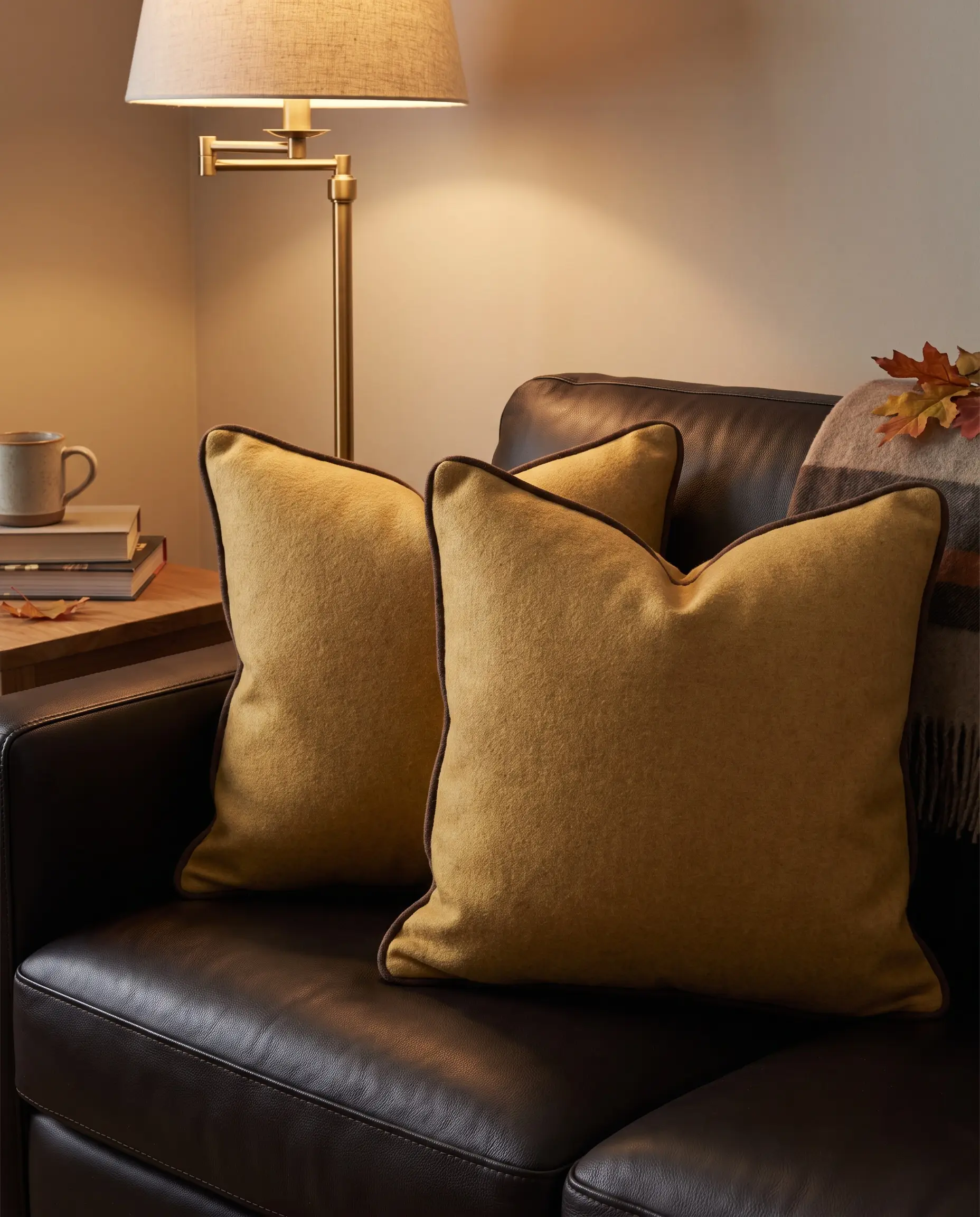
The Vibe: Moody, autumnal richness. Mustard injects necessary vibrancy into dark, cool espresso leather, creating a striking focal point that feels intentional and curated.
- Key Material: Thick woven wool or heavy felt.
- Color Match: Benjamin Moore Stuart Gold (HC-10).
- Styling Pro-Tip: Incorporate a welted edge in a contrasting dark brown to tie the pillow back to the sofa.
Vintage Multicolored Kilim
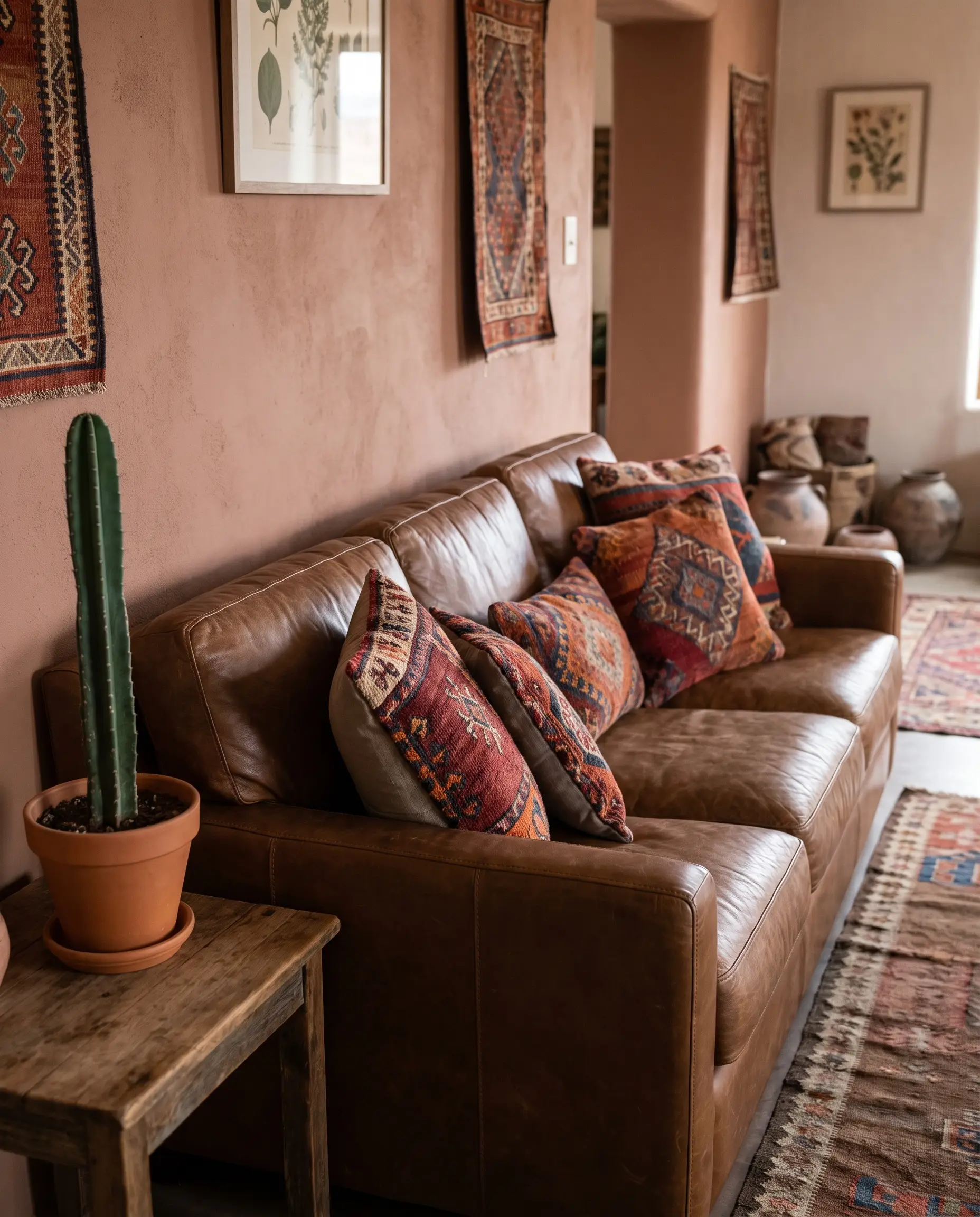
The Vibe: Eclectic, collected Southwestern charm. The geometric patterns effectively break up the solid block of brown, while the incredibly rough wool naturally grips the leather.
- Key Material: Authentic flat-weave wool kilim.
- Color Match: Sherwin-Williams Redend Point (SW 9081) for surrounding walls to complement the warm reds.
- Styling Pro-Tip: Source authentic vintage pieces from Etsy; the natural imperfections add crucial character.
High-Contrast Pairings for Black Leather Sofas
A black leather sofa can easily read as harsh, resembling corporate office furniture or a sterile bachelor pad if left unstyled. The objective is to domesticate the sleekness by introducing extreme softness, organic shapes, and intentional matte-versus-shine contrast.
Monochromatic Charcoal Heavyweight Linen
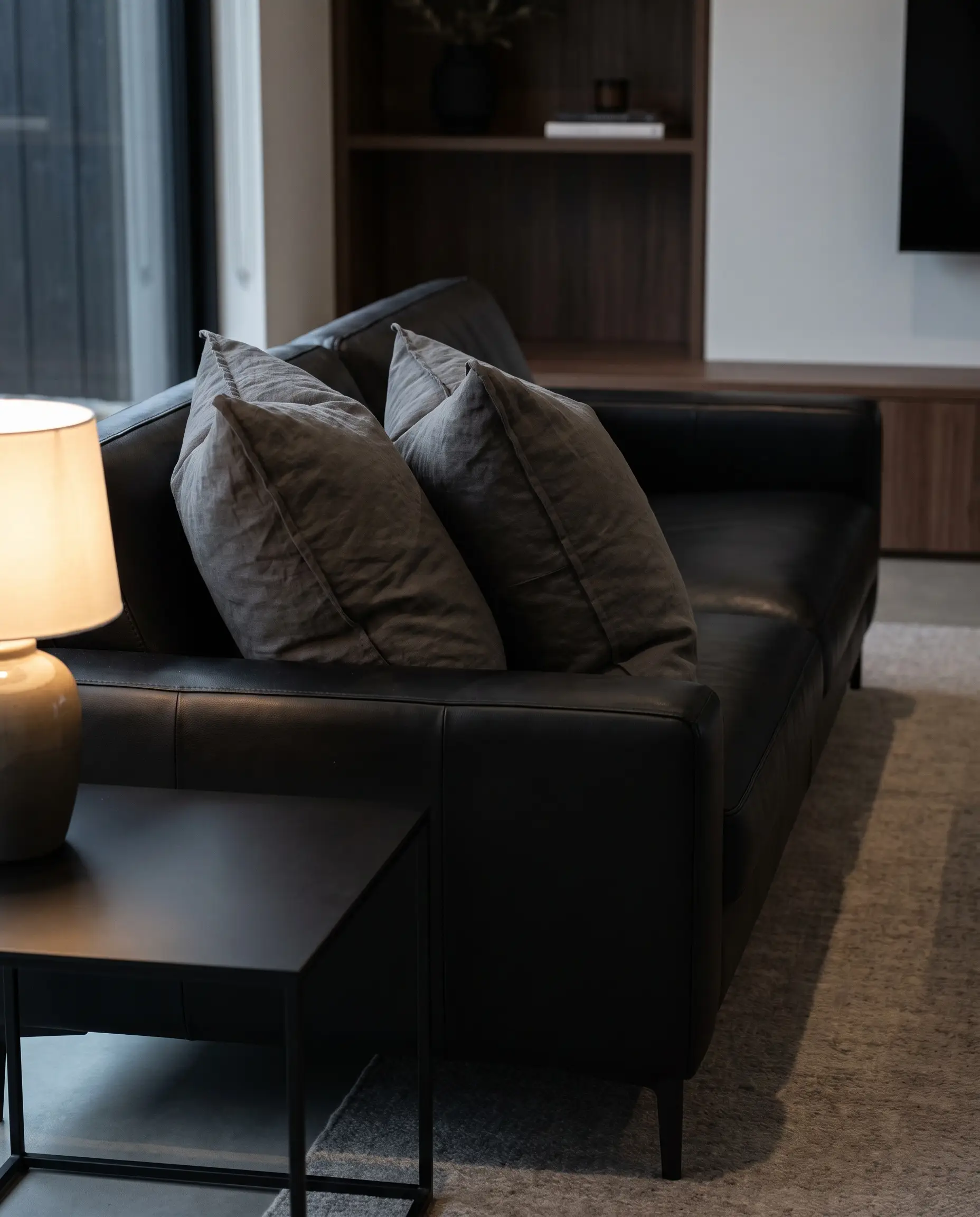
For a moody, minimalist approach, layering charcoal grey against black offers a subtle, sophisticated break in tone. The thick linen texture provides a necessary matte contrast against the shiny black leather without disrupting the dark palette.
- Key Material: Heavyweight Belgian linen.
- Color Match: Benjamin Moore Kendall Charcoal (HC-166).
- Styling Pro-Tip: Ensure the insert is aggressively overstuffed so the linen doesn’t look sloppy against the rigid sofa frame.
Stark White Faux Fur or Shearling
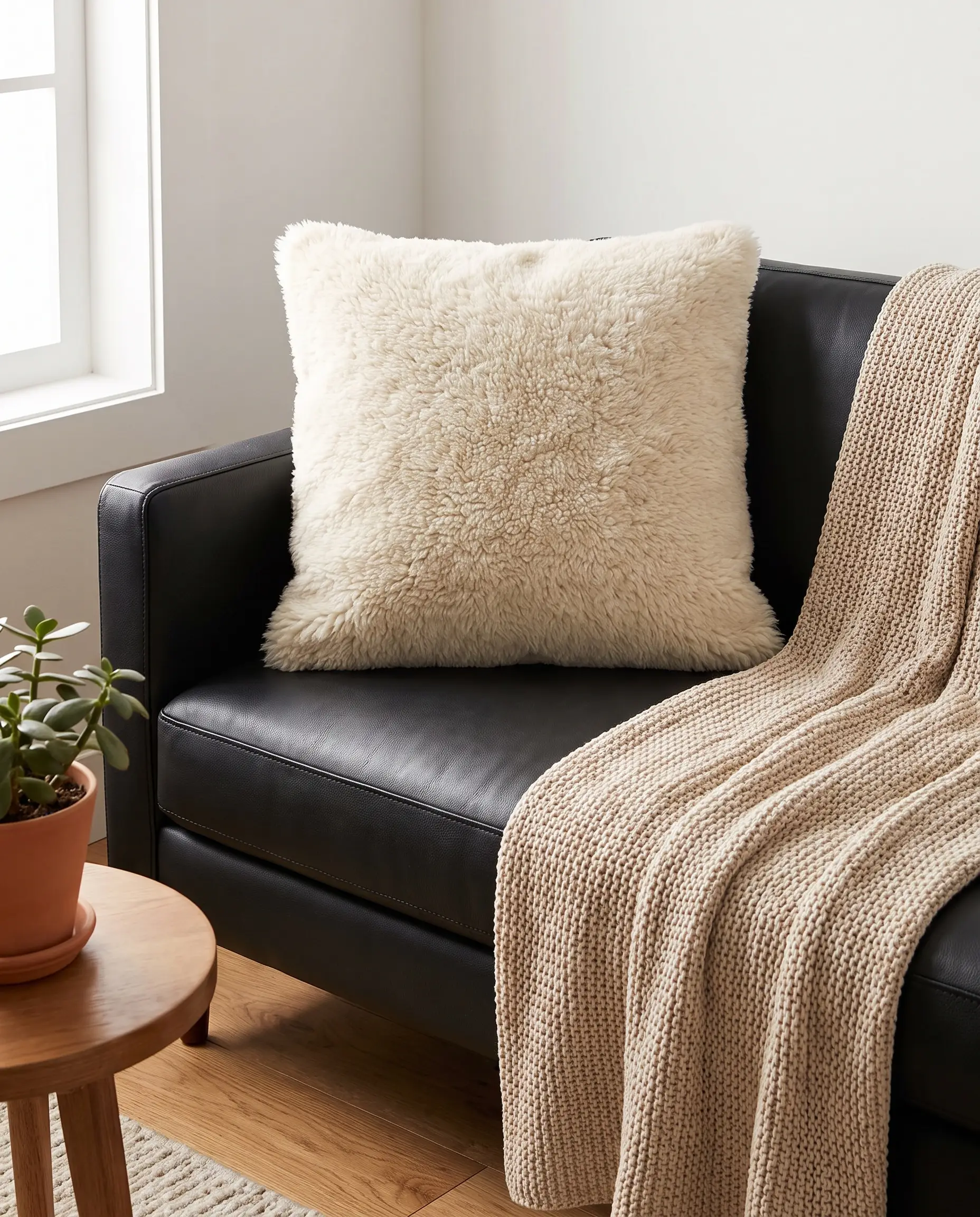
This pairing delivers maximum tactile contrast to combat the cold, sleek nature of black upholstery. The ultra-soft, voluminous texture of shearling completely softens the visual weight of the furniture.
- Key Material: High-pile faux fur or genuine shearling.
- Color Match: Sherwin-Williams Pure White (SW 7005).
- Styling Pro-Tip: Limit this to one accent pillow per sofa to avoid a chaotic, cluttered look.
Camel and Tan Leather Accents
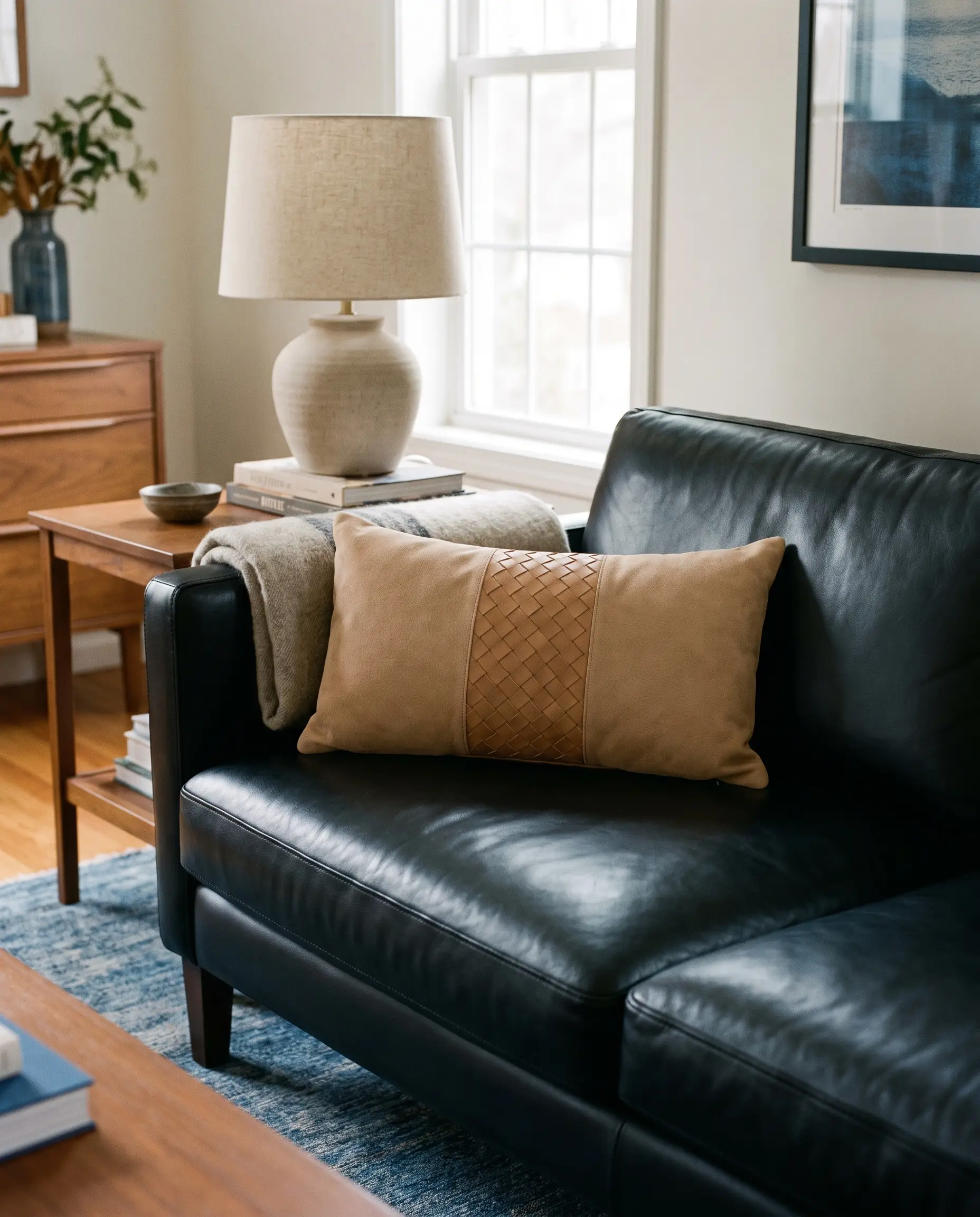
Mixing leathers is a highly effective way to bridge the gap between warm and cool tones in a living room. Placing a matte camel suede or woven tan leather lumbar on a black sofa introduces immediate warmth.
- Key Material: Matte suede or woven/braided tan leather.
- Color Match: Farrow & Ball Oxford Stone (No. 264).
- Styling Pro-Tip: Ensure the camel leather has a matte finish so it doesn’t compete with the shine of the black sofa.
Geometric Black and White Mudcloth
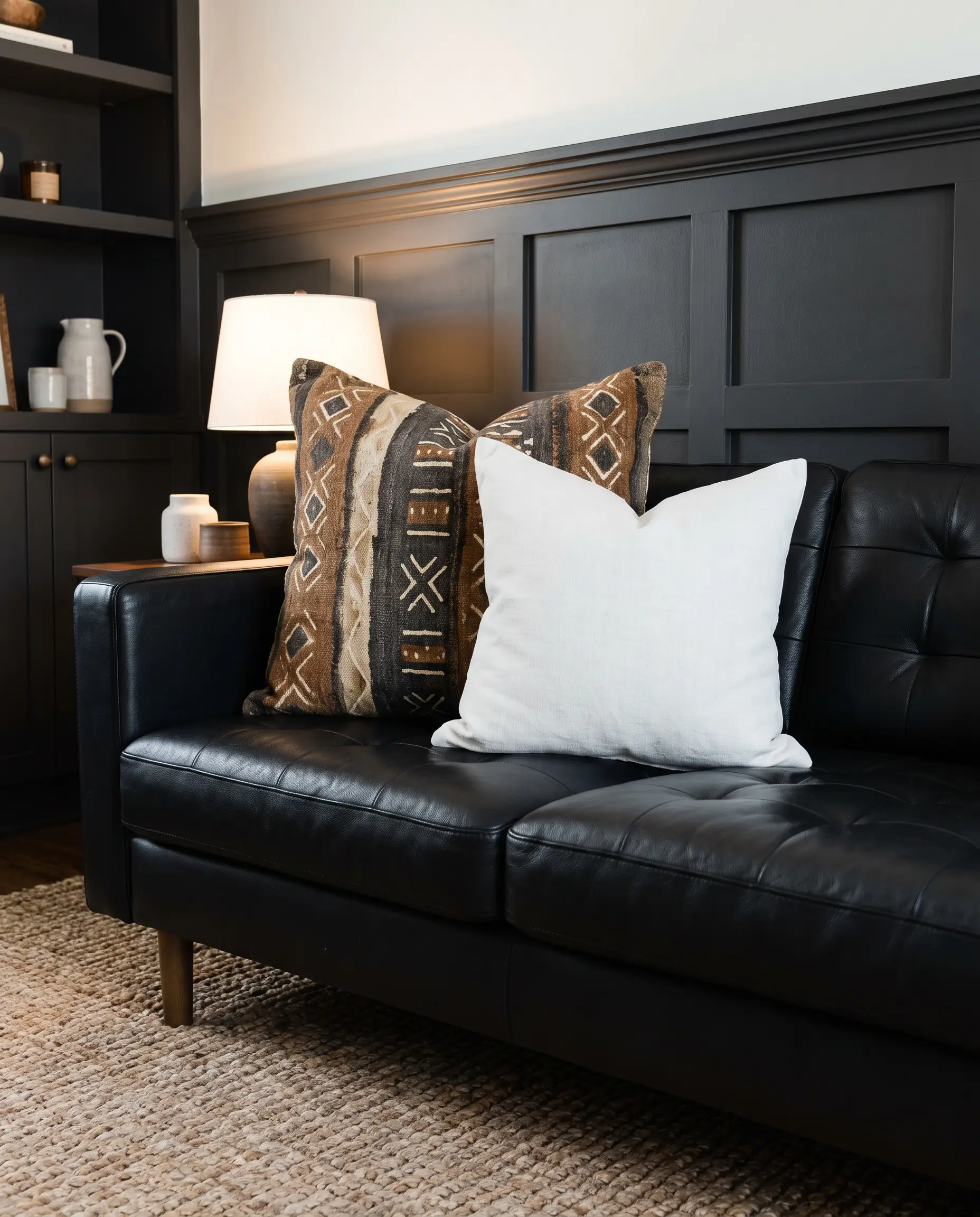
Organic, hand-painted lines break up the solid, imposing mass of a black sofa with striking visual interest. The thick cotton fabric provides excellent grip while introducing global texture.
- Key Material: Authentic Malian mudcloth.
- Color Match: Sherwin-Williams Tricorn Black (SW 6258) for painted accents in the room.
- Styling Pro-Tip: Layer a smaller, solid white linen pillow in front of the mudcloth to ground the bold pattern.
Deep Burgundy or Plum Velvet
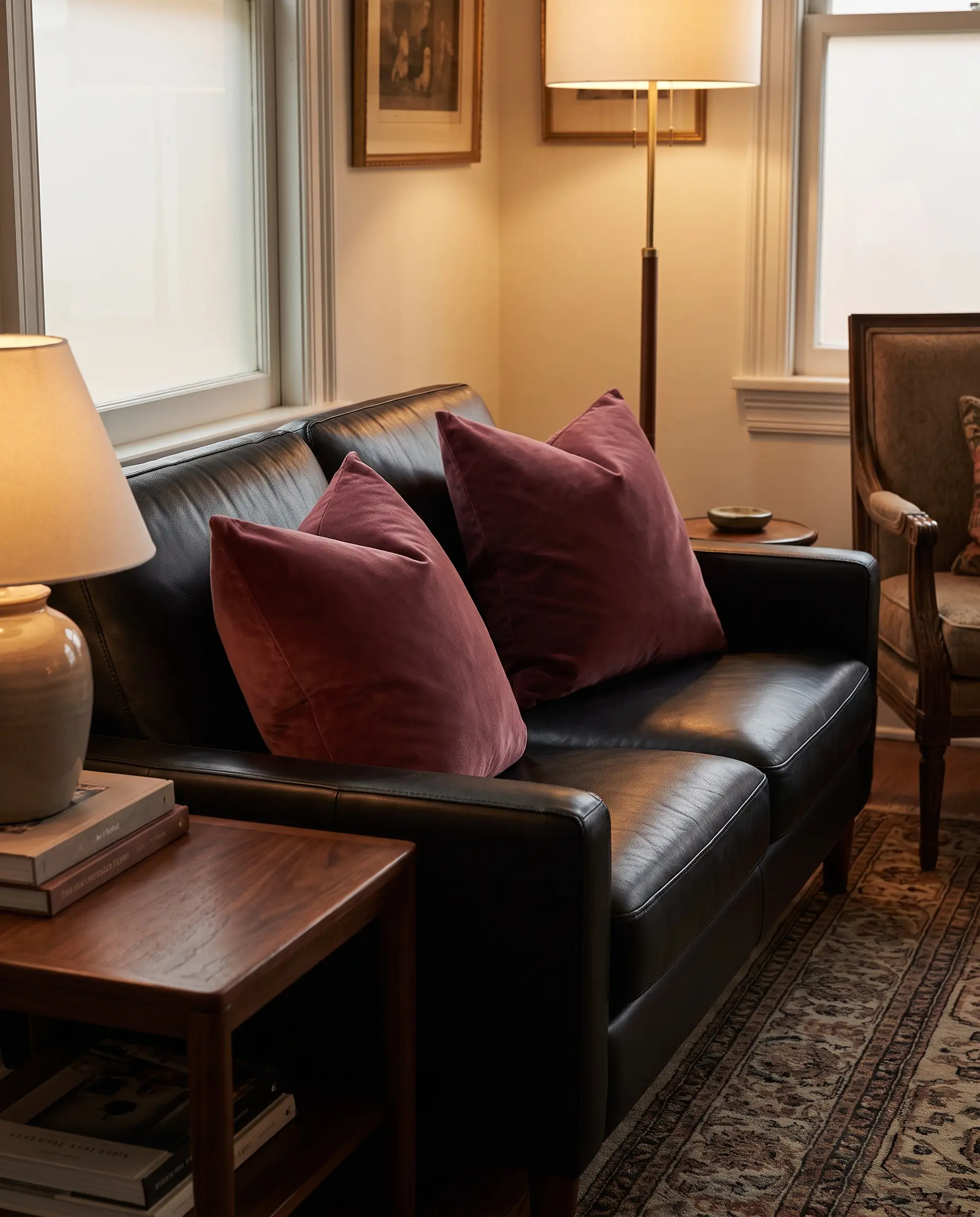
Introducing a rich, moody jewel tone shifts the black leather into a slightly traditional or postmodern aesthetic. Velvet catches the light completely differently than leather, adding necessary depth to the arrangement.
- Key Material: Heavy cotton velvet.
- Color Match: Benjamin Moore Carter Plum (CW-355).
- Styling Pro-Tip: Use a deep, dramatic “karate chop” in the center to highlight the velvet’s dynamic sheen.
Softening Techniques for Grey and White Leather
Grey and white leather sofas lean heavily into contemporary and Scandinavian aesthetics, but their pale, smooth surfaces risk feeling clinical or sterile. You must inject visual warmth and structural texture to remove the stark, showroom feel.
Soft Blush and Dusty Rose
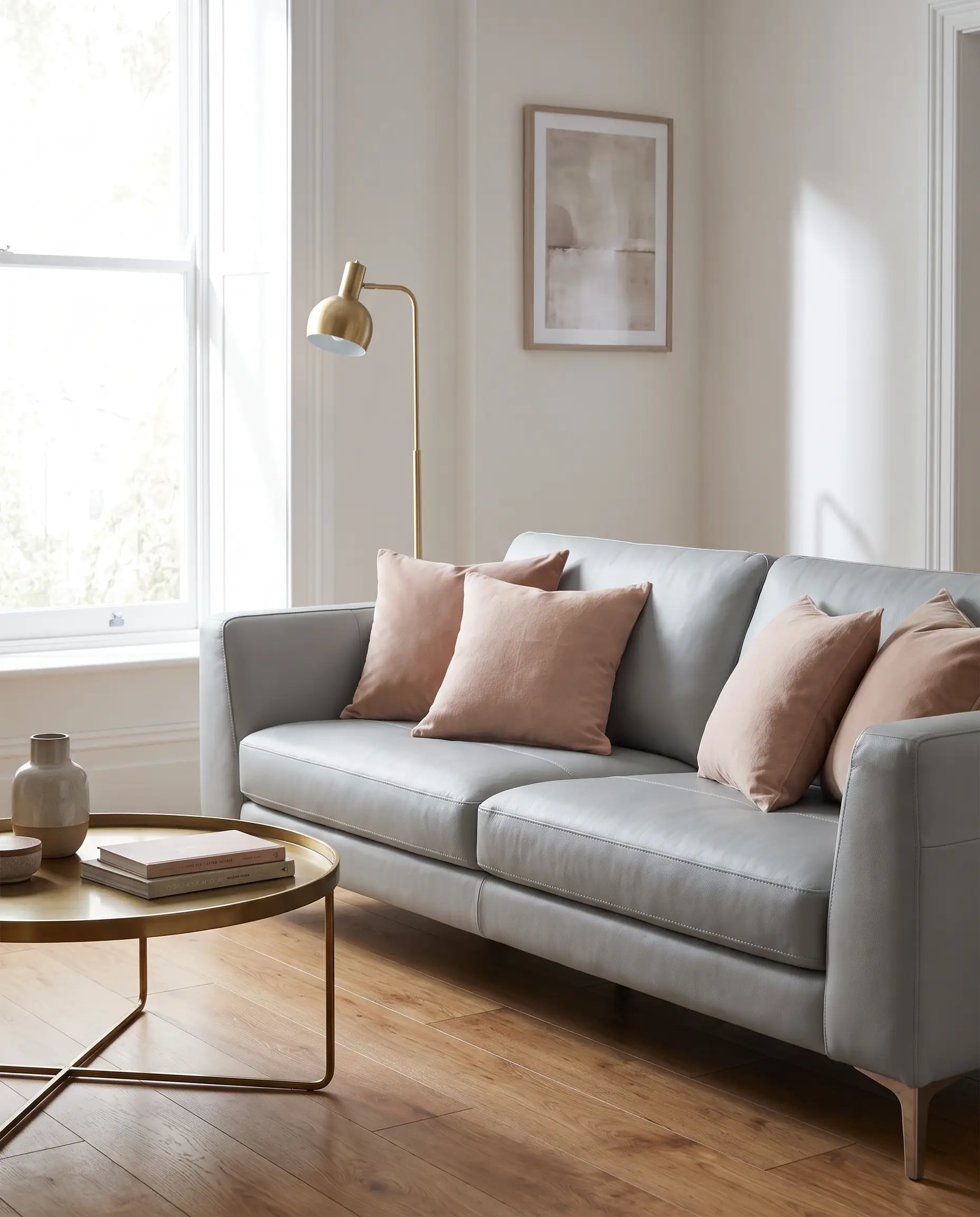
Pink undertones actively warm up the cool, sometimes icy surface of light grey leather. A matte finish is crucial here to keep the pairing grounded and sophisticated rather than overly sweet.
- Material Match: Stonewashed Linen, Matte Velvet.
- Color Match: Farrow & Ball Setting Plaster (No. 231).
- Styling Pro-Tip: Pair with brass or warm wood room accents to amplify the warmth.
Slate Blue and Navy Wovens
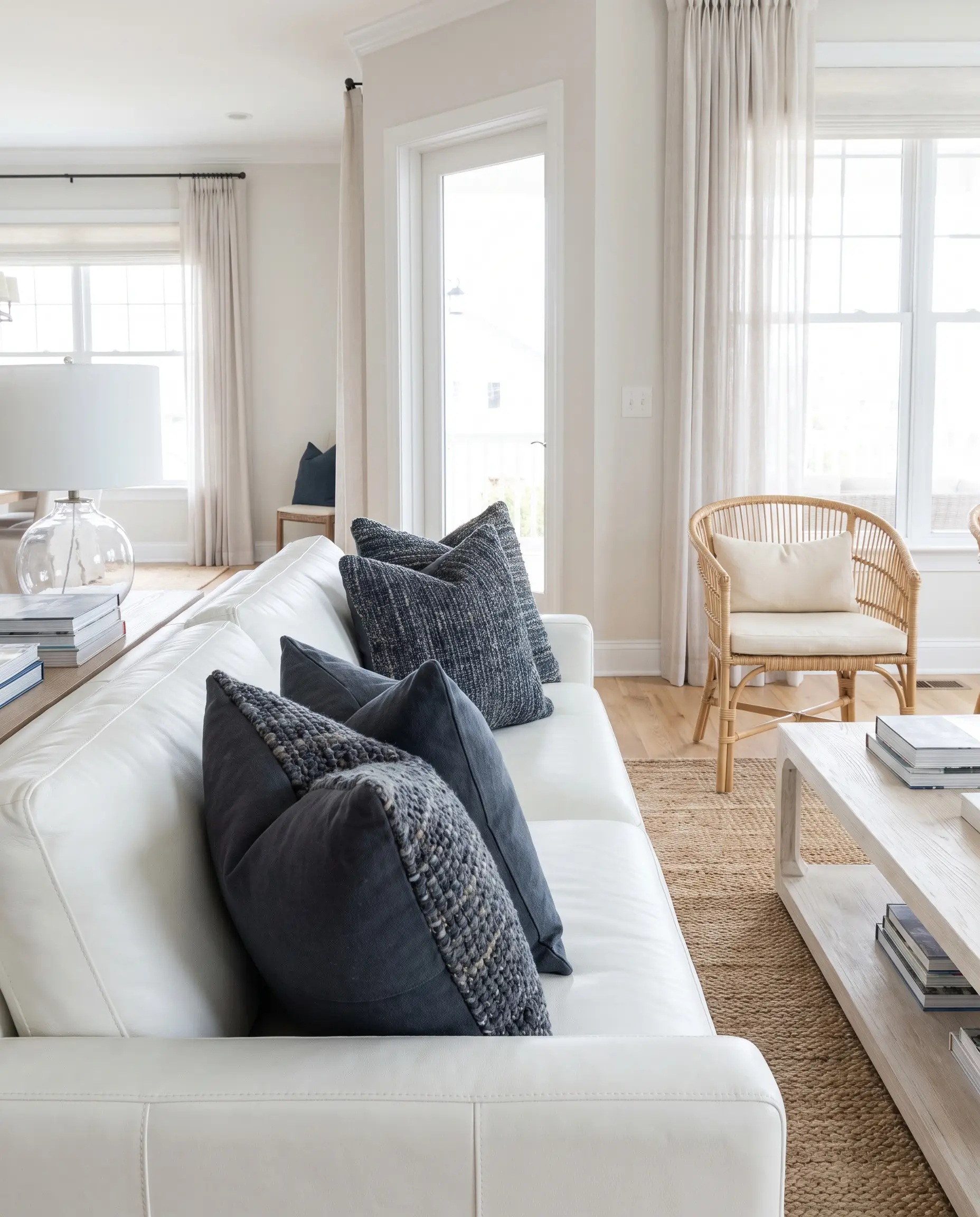
Deep blues anchor a bright white leather sofa with transitional, coastal-inspired sophistication. The dark woven fabric provides a heavy visual counterweight to the buoyant white seating.
- Material Match: Heavy Cotton Canvas, Woven Wool.
- Color Match: Benjamin Moore Hale Navy (HC-154).
- Styling Pro-Tip: Use pillows with a subtle, varied weave to add micro-texture upon close inspection.
Chunky Knit Neutrals
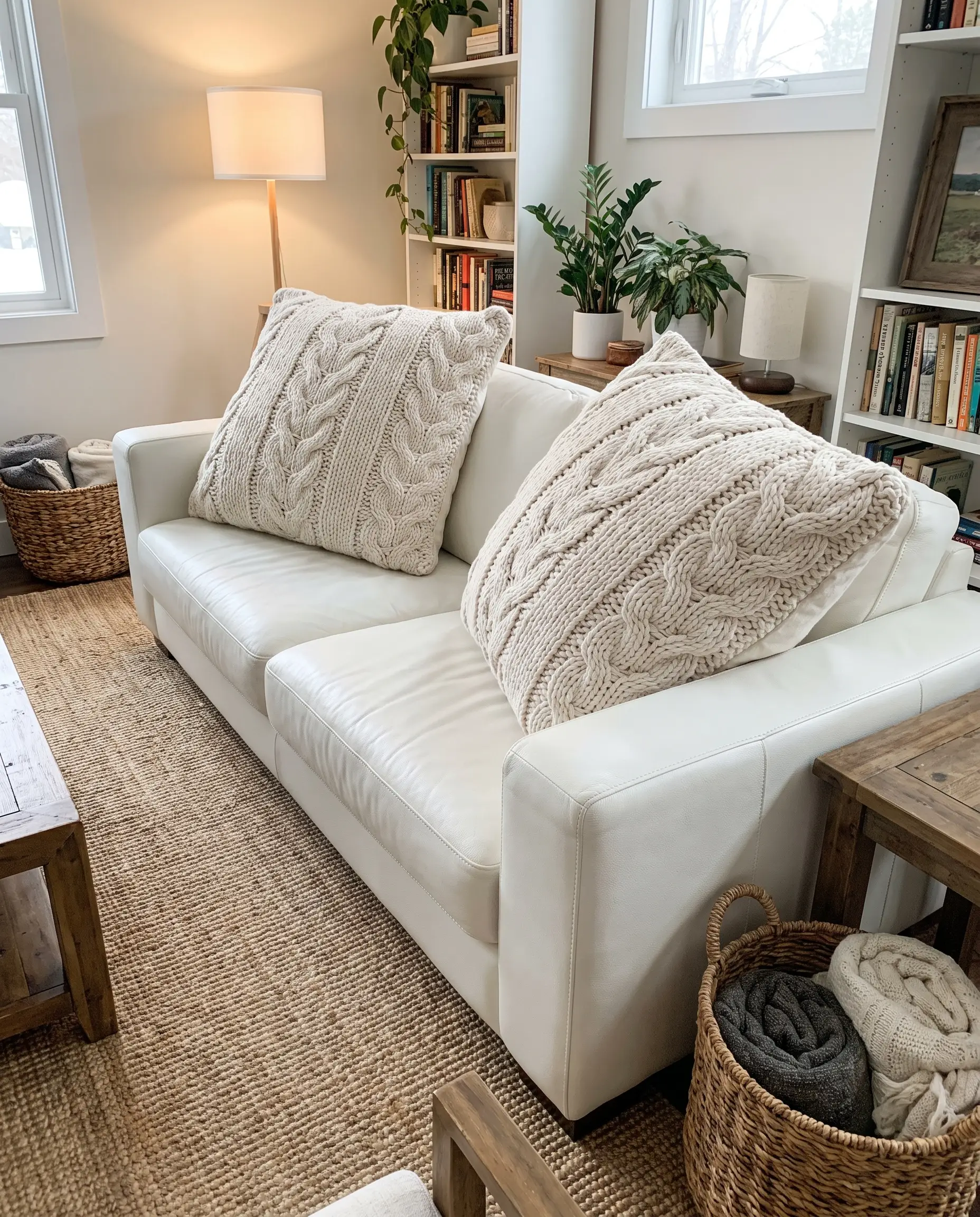
Introducing massive architectural texture physically alters the rigid silhouette of a stark white leather sofa. An oversized cable knit physically commands the space, completely erasing any lingering sterile vibes.
- Material Match: Thick Merino Wool Knit, Chunky Cotton Cable Knit.
- Color Match: Sherwin-Williams Snowbound (SW 7004).
- Styling Pro-Tip: Keep the color tonal with the sofa; let the massive physical texture do all the talking.
Warm Taupe and Mushroom Tones
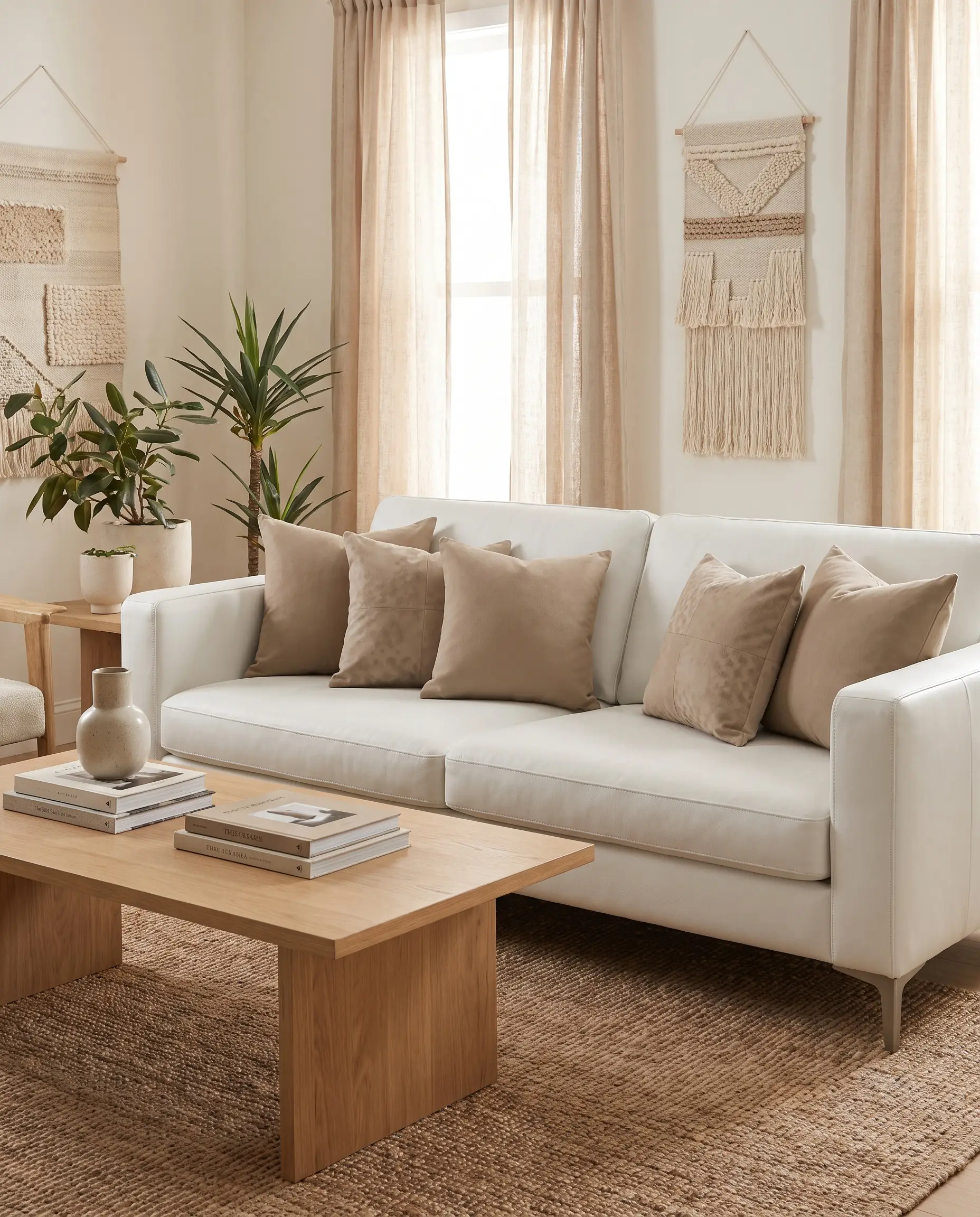
Creating a seamless, monochromatic organic modern transition softens stark white leather beautifully. These earthy mid-tones bridge the gap between the white seating and the surrounding room architecture.
- Material Match: Brushed Canvas, Matte Suede.
- Color Match: Sherwin-Williams Shiitake (SW 9173).
- Styling Pro-Tip: Mix a solid mushroom pillow with a subtly patterned taupe option for layered depth.
The Best Heavyweight Fabrics to Prevent Slipping
Moving from pure color theory to tactile function, we must address the fabrics that actually stay put. Silk, satin, and thin polyester covers are universally banned from leather furniture because they offer zero friction and will spend more time on your rug than your seat.
Authentic Moroccan Kilim and Flat-Weave Wool
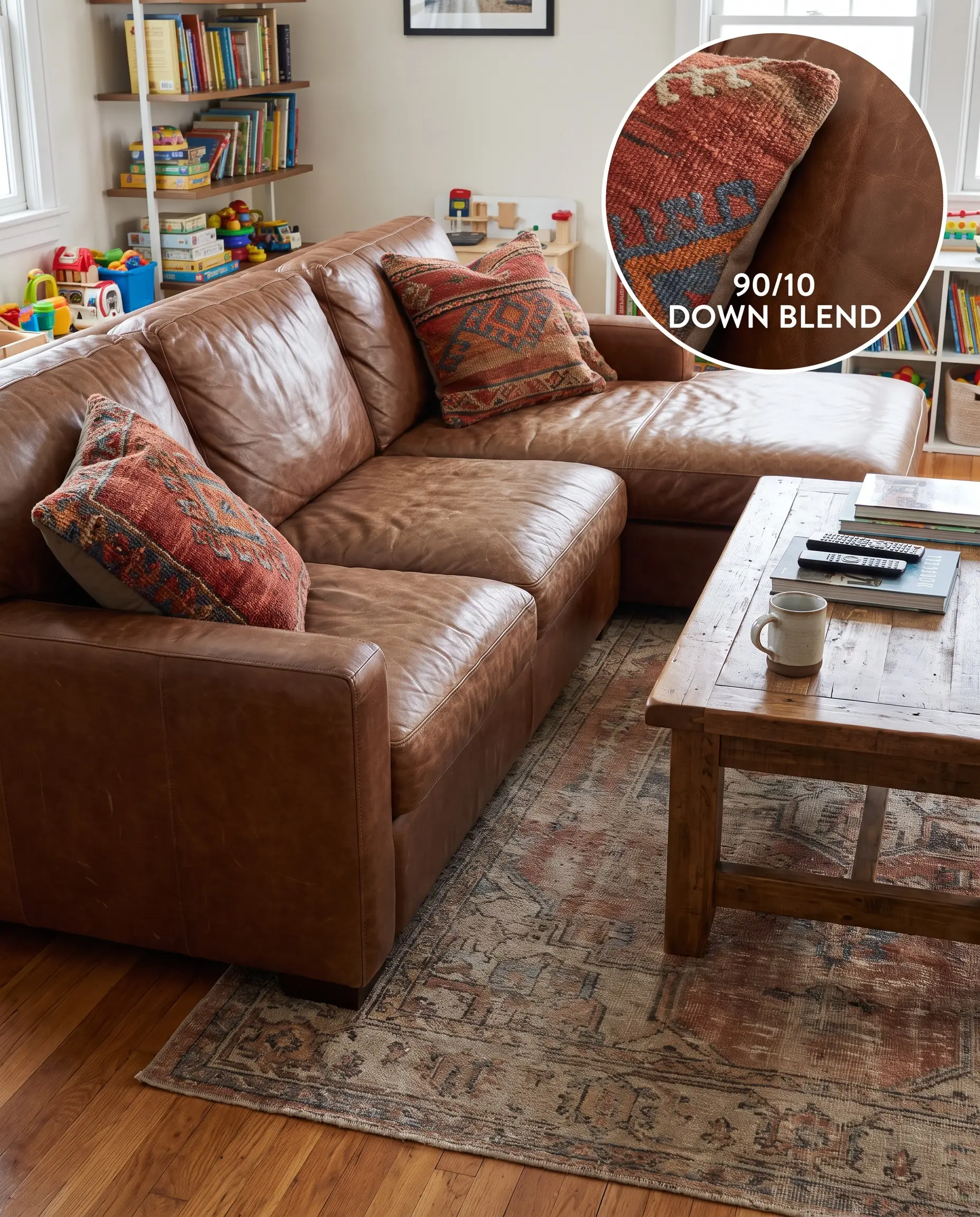
Friction Rating: High The exceptionally rough, coarse texture acts like velcro against smooth leather upholstery. It is highly durable, easily hides wear, and physically anchors your arrangement in the corners.
- Best For: High-traffic family rooms.
- Insert Pairing: 90/10 Down blend to maximize the heavy footprint.
- Maintenance: Spot clean only; the coarse fibers can warp in the wash.
Dense Bouclé and Shearling
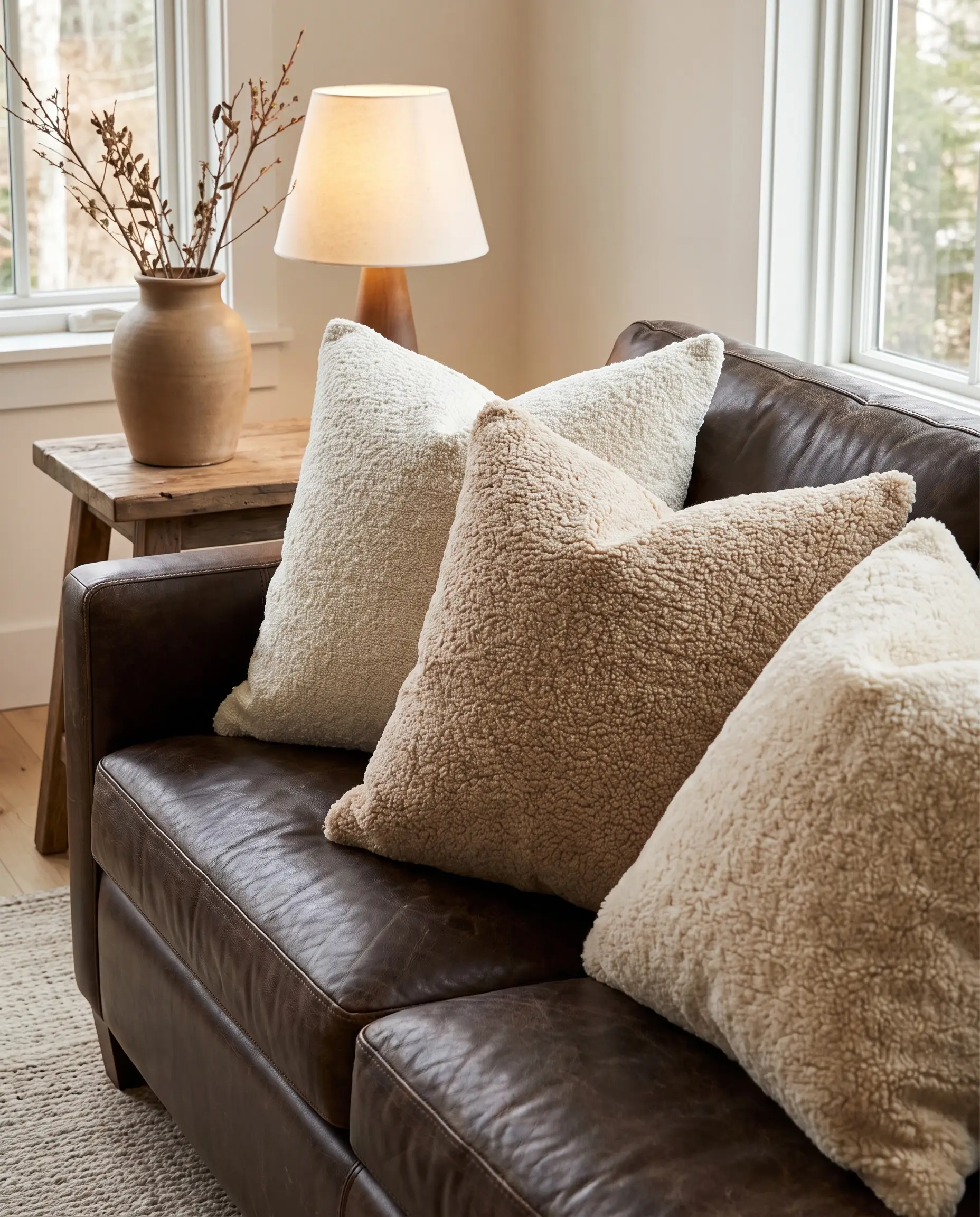
Friction Rating: High Providing a nubby, looped texture, these fabrics physically grip the leather grain while injecting instant visual warmth. They completely transform the temperature of a cold leather seat.
- Best For: Organic modern or minimalist spaces.
- Insert Pairing: Heavyweight memory foam/down alternative.
- Maintenance: Requires occasional brushing to maintain the looped pile.
Thick Stonewashed Linen
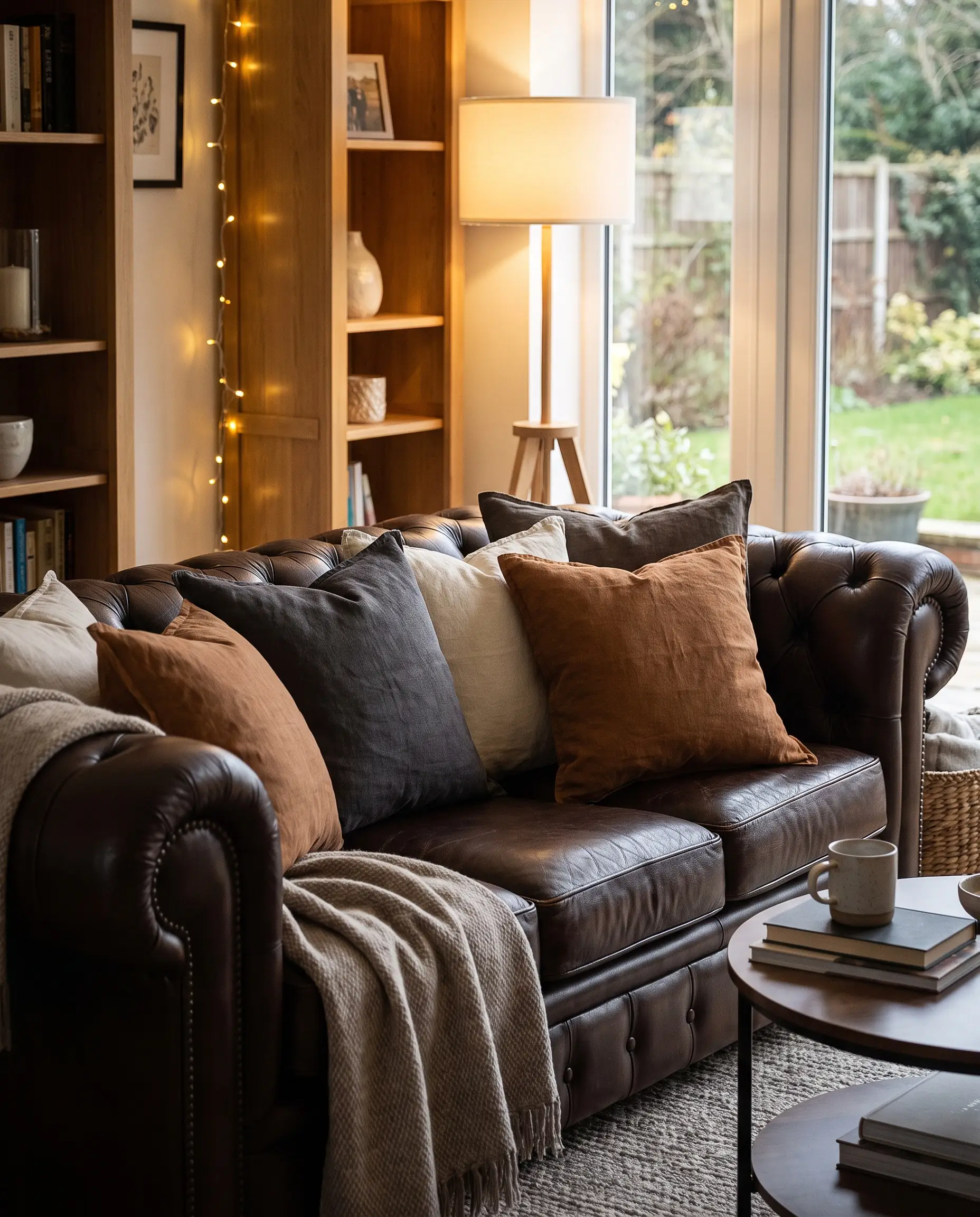
Friction Rating: Medium A breathable, organic fabric that provides a relaxed, slightly rumpled look, beautifully countering the stiff formality of a rigid leather couch. The matte weave provides just enough grip to stay seated.
- Best For: Relaxed, transitional living rooms.
- Insert Pairing: Overstuffed feather blend for a dense, slouchy look.
- Maintenance: Machine washable; embrace the natural wrinkles.
Heavy Cotton Canvas and Mudcloth
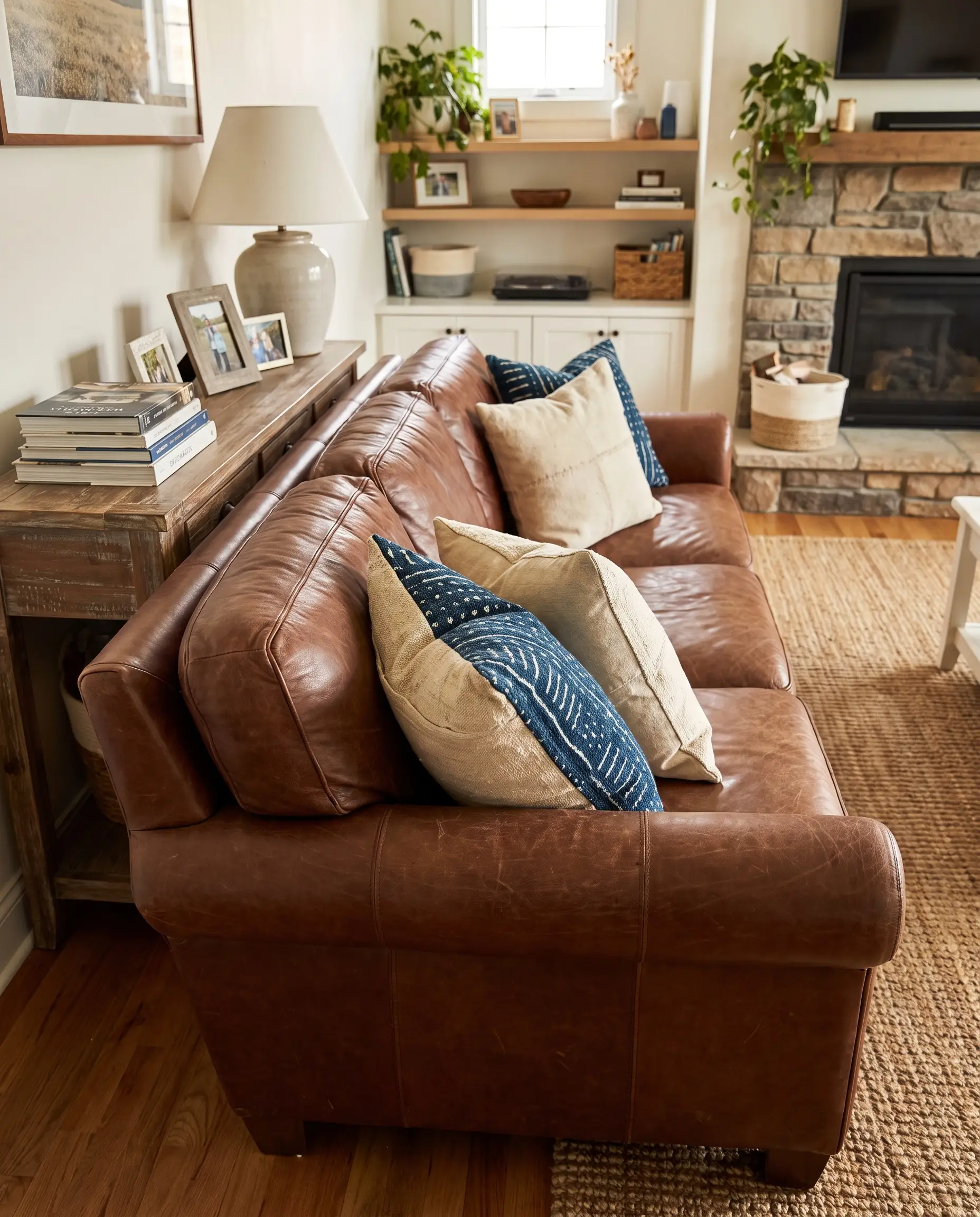
Friction Rating: Medium Thick, structured, and incredibly durable for daily use. The heavy physical weight of canvas, combined with a dense insert, ensures the pillow stays wedged firmly against the armrests.
- Best For: Eclectic, rustic, or bohemian styling.
- Insert Pairing: Dense poly-blend or firm down alternative.
- Maintenance: Highly durable, easily spot-cleaned.
Pillow Arrangement Proportions for Leather Couches
Because leather is inherently slippery, you cannot simply toss a dozen random pillows onto the seat and expect them to stay in place. Structural arrangement is required to build retaining walls that hold your styling together.
The 2-2-1 Anchor Method
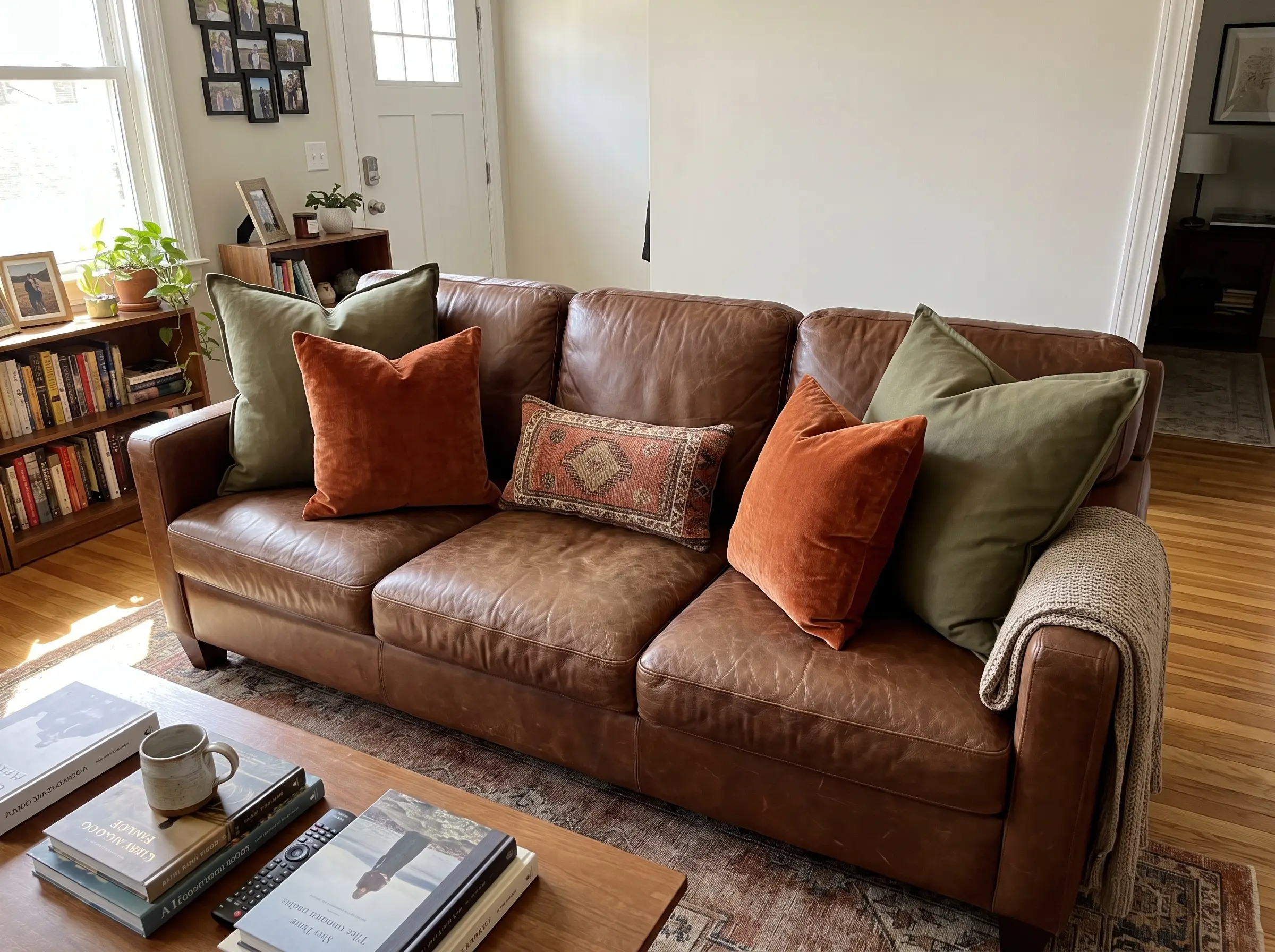
This classic setup uses two large 22″ squares in the back corners, two 20″ squares slightly in front, and one lumbar in the center. The heavier 22″ pillows act as dense retaining walls, keeping the smaller pillows from sliding outward.
- Base Layer: Two 22″ solid, high-friction pillows (e.g., kilim or canvas).
- Middle Layer: Two 20″ contrasting textures (e.g., velvet or linen).
- Center Anchor: One 14″x20″ patterned lumbar.
The Asymmetrical Minimalist (The 3-Pillow Cluster)
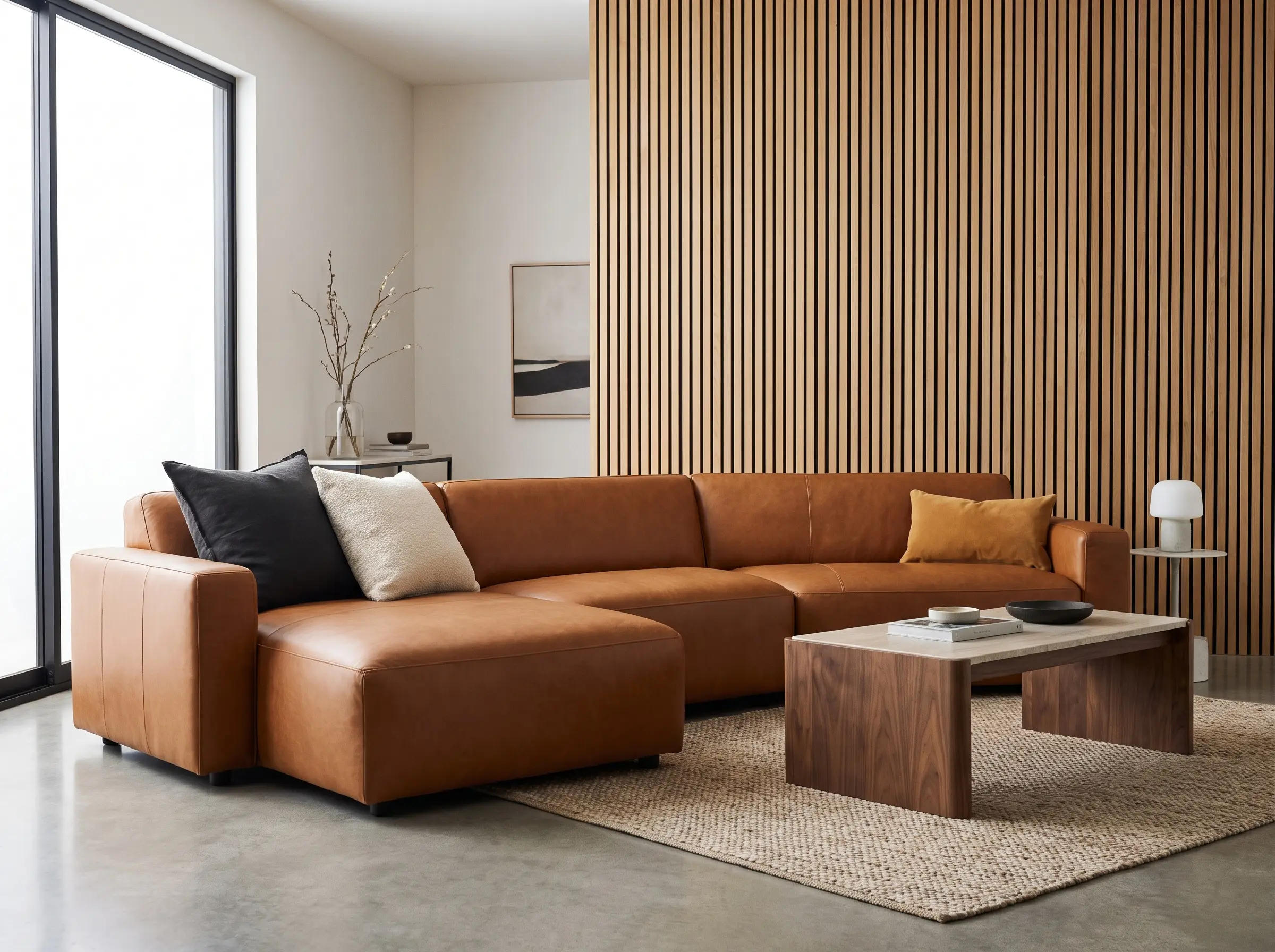
For a modern, uncluttered look, place two pillows on one side (one 22″, one 20″), and a single contrasting lumbar on the opposite armrest. This drastically reduces the number of items that can slide around while maintaining visual balance.
- Heavy Side: One 22″ dark linen and one 20″ bouclé.
- Light Side: One 14″x20″ leather or suede lumbar.
- Visual Rule: Ensure the single lumbar visually weighs as much (via dark color or heavy texture) as the clustered pair.
The Single Oversized Lumbar
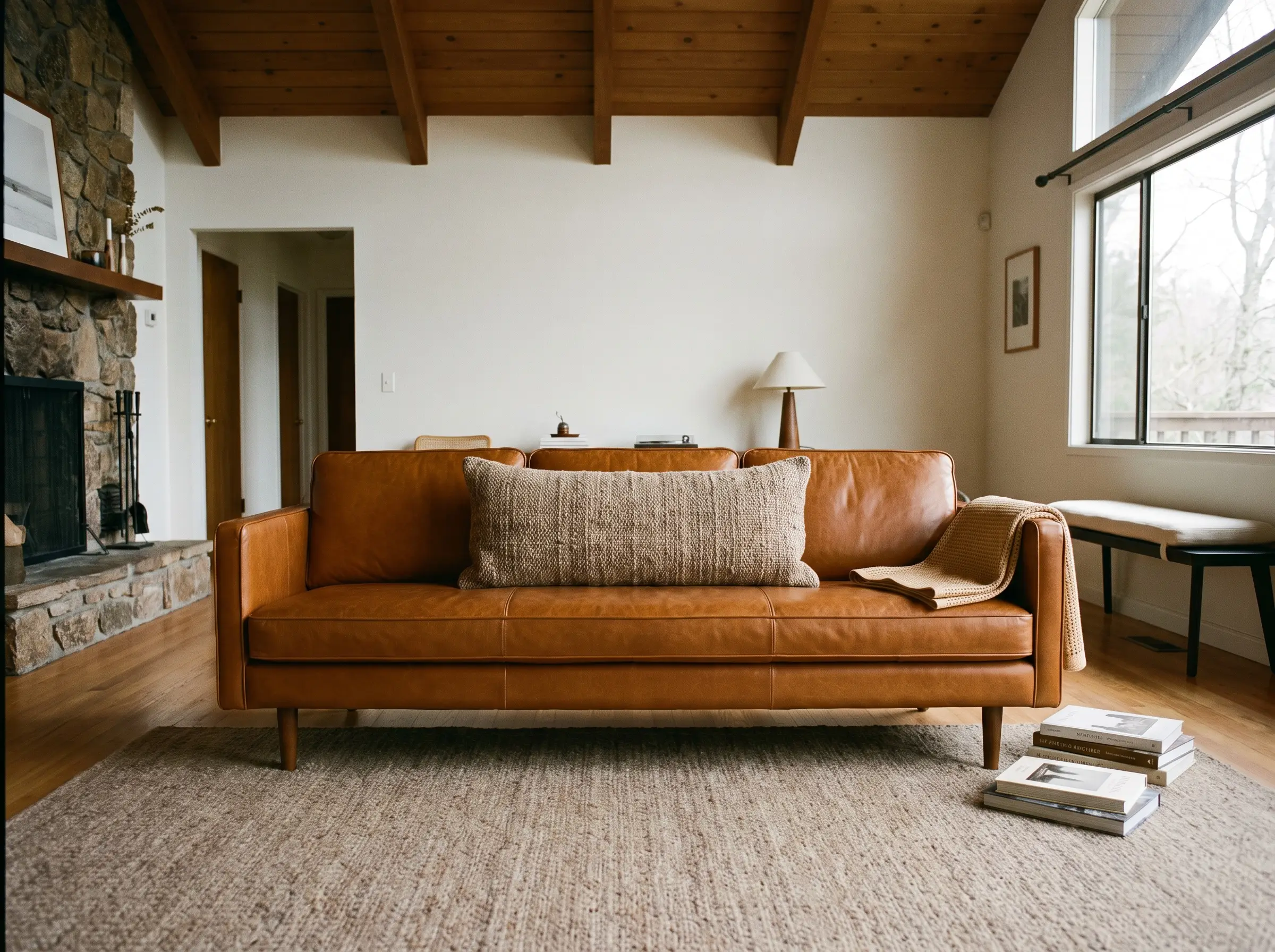
The absolute best low-maintenance solution for incredibly slippery aniline leather. A single, heavy 14″x36″ lumbar pillow placed perfectly in the center requires zero adjustment and won’t roll off the edges.
- Size Mandate: Must be at least 14″x36″ to span the center cushions adequately.
- Fabric Choice: Opt for a highly textured, high-friction heavy woven wool.
- Styling Pro-Tip: Ensure the insert is extremely firm so the long pillow doesn’t slouch or fold in the middle.
Maintaining the Look: Care and Daily Styling
Styling a leather sofa is an ongoing relationship between friction, weight, and texture. To keep your arrangement looking intentional, embrace the “karate chop” method. A firm chop in the top center of a down-filled pillow forces the heavy insert to settle and widen at the base, creating a flatter bottom that grips the slick seat far better than a rounded, over-inflated cushion.
Additionally, remember that high-friction fabrics like rough kilim or heavy canvas can act as mild abrasives over time. You must condition your leather upholstery at least twice a year to ensure the surface remains supple and hydrated, preventing the friction of your perfectly styled pillows from wearing down dry finishes.
What color leather sofa are you currently trying to domesticate? Assess your leather’s undertones, source a few heavyweight, oversized inserts from trusted mid-tier brands like West Elm or CB2, and start building your tactile contrast today.
The Hackrea Style Desk treats interior decoration as an exact visual science. Rather than focusing on demolition or floor plans, this desk masters the art of color theory, undertone matching, material pairings, and spatial proportion. From balancing the visual weight of mixed metals to finding the perfect bridging tone between disparate wood species, this desk provides the rigorous aesthetic rules needed to achieve high-end, editorial-quality harmony in any space.